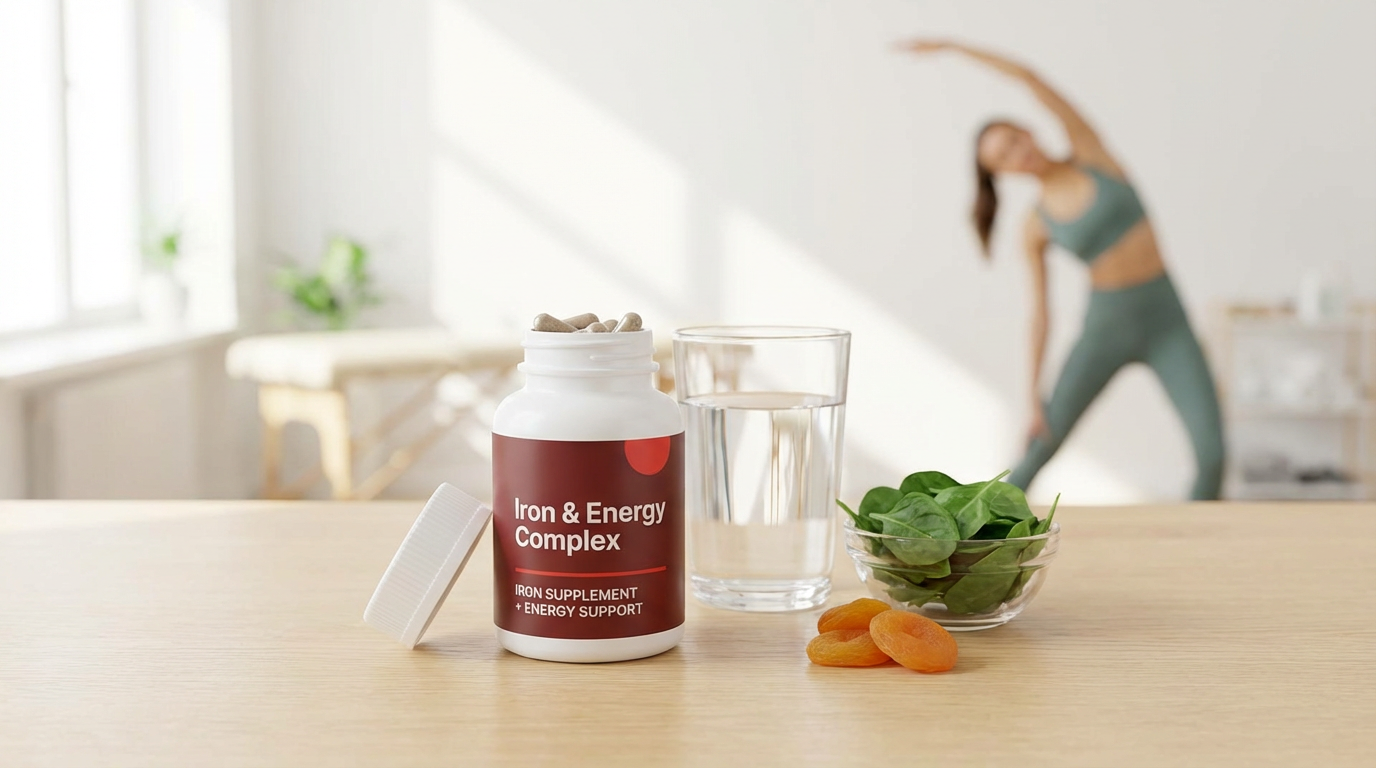
Iron is essential for hemoglobin and oxygen delivery; low iron can cause fatigue, weakness, and poor concentration even before full-blown anemia. Supplements help when diet does not meet needs—for example with heavy periods, pregnancy, or plant-based eating. Understanding when to get tested, which form to choose, and how to take iron safely helps you get the benefit without excess or side effects. This guide covers evidence-based dosing, timing, form, and how to combine supplementation with habits like diet and vitamin C for better absorption. For product options, see iron supplements and vitamin C on iHerb.
Why Iron Supplementation Matters for Energy
When iron stores (ferritin) or hemoglobin are low, your body cannot make enough red blood cells to carry oxygen to tissues. That leads to fatigue, shortness of breath on exertion, and reduced exercise tolerance. Iron is also a cofactor for enzymes involved in cellular energy production. So supplementing with iron when you are deficient can restore energy and improve well-being. Supplementation is not a substitute for a balanced diet; it is for when diet alone is insufficient or when your doctor has confirmed deficiency or anemia and prescribed a therapeutic dose.
When to Consider Iron Supplements
Get a blood test (ferritin, hemoglobin, and if needed transferrin saturation) before starting. Do not self-treat suspected anemia; fatigue has many causes. If your doctor confirms low iron or iron deficiency anemia, they may recommend a supplement. Typical situations: heavy menstrual periods, pregnancy, blood donation, gut conditions that affect absorption, vegetarian or vegan diets with low intake or poor absorption, and athletes with repeated low ferritin. Even if hemoglobin is still normal, low ferritin (non-anemic iron deficiency) can cause tiredness; your doctor can advise on whether to supplement and at what dose.
Forms of Iron and Absorption
Ferrous sulfate, ferrous gluconate, ferrous fumarate, and iron bisglycinate are common. Labels list elemental iron (e.g. 65 mg per 325 mg ferrous sulfate). Bisglycinate is often better tolerated with fewer gut side effects. Taking iron on an empty stomach improves absorption; if you get stomach upset, take with a small amount of food or with vitamin C. Avoid taking iron with tea, coffee, or calcium at the same time. Adding 50–100 mg vitamin C with each dose can improve absorption of non-heme iron from supplements. Compare iron products and vitamins on iHerb.
Dosage and Duration
Treatment doses are set by your doctor based on your weight, severity of deficiency, and toleration. Typical elemental iron for deficiency is about 50–100 mg per day or every other day; alternate-day dosing is supported by some studies for better absorption and fewer side effects. Do not use high doses long term without retesting; excess iron is harmful. After levels normalise, maintenance usually comes from diet; low-dose or intermittent supplementation may be recommended by your doctor if you remain at risk (e.g. heavy periods, vegetarian diet).
Food First, Then Supplements
Prioritise iron-rich foods: red meat, poultry, fish, beans, lentils, spinach, fortified cereals, pumpkin seeds. Pair plant sources with vitamin C (citrus, peppers, tomatoes, berries) to improve absorption. Avoid tea and coffee at the same meal as iron-rich foods. Cooking in cast-iron cookware adds a little iron to meals. If you are not deficient, diet alone may be enough. Supplements are for when intake or absorption is insufficient or when your doctor has confirmed deficiency or anemia.
Safety and Side Effects
Iron supplements can cause constipation, stomach upset, or nausea. Taking with food (with slightly lower absorption), switching to iron bisglycinate, or using alternate-day dosing often helps. Calcium, tannins in tea and coffee, and some antacids can reduce iron absorption when taken at the same time; separate iron from these by at least 1–2 hours when possible. If you take other medications, ask your doctor or pharmacist about interactions with iron before starting. Keep supplements away from children; iron overdose can be fatal. In hemochromatosis or other iron overload conditions, do not take iron or high-dose vitamin C without medical supervision. During active infection, discuss iron with your doctor, as bacteria can use iron. Do not exceed the dose your doctor recommends.
Who Is at Risk and When to Test
Women of childbearing age (especially with heavy periods or pregnancy), vegetarians and vegans, frequent blood donors, people with celiac disease or inflammatory bowel disease, and athletes (especially endurance runners) are often at higher risk of low iron. If you have unexplained fatigue, pallor, dizziness, or cold hands and feet, get tested. Repeat testing every 1–2 years may be advised if you remain at risk. After starting supplementation, your doctor will typically recheck ferritin and hemoglobin in 2–3 months to confirm improvement and avoid excess.
Combining Iron with Lifestyle
Sleep, nutrition, and stress management matter as much as any supplement. Adequate sleep and a balanced diet support energy and recovery. Use iron supplementation as one part of a broader plan when deficiency is confirmed—not as a replacement for good diet or medical care. If fatigue persists despite normal iron, other causes (e.g. thyroid, B12, sleep apnea) need to be considered by your doctor.
When to See a Doctor
See a doctor if you have unexplained or persistent fatigue, especially with weight loss, blood in stool, severe pain, or family history of digestive or blood disease. Do not self-diagnose anemia or start high-dose iron without tests. Your doctor can rule out other causes, confirm low iron or anemia, and prescribe the right dose and form. Pregnant and breastfeeding women should have iron dose and form tailored individually. Chronic blood loss or gut disease requires treatment of the underlying cause.
Practical Tips
- Get tested first: Confirm low iron or anemia before supplementing.
- Follow your doctor's dose: Do not exceed it; re-test after 2–3 months.
- Improve absorption: Take on an empty stomach or with vitamin C; avoid tea/coffee and calcium at the same time.
- If side effects: Try iron bisglycinate, with-food dosing, or alternate-day dosing; discuss with your doctor.
Iron supplementation, when used correctly for confirmed deficiency, can make a real difference to energy and well-being. When in doubt, get tested and tailor intake with your healthcare provider.
Iron Supplementation and Pregnancy
Iron needs rise during pregnancy; many prenatal vitamins already contain iron and vitamin C. If your doctor prescribes additional iron due to low ferritin or anemia, take it as directed and consider taking it with a small amount of vitamin C (e.g. orange juice or 50–100 mg) to improve absorption. Do not exceed recommended doses; excess iron in pregnancy is also undesirable. Re-testing during and after pregnancy helps tailor dose and duration.
Athletes and Active People
Endurance athletes, especially female runners, may have lower ferritin due to sweat loss, gut micro-bleeds, or foot-strike hemolysis. Heavy training can increase iron needs. If you train frequently and feel unusually tired, a ferritin and hemoglobin check is worthwhile. Supplementation when deficient, under medical guidance, can improve energy and recovery. Avoid taking iron immediately before intense training to reduce gut discomfort.
Long-Term Maintenance
After normalising iron levels, prioritise diet: combine iron-rich foods with vitamin C at each meal. Annual or biennial ferritin and hemoglobin checks for at-risk groups help catch low iron early. Do not use high treatment doses indefinitely without retesting; switch to maintenance (diet with or without low-dose or intermittent supplement) as your doctor recommends. Excess iron stores can damage organs.
Choosing a Product
Look for clear labelling of elemental iron; compare doses across brands. Ferrous sulfate is common and inexpensive but may cause constipation or upset; ferrous bisglycinate is often better tolerated. Choose reputable brands and check expiry and storage. If you have side effects, discuss switching form or timing with your doctor. Many people find that taking iron with a small meal or every other day improves toleration.
Children and Iron Supplementation
Children may need iron supplementation when deficient (e.g. picky eating, growth spurts, or vegetarian diet). Doses and form must be prescribed by a paediatrician after blood tests; do not give adult doses or high-dose iron to children. Liquid or chewable forms are often used; store all iron products out of reach of children to prevent accidental overdose.
After Menopause
Women after menopause generally have lower iron needs because menstrual blood loss stops. Some still have low ferritin due to diet or prior deficiency. Testing and supplementation, if needed, should be guided by your doctor; avoid long-term high-dose iron without monitoring, as excess iron is harmful at any age.
Myths and Facts
Myth: "More iron is always better." Fact: Excess iron is harmful; use only the dose your doctor recommends and re-test to avoid overload.
Myth: "I can self-treat fatigue with iron without testing." Fact: Fatigue has many causes; confirm low iron with a blood test before supplementing.
Myth: "Iron from food is enough for everyone." Fact: When diet is insufficient or absorption is impaired (e.g. heavy periods, gut disease), supplements are needed under medical guidance.
Evidence Summary
Systematic reviews confirm that iron supplementation is effective for treating iron deficiency anemia when dose and form are appropriate. Vitamin C (about 50–100 mg per dose) with iron can improve absorption. Alternate-day dosing is supported by some studies for better absorption and toleration. Food-first approach with heme and non-heme sources plus vitamin C is recommended for maintenance; supplements are indicated when diet is insufficient or when deficiency or anemia is confirmed. Low ferritin with normal hemoglobin is common in active women and can cause fatigue; repletion under guidance often improves energy. Quality of supplements varies; choose brands with clear labelling of elemental iron and good manufacturing practices, and avoid megadoses or unapproved formulations. Re-testing after 2–3 months of supplementation confirms improvement and helps your doctor adjust dose or switch to maintenance; do not continue high-dose iron indefinitely without monitoring.
FAQ
How long until I feel less tired on iron?
Some people notice improvement in a few weeks; hemoglobin and energy often improve over 2–3 months. Re-test to confirm and avoid excess.
Can I take iron with vitamin C in one pill?
Yes; many formulations contain both. Ensure the vitamin C dose is sufficient (about 50–100 mg per dose) for absorption.
What if iron upsets my stomach?
Try taking with a small meal, switching to iron bisglycinate, or alternate-day dosing. Discuss options with your doctor.
Do I need iron supplements if I am vegetarian?
Not always; a balanced diet with legumes, grains, nuts, leafy greens, and vitamin C at each meal can maintain iron in many vegetarians. Test when symptomatic or every 1–2 years if at risk.
Tracking and Follow-Up
When taking prescribed iron, note dose, timing, and any side effects. A repeat blood test after 2–3 months shows whether the regimen is working and when to reduce dose or switch to maintenance. If you are optimising diet (e.g. as a vegetarian), a brief log of iron-rich meals and vitamin C pairing can help ensure you are supporting absorption. Do not continue high-dose iron indefinitely without monitoring.
Summary
- Iron supplementation is for when diet is insufficient or when deficiency or anemia is confirmed by your doctor.
- Get tested before starting; follow your doctor's dose and re-test after 2–3 months.
- Choose a well-tolerated form (e.g. bisglycinate); take with vitamin C and avoid tea/coffee and calcium at the same time.
- Food first for maintenance; use supplements when needed and store them safely away from children.
Iron supplementation for energy works when you are truly low in iron. Get tested, use evidence-based dosing and form, and combine with good diet and lifestyle. Retesting every 1–2 years in at-risk individuals helps catch low iron early and adjust diet or supplements before anemia develops. Choose products from reputable brands, check expiry dates, and store in a cool dry place as directed. If you notice new symptoms or change medications, review your iron use with your doctor. For options, browse iron and vitamin C on iHerb and discuss your needs with a healthcare provider familiar with your history. A stepwise approach—test first, then supplement if needed—helps avoid excess and supports energy safely. Re-test after 2–3 months of supplementation to confirm improvement and adjust dose or switch to maintenance as your doctor recommends.