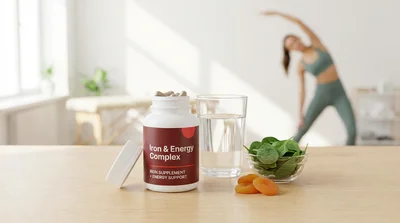
As a fitness trainer I see clients who feel flat in the afternoon, struggle to recover between sessions, or assume they need more caffeine when the real gap is often B vitamins. The B vitamins are a group of eight water-soluble vitamins that play essential roles in metabolism, energy production, and nervous system function. They include B1 (thiamine), B2 (riboflavin), B3 (niacin), B5 (pantothenic acid), B6 (pyridoxine), B7 (biotin), B9 (folate), and B12 (cobalamin). They work together to help your body convert food into usable energy and support red blood cell formation and nerve health. Without adequate B vitamins you may feel tired or run down even if you eat enough calories.
This guide covers how B vitamins support energy, who is at risk of deficiency, how to get enough from food and when to consider a B-complex supplement, plus practical dosing and timing for active adults. You can also browse B vitamins and multivitamins for general support.
What Are B Vitamins?
B vitamins act as coenzymes in the pathways that turn carbohydrates, fats, and proteins into ATP, the energy currency of your cells. Thiamine, riboflavin, niacin, pantothenic acid, and biotin are especially involved in these metabolic steps. B12 and folate are needed for healthy red blood cell formation and DNA synthesis; low levels can lead to anemia, which causes fatigue and weakness. B6 supports protein metabolism and neurotransmitter production, so it matters for both physical recovery and mood. Biotin and folate are important for skin, hair, and cell turnover. Because they are water-soluble, excess is excreted and stores can run down quickly if intake is low or absorption is impaired.
Energy and Metabolism
Converting Food to Energy
B vitamins are coenzymes in the process that turns carbohydrates, fats, and proteins into ATP. A deficiency in one or more B vitamins can slow energy production and contribute to fatigue. Correcting deficiency often improves energy and well-being; in people with adequate intake, extra B vitamins usually do not boost energy further but can still help fill dietary gaps and support high training loads.
Red Blood Cells and Oxygen
B12 and folate are needed for healthy red blood cell formation. Anemia from B12 or folate deficiency is a common and treatable cause of tiredness. A blood test can confirm deficiency so that the right form and dose of supplementation can be chosen.
Who Might Need More?
Vegans and older adults are at higher risk of B12 deficiency because B12 is mainly in animal products and absorption can decline with age. People with digestive conditions (e.g. celiac, Crohn, atrophic gastritis) or on metformin or proton pump inhibitors long-term may also need extra B vitamins. Pregnancy and breastfeeding increase needs for folate and B12. Athletes and very active people who restrict calories or eat a limited variety of foods may have marginal intakes. If you are often tired, have a restricted diet, or are over 50, discussing B vitamin status with your doctor or a dietitian can be useful.
Food Sources and Supplements
Whole grains, eggs, meat, fish, legumes, leafy greens, and fortified cereals provide B vitamins. B-complex supplements contain multiple B vitamins and can help fill gaps. Take with food to support absorption and reduce stomach upset. B12 is the most common deficiency in Western diets among vegans and older adults; sublingual or oral B12 at sufficient dose can correct deficiency even when absorption is reduced. For folate, folic acid or 5-MTHF are common supplemental forms; women who are pregnant or planning pregnancy should get adequate folate (often as folic acid) for fetal development. When choosing a supplement, look for a balanced B-complex that includes B12 and folate at sensible doses rather than megadoses of one or two.
Dosing and Timing for Active Adults
Most B-complex products provide 100–300% of the Daily Value per serving. There is no need to exceed that for general energy support; more is not better and very high doses of single B vitamins (e.g. niacin, B6) can cause side effects. Take your B-complex with a meal that contains some fat to improve absorption of the whole group. Morning or with your largest meal is a simple rule. If you take other supplements, avoid taking high-dose calcium or iron at the same time as B vitamins, as they can interfere with absorption; space them by at least two hours if possible.
B Vitamins and Training
B vitamins do not act like stimulants; they support the pathways that turn food into energy and help maintain red blood cell mass. So they are foundational rather than a quick fix. If you are deficient, correcting that can improve endurance, recovery, and overall energy. If you are already replete, a B-complex may still help cover gaps when calorie intake is variable or food variety is limited. Pair adequate B intake with sufficient calories, protein, and sleep for the best results.
Signs You Might Be Low
Unexplained fatigue, especially with a restricted diet or after 50; tingling or numbness in hands or feet (possible B12); pale skin, breathlessness on exertion (possible anemia from B12/folate); mouth ulcers or cracked corners (possible B2 or B complex). These are not diagnostic by themselves; a blood test for B12, folate, and sometimes a full blood count can confirm deficiency and guide supplementation.
Practical Tips
- B12: If you are vegan or over 50, consider a B12 supplement or fortified foods; 500–1000 mcg daily is often used for maintenance.
- Folate: Women who are pregnant or planning pregnancy need adequate folate (400–800 mcg folic acid or equivalent) for fetal development.
- Balance: Megadoses of single B vitamins are rarely needed; a balanced B-complex is usually sufficient for general support.
- Test when unsure: Fatigue has many causes; confirm B12 or folate deficiency before relying on supplements alone.
- Timing: Take B-complex with food; avoid taking with large doses of calcium or iron at the same time.
B Vitamins, Sleep and Stress
B6 is involved in the production of serotonin and melatonin, so adequate B6 may support mood and sleep quality. B12 and folate are important for nerve function and have been studied in the context of mood; deficiency can contribute to low energy and sometimes low mood. Stress and heavy training increase metabolic demand; a balanced diet and a B-complex can help cover increased needs without megadoses.
Interactions With Other Supplements and Medications
Metformin can reduce B12 absorption over time; if you take it long-term, your doctor may suggest periodic B12 checks. Proton pump inhibitors (PPIs) can also reduce B12 absorption. High-dose folate can mask B12 deficiency, so if you supplement folate, ensure adequate B12 intake and consider testing. Taking B-complex with food and separating it from calcium or iron supplements by a couple of hours helps avoid competition for absorption.
Choosing a B-Complex Product
Look for a product that includes all eight B vitamins in reasonable doses (around 100% DV or similar). Standardized forms like methylcobalamin or adenosylcobalamin for B12 and 5-MTHF for folate are well absorbed. Avoid products with unnecessarily high single-B megadoses unless prescribed. A simple B-complex or a multivitamin that contains a full B group is usually enough for general energy and gap-filling.
FAQ
Can B vitamins give you instant energy?
They are not stimulants. If you are deficient, correcting deficiency can improve energy over days to weeks. If you are replete, extra B vitamins will not give a caffeine-like boost but can help maintain metabolic and red blood cell health.
Should I take B vitamins in the morning or evening?
Morning or with your main meal is fine. Some people prefer to avoid B-complex late in the day in case it affects sleep, though evidence for that is weak; taking with breakfast is a safe default.
Do I need a B-complex if I eat a balanced diet?
If your diet is varied and sufficient in calories and you have no absorption issues, you may not need one. Vegans, older adults, and those on restrictive diets or certain medications often benefit from a B-complex or targeted B12/folate.
Simple Weekly Checklist for Energy Support
Include B-rich foods most days: eggs, legumes, leafy greens, whole grains, meat or fish if you eat them, and fortified cereals or nutritional yeast. If you take a B-complex, take it with a meal and keep the dose in the standard range. Track energy and recovery; if fatigue persists despite adequate sleep and calories, consider testing B12 and folate. Adjust training load and recovery as needed; B vitamins support the engine but cannot replace rest.
When to Retest
If you have been supplementing B12 or folate for deficiency, your doctor may suggest a repeat blood test after a few months to confirm repletion. For maintenance, annual or periodic checks can be useful if you are vegan, over 50, or on metformin or PPIs. There is no need to over-test if you are healthy and eating a varied diet; use testing to confirm or correct deficiency rather than to chase numbers.
Common Mistakes When Taking B Vitamins
Taking a B-complex on an empty stomach with high-dose calcium or iron at the same time can reduce absorption of some B vitamins and of the minerals; space them by at least two hours. Relying on B vitamins to fix fatigue without checking for deficiency or without addressing sleep, calories, or overtraining rarely works; test first and fix the basics. Using very high single-B megadoses (e.g. niacin or B6) without a clear indication can cause side effects; stick to a balanced B-complex unless your doctor advises otherwise. Skipping food when you take your B-complex may increase the chance of stomach upset and can reduce absorption of fat-soluble B-related cofactors; take with a meal that contains some fat.
B Vitamins and Alcohol
Heavy or chronic alcohol use can impair absorption and storage of several B vitamins, especially thiamine (B1), folate, and B12. People who drink heavily or have alcohol use disorder are at higher risk of deficiency; thiamine deficiency in that context can have serious neurological consequences and may require medical treatment. If you drink moderately, a balanced diet and a B-complex can help cover gaps; if intake is high or chronic, discuss B vitamin status and possibly testing with your doctor. Reducing alcohol and ensuring adequate B intake often improves energy and well-being in those cases.
Long-Term Use and Cycling
B vitamins are water-soluble and do not accumulate in the body like fat-soluble vitamins; excess is excreted. There is no strong evidence that you need to cycle off a standard-dose B-complex if you are using it for general support or to fill dietary gaps. If you were deficient and have been repleted, your doctor may suggest continuing a maintenance dose or getting enough from diet and a multivitamin. Cycling (e.g. a few months on, a month off) is optional and not evidence-based for most people; consistency with a sensible dose is usually more important.
B Vitamins and Vegetarian or Vegan Diets
Vegetarian and especially vegan diets are often low or absent in B12, which is found in meaningful amounts mainly in animal products. Fortified foods (plant milks, nutritional yeast, some cereals) can contribute but are often insufficient for strict vegans; a B12 supplement or a B-complex that includes adequate B12 is usually recommended. Folate is plentiful in many plant foods (leafy greens, legumes), but B12 is not, so focus on B12 first. If you are vegan or vegetarian and feel tired or have been vegan for years without supplementing B12, get your B12 and folate checked and start supplementation if deficient; many people feel a clear improvement in energy and well-being after correction. A simple rule: if you do not eat animal products, plan on a reliable B12 source (supplement or fortified foods) and consider a blood check every year or two.
Summary
B vitamins are fundamental to energy and vitality. They support metabolism, red blood cell formation, and nerve function. Address deficiencies first with testing and targeted supplementation if needed; then maintain intake with a varied diet and a quality B-complex or multivitamin as needed. For active adults, ensuring adequate B intake is part of the foundation that supports training, recovery, and daily energy.