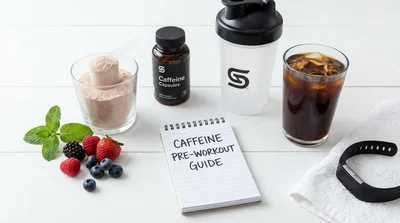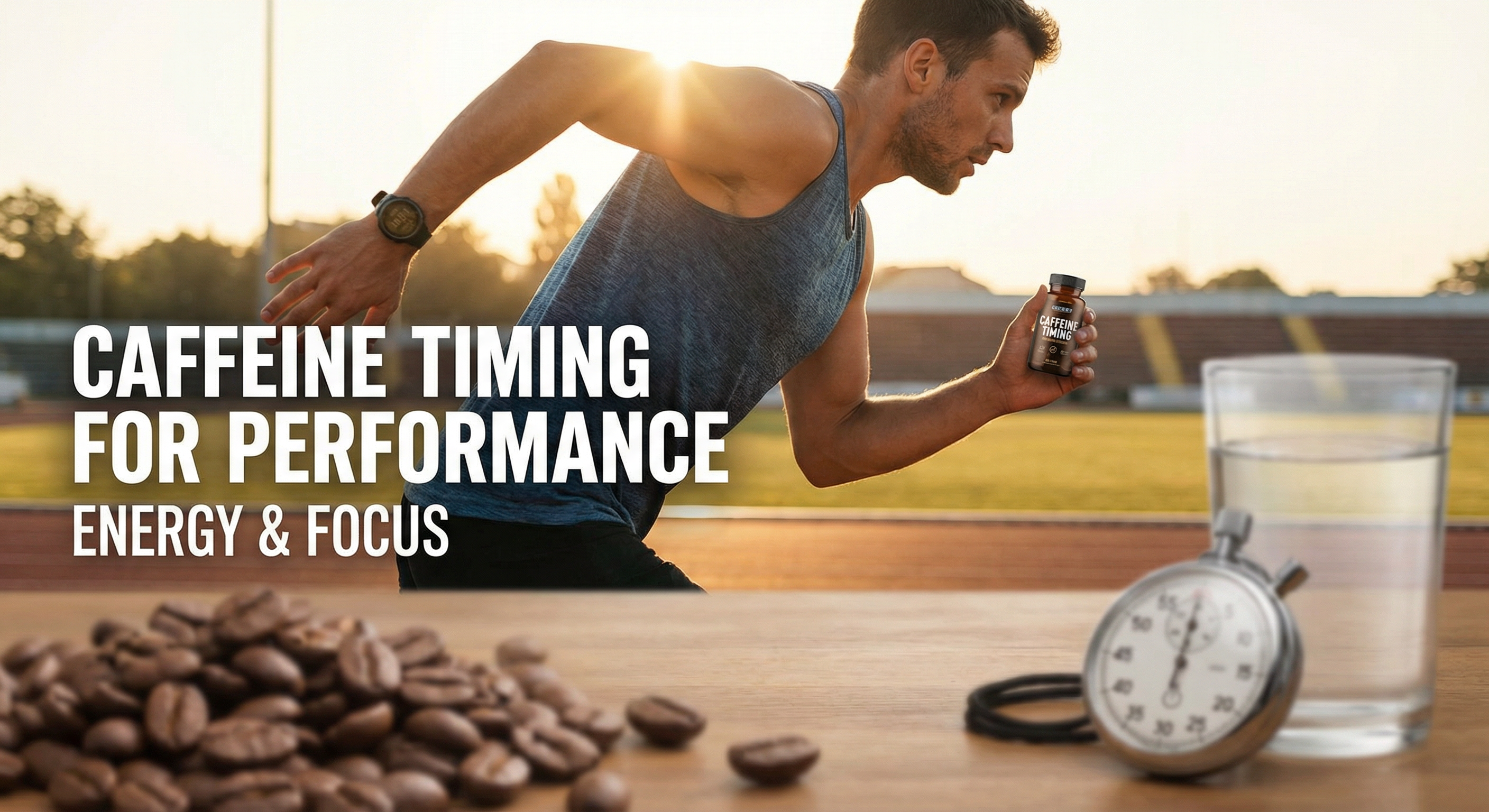
Caffeine is one of the most researched ergogenic aids. It can improve focus, endurance, and perceived effort when taken at the right time and dose. As a fitness trainer, I help athletes and lifters get the timing and dosage right so they see the benefits without jitters or sleep disruption. This guide covers when and how much to take for training and competition, how to manage tolerance, and how to pair caffeine with sleep and nutrition. For product options, browse caffeine and pre-workout on iHerb.
Why caffeine timing matters
Peak blood levels typically occur 30–90 minutes after consumption. Many athletes take caffeine 45–60 minutes before training or competition to align the peak with their session. Taking it too early or too late can mean missing the window when it would help most. Individual response varies: some people are fast metabolizers, others slow. Genetics, habitual use, and body weight all affect how you feel and perform. Start with a moderate dose and adjust timing based on your own experience and goals.
Effective doses for performance
Research suggests 3–6 mg per kilogram of body weight for performance benefits. For a 70 kg person, that is about 210–420 mg (roughly two to four cups of coffee). Lower doses (1–2 mg/kg) can still improve alertness and focus. More is not always better; very high doses can cause jitters, stomach upset, or sleep disruption. If you do not usually consume caffeine, start at the lower end. If you are habituated, you may need a bit more for the same effect, but avoid escalating indefinitely. Cycle or reduce intake periodically to maintain sensitivity.
Pre-workout and competition timing
For most people, 45–60 minutes before exercise is a good default. Capsules and chews often hit faster than coffee because of gastric emptying. For long events (e.g. marathons, ultras), some athletes take a first dose before the start and a smaller top-up later to extend the benefit. Practice in training so you know how you respond and avoid stomach or anxiety issues on race day. Do not use caffeine too late in the day if you train in the evening; half-life is about 3–7 hours and can interfere with sleep. Morning or midday training gives more flexibility.
Sleep and tolerance
Regular high intake can blunt the performance and alertness effects and disrupt sleep. Consider limiting caffeine to key sessions or competition, or use it only when you need a boost. A caffeine holiday (reducing or stopping for a few days to a week) can restore sensitivity. Prioritize sleep; no amount of caffeine replaces rest. If you have anxiety, heart conditions, or are pregnant, check with your doctor before using caffeine for performance. It is not essential—it is an optional tool when used responsibly.
Forms and practical tips
Coffee, anhydrous caffeine capsules, or pre-workout blends can all work. Capsules give more predictable timing. Spread total daily caffeine so you do not exceed safe limits (e.g. 400 mg for most adults unless advised otherwise). Pair with good hydration and nutrition. Compare caffeine and pre-workout options on iHerb to find forms and flavours that suit you.
Individual differences
Some people feel a strong effect from 100 mg; others need 200–300 mg. Fast metabolizers may peak sooner and clear caffeine faster; slow metabolizers may feel effects longer and need to avoid late-day use. If you are sensitive, stick to the lower end of the dose range and time it so the half-life does not overlap with bedtime. Log your dose, timing, and how you feel (focus, stomach, sleep) so you can refine over time. Body weight matters for the per-kilogram recommendation: a 55 kg athlete might use 165–330 mg (3–6 mg/kg), while a 90 kg athlete might use 270–540 mg; both should stay under safe daily limits.
What the research shows
Meta-analyses and position statements from sports nutrition bodies support caffeine for endurance performance (time to exhaustion, time trial performance) with doses in the 3–6 mg/kg range. For strength and power, results are less consistent: some studies show small improvements in repeated efforts or session volume, others show no significant effect. The cognitive and focus benefits are well documented and apply across activities. Caffeine does not replace training, sleep, or nutrition; it is a tool to use when those basics are in place.
Who should be cautious
People with anxiety disorders, arrhythmias, uncontrolled hypertension, or a history of caffeine-induced sleep problems should discuss use with a doctor. Pregnant and breastfeeding women are often advised to limit or avoid caffeine. Adolescents should use lower doses and avoid heavy reliance. If you take medications that affect the heart, blood pressure, or sleep, check for interactions. When in doubt, start low, use it only for important sessions, and prioritise sleep and recovery.
Competition day
Do nothing new on race day. Use the same dose, form, and timing you have practised in training. If you travel, bring your usual product or know where to get the same dose (e.g. same coffee order). Avoid stacking multiple caffeine sources (e.g. pre-workout plus energy drink plus coffee) without counting total milligrams. Stay within your known effective and safe range. Hydrate well; caffeine can have a mild diuretic effect. If you have a multi-hour event, a small top-up (e.g. half your initial dose) partway through may extend benefit—but only if you have tried it in training first.
Combining with carbs and other supplements
For endurance events, caffeine plus carbohydrates can support both mental focus and glycogen sparing or utilisation. Many athletes take caffeine with a pre-race meal or gel. For resistance training, caffeine alone is usually sufficient; adding creatine is evidence-based for strength and power, and the two do not conflict. Just avoid piling on every stimulant: check pre-workout labels so your total caffeine from all sources stays within your target and safe limit.
FAQ
When is the best time to take caffeine before a workout?
For most people, 45–60 minutes before. Capsules may work in 30–45 minutes; coffee sometimes a bit earlier. Test in training.
Can I take caffeine every day?
You can, but tolerance may build. Many athletes use it for key sessions only or cycle to keep it effective.
Does caffeine improve strength or only endurance?
Evidence is stronger for endurance. For strength and power, effects are mixed; many still report better focus and session quality.
Key takeaways
- Time caffeine 45–60 minutes before training or competition for most people.
- Dose: 3–6 mg/kg for performance; 1–2 mg/kg can aid focus.
- Avoid late-day caffeine if sleep is a priority; manage tolerance with breaks.
- Practice in training and respect individual response and health conditions.
- On race day, stick to what you have practised; do not stack sources without counting total caffeine.