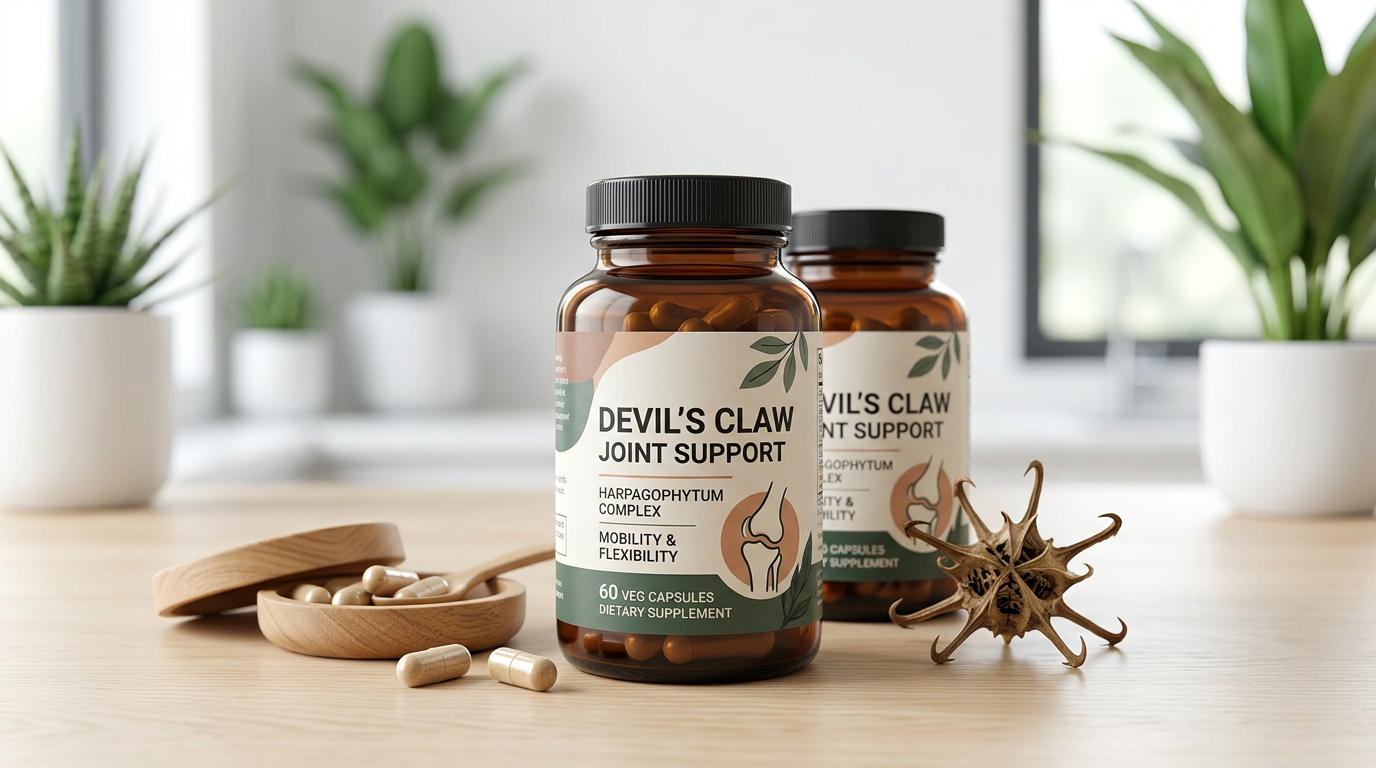
Devil's claw (Harpagophytum procumbens) is a traditional herbal remedy from southern Africa, used for joint discomfort, digestive support, and general inflammation. The name comes from the hooked fruit. Today it is best known in the West for joint and back comfort. This guide covers what the evidence shows, how to dose it safely, and how to choose a quality product. For herbal and joint support options you can browse joint support and herbs on iHerb.
What devil's claw is and how it may work
Devil's claw is a perennial plant; the secondary tuber (root) is used medicinally. It contains iridoid glycosides, including harpagoside, which are thought to contribute to its anti-inflammatory and analgesic effects. Laboratory and some human studies suggest it may reduce inflammatory markers and ease joint discomfort, though results vary by extract, dose, and population. It is not a replacement for medical diagnosis or treatment of arthritis or other conditions, but it can be a useful complementary option when used appropriately.
Evidence for joint and back comfort
Several clinical trials have examined devil's claw for osteoarthritis and non-specific low back pain. Meta-analyses and reviews suggest that standardized extracts may improve pain and mobility in some people with osteoarthritis of the knee or hip, and may reduce low back pain compared with placebo. Effects are often modest and not everyone responds. Study quality varies; many trials use specific extracts (e.g. standardized to harpagoside) at particular doses. Duration of use in trials often ranges from 4 to 12 weeks. Devil's claw is not a cure for arthritis but may support comfort and function as part of a broader plan that includes exercise, weight management, and medical care when needed.
In European herbal medicine, devil's claw is often recommended for degenerative joint conditions and soft-tissue discomfort. The Commission E and ESCOP monographs support its use for supportive treatment of degenerative musculoskeletal disorders and loss of appetite. Clinical outcomes typically focus on pain scores, mobility, and use of rescue medication. As with many herbal interventions, consistency of use and quality of the product matter as much as the dose. If you have been diagnosed with rheumatoid arthritis, gout, or another inflammatory condition, do not self-treat with devil's claw instead of prescribed therapy; use it only as a complement after discussion with your doctor.
Mechanism and active constituents
The secondary roots of Harpagophytum procumbens contain iridoid glycosides, with harpagoside being the most studied. These compounds are thought to exert anti-inflammatory effects through modulation of inflammatory pathways, including COX-2 and cytokines. Some laboratory studies also suggest chondroprotective and antioxidant activity. Bioavailability of harpagoside and related compounds can vary with the form of the extract (dry extract, liquid, or raw powder) and whether it is taken with food. Standardization to a minimum harpagoside content helps ensure that each dose delivers a consistent amount of the marker compound, which is why many clinicians and herbalists prefer standardized extracts over unstandardized preparations when aiming for evidence-based dosing.
Dosing and timing
Dosing depends on the product. Many studies use extracts standardized to harpagoside (e.g. 50–60 mg harpagoside per day) or total daily doses of dried extract in the range of 1.5–2.5 g. Follow the label on the product you choose; start at the lower end and give it at least 4–8 weeks before judging effect. Taking devil's claw with food may reduce the chance of digestive upset. Do not exceed recommended doses; higher doses have not been shown to be more effective and may increase the risk of side effects. If you take other medications or have health conditions, discuss use with your doctor or pharmacist.
Safety and who should be cautious
Devil's claw is generally well tolerated in recommended doses, but it can cause digestive upset (e.g. stomach discomfort, diarrhea) in some people. It may stimulate stomach acid; avoid it or use with caution if you have gastric or duodenal ulcers. It may interact with blood-thinning medications, diabetes drugs, or heart medications; if you take any of these, get professional advice before use. Do not use during pregnancy or breastfeeding due to lack of safety data. Avoid in people with gallstones unless under medical supervision, as it may stimulate bile secretion. Stop use before surgery and inform your surgeon. If you experience any unusual symptoms, discontinue and consult a healthcare provider.
Choosing a quality product
Look for extracts standardized to harpagoside or with a stated content of active constituents; this helps consistency. Prefer brands that undergo third-party testing for identity and purity. Avoid products with unclear labeling or exaggerated claims. Devil's claw is available as capsules, tablets, liquid extracts, and teas; choose a form that fits your routine and follow the dosing on the label. Store in a cool, dry place and check the expiry date.
Combining with lifestyle and other supplements
Devil's claw works best as part of a broader approach: regular movement, weight management if relevant, and physical therapy or exercise as recommended. Some people combine it with other joint-support supplements (e.g. glucosamine, chondroitin, or turmeric), but introduce one change at a time so you can tell what helps. Do not use devil's claw instead of prescribed medications unless your doctor agrees. If pain is severe, worsening, or accompanied by swelling, redness, or fever, seek medical evaluation.
Practical steps that support joint health alongside devil's claw include low-impact exercise (swimming, cycling, walking), stretching, and avoiding prolonged static postures. If you are overweight, gradual weight loss can reduce load on weight-bearing joints. Heat or cold applications and ergonomic adjustments at work or home often help. A diet rich in anti-inflammatory foods (vegetables, fruit, omega-3 fats) and adequate protein supports muscle and connective tissue. Supplements are one piece of the puzzle; consistency in both lifestyle and supplement use usually gives the best results over 4–12 weeks.
Devil's claw vs other joint herbs
People sometimes ask how devil's claw compares to other herbs used for joint comfort. Turmeric (curcumin) has broader anti-inflammatory research but different mechanisms; some people use both, though again it is wise to add one intervention at a time. Boswellia (frankincense) is another herb with clinical data for joint and inflammatory conditions. White willow bark contains salicin, which is related to aspirin and has analgesic and anti-inflammatory effects; it carries more caution regarding bleeding and stomach irritation. Devil's claw is often chosen for its relatively favorable safety profile and specific tradition in musculoskeletal support. If you are already taking one herb and consider adding another, check for interactions and discuss with a knowledgeable provider.
When to see a doctor
Do not rely on devil's claw or any supplement alone if you have new or severe joint pain, joint swelling or redness, fever, unexplained weight loss, or pain that wakes you at night. These can signal infection, autoimmune disease, or other serious conditions that need diagnosis and medical treatment. If you have been diagnosed with osteoarthritis or chronic low back pain and want to add devil's claw to your plan, mention it at your next visit so your doctor can check for drug interactions and ensure it fits your overall care.
Summary and key takeaways
Devil's claw is a traditional herb with some evidence for joint and low-back comfort when used in standardized extracts at studied doses. Effects are often modest and individual. Use a quality product, follow dosing, allow 4–8 weeks for assessment, and combine with lifestyle measures and medical advice when needed. Be cautious if you have stomach ulcers, take blood thinners or diabetes/heart medications, or are pregnant or breastfeeding. For personalized advice, consult a healthcare provider or a qualified herbalist.
- Standardized extracts (e.g. 50–60 mg harpagoside/day or 1.5–2.5 g dry extract) are best supported by trials.
- Allow 4–12 weeks of consistent use before judging effect; combine with exercise and weight management when relevant.
- Avoid or use with caution in ulcers, gallstones, pregnancy, breastfeeding, and with blood thinners or diabetes/heart drugs.
- Choose products with clear standardization and third-party testing; store properly and respect expiry dates.
FAQ
How long until I notice an effect?
Many trials run 4–12 weeks. Give the product a consistent trial before switching; some people notice benefit within a few weeks.
Can I take devil's claw with NSAIDs?
Combining with NSAIDs may increase the risk of bleeding or digestive effects. Discuss with your doctor before combining.
Is devil's claw safe long-term?
Short-term use (months) is better studied. If you use it long-term, periodic review with a healthcare provider is sensible.