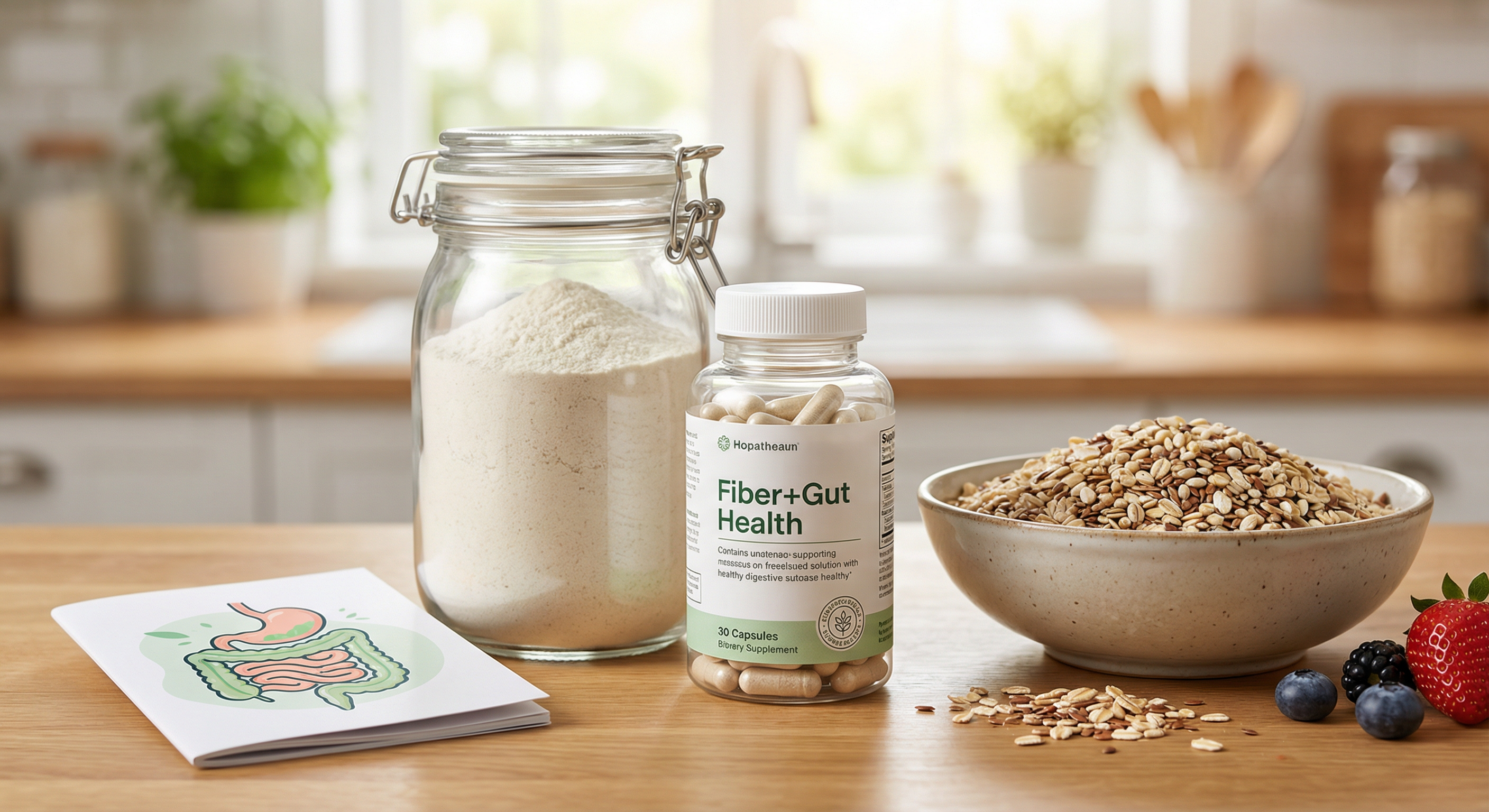
Why Fibre Matters for Gut Health
Dietary fibre supports digestion, regular bowel movements, and a healthy gut microbiome. Adults typically need about 25–35 g of fibre per day; many people get less, which can contribute to constipation, irregularity, or dysbiosis. Fibre comes in soluble form (dissolves in water, can help soften stool and feed beneficial bacteria) and insoluble form (adds bulk, supports motility). Whole grains, fruits, vegetables, legumes, nuts, and seeds are the best food sources. When diet falls short, fibre supplements can help—but they are not a substitute for a varied, fibre-rich diet. As a registered dietitian or CNS, I recommend improving food choices first and using supplements to fill gaps or manage specific symptoms under guidance.
Types of Fibre Supplements
Psyllium husk: Soluble fibre that forms a gel; often used for constipation and to support regularity. Start low (e.g. half a dose) and increase gradually with plenty of water to avoid bloating. Inulin and FOS (fructooligosaccharides): Prebiotic fibres that feed gut bacteria; may cause gas or bloating if increased too quickly. Methylcellulose / wheat dextrin: Gentle options that add bulk with minimal fermentation. Partially hydrolysed guar gum (PHGG): Well tolerated, low fermentability; sometimes used in IBS. Glucomannan: Soluble fibre that expands with water; take with fluid and avoid if you have swallowing difficulties. Choose a type that fits your goal (regularity, prebiotic effect, or low fermentability) and tolerance. Compare fibre supplements on iHerb for quality options.
When Fibre Supplements May Help
They can be useful when you cannot meet fibre needs through food (e.g. low appetite, restricted diet, travel), when you need extra support for constipation (along with fluid and movement), or when a clinician suggests a prebiotic for gut microbiome support. They are not a cure for underlying conditions; if you have persistent symptoms, blood in stool, or sudden changes in bowel habits, see a doctor. Increase intake slowly and drink adequate water to reduce gas and bloating.
How to Use Them Safely
Start with a small amount (e.g. half the recommended dose) and increase over one to two weeks. Take with a full glass of water and stay well hydrated throughout the day. Do not take fibre supplements at the same time as some medications (e.g. certain antidepressants, thyroid meds)—space by at least two hours unless your doctor says otherwise. If you have IBS, SIBO, or other gut conditions, work with a dietitian to choose a type and dose that minimises symptoms. People with strictures, swallowing problems, or recent abdominal surgery should use fibre supplements only with medical clearance.
Psyllium: benefits and caution
Psyllium is a soluble fibre that forms a gel and is widely used for constipation and regularity. Evidence supports its role in lowering LDL cholesterol when taken regularly. Start with half the recommended dose and increase over one to two weeks. Always take with a full glass of water; inadequate fluid can lead to obstruction or discomfort. Do not use psyllium in the presence of strictures or bowel obstruction without medical advice.
Inulin and prebiotics
Inulin and fructooligosaccharides (FOS) are prebiotic fibres that feed beneficial gut bacteria. They may support microbiome diversity but often cause gas and bloating if the dose is increased too quickly. Introduce them gradually; if you have SIBO or bacterial overgrowth, discuss the type of fibre with your doctor or dietitian. Some people with IBS tolerate low-fermentability options (e.g. PHGG) better than inulin.
Food First, Then Supplements
Prioritise whole foods: oats, barley, beans, lentils, vegetables, fruits, nuts, and seeds. Build up gradually to avoid discomfort. Supplements are a tool to top up when needed—not a replacement for a balanced diet. Combining food-based fibre with a supplement, if appropriate, can help you reach your daily target while keeping the gut microbiome diverse. For gut support, probiotics are often used alongside fibre when indicated.
When to see a doctor
Do not rely on supplements alone for persistent constipation, blood in stool, sudden change in bowel habits, pain, or weight loss. A clinician can rule out structural or functional disease and refer you to a dietitian for an individualised diet and supplement plan if needed.
Evidence and Practical Tips
Research supports the role of fibre for digestive and metabolic health. Quality and type of supplement matter; individual tolerance varies. Start low, increase slowly, and prioritise fluids. Supplements do not replace a varied diet or medical care for persistent gut symptoms.
Summary
- Fibre supports digestion, regularity, and the microbiome; prioritise food, then supplements.
- Psyllium, inulin, PHGG, glucomannan serve different goals; choose type and dose to fit you.
- Increase dose gradually and drink enough fluid to reduce gas and discomfort.
- If you take medications or have gut conditions, coordinate supplements with your doctor.