
Intense training can affect gut barrier function, immune response, and digestive comfort. Some probiotic strains may support recovery, reduce upper-respiratory illness, and help maintain gut comfort during heavy training blocks. As a registered dietitian working with athletes, I see growing interest in probiotics for performance and resilience—but the evidence is strain-specific and outcomes vary. This guide summarises how training impacts the gut and immunity, what the research shows for athletes, which strains and doses are best studied, dosing and timing, food versus supplements, safety, and practical takeaways. Probiotics are one tool within a broader plan that includes load management, sleep, and nutrition—not a substitute for them. The information below is for educational purposes and does not replace advice from your doctor or dietitian.
How Training Affects the Gut and Immunity
Exercise and training load have complex effects on the gut and immune system. During intense or prolonged exercise, blood flow is redirected to working muscles and away from the gut; this can compromise gut barrier function and increase intestinal permeability in some athletes. The result may be bloating, cramping, nausea, or loose stools during or after hard sessions—often called "exercise-induced gastrointestinal syndrome." The risk is higher with very long or high-intensity efforts, heat stress, and dehydration. Endurance athletes and those doing long sessions in the heat are especially familiar with these symptoms; managing intensity, fuelling, and hydration can help, but gut support remains a concern for many.
At the same time, heavy training can temporarily suppress certain aspects of immune function, especially in the hours after a hard session, which may increase susceptibility to upper respiratory tract infections (URTIs). This "open window" is well described in sports science: it does not mean every athlete gets sick, but the risk is elevated when load is high and recovery is inadequate. Marathon and ultra runners, team-sport athletes in competitive phases, and anyone stacking high volume with insufficient sleep or poor nutrition are at greater risk. Upper respiratory symptoms can disrupt training and competition; reducing their incidence or severity is a common goal for athletes and their support teams.
Gut microbiota composition can also shift with training. Some studies report differences in bacterial diversity or specific taxa between athletes and sedentary controls, and between high-load and recovery phases. The direction and meaning of these changes are still being clarified; what is clear is that gut health and immune resilience matter for athletes who want to train consistently and avoid missed days. Supporting the gut barrier and immune function through evidence-based strategies—including sleep, nutrition, hydration, and, where appropriate, probiotics—can be part of a sensible approach. Probiotics are not a replacement for periodisation, recovery, or medical care when needed.

Evidence on Probiotic Strains in Athletes
Probiotic effects are strain-specific: the species and strain designation matter. You cannot assume that results from one strain apply to another; when reading research or choosing a product, look for the full strain name (genus, species, and strain identifier). In athletic populations, several strains and multi-strain blends have been studied for outcomes such as URTI incidence, GI tolerance, recovery, and markers of immune or gut function.
Lactobacillus casei (often as L. casei Shirota or similar strains) has been used in trials with athletes and active adults. Some studies report fewer days of upper respiratory illness or reduced incidence of URTI when the strain is taken consistently over weeks. Results are not uniform across all trials; study design, dose, duration, and population differ. Mechanistically, benefits may relate to gut barrier support, modulation of immune markers, or competition with pathogens; the exact pathways are still under investigation. Lactobacillus rhamnosus GG (LGG) is one of the most studied probiotics overall and has been evaluated in athletes for immune and digestive outcomes. Meta-analyses in mixed populations suggest modest benefits for URTI; in athletes, individual trials have shown mixed results, with some indicating fewer sick days or milder symptoms when LGG is used during heavy training. Bifidobacterium species (e.g. B. lactis, B. longum) are often included in multi-strain products and have been studied for gut barrier and immune support; they may complement Lactobacillus strains in formulations aimed at athletes.
Multi-strain products are common in sports nutrition. Blends containing Lactobacillus and Bifidobacterium species (e.g. L. acidophilus, L. casei, B. bifidum, B. lactis) have been studied in athletes for GI tolerance, immune markers, and recovery. Benefits in trials may include reduced GI symptoms during high load, fewer URTI episodes, or modest improvements in recovery or inflammation markers. Again, outcomes vary by study; the takeaway is that multi-strain formulations with evidence in active populations are a reasonable choice when the product states the strains and CFU clearly. Avoid products that do not list full strain names or that use vague "proprietary blend" labelling without strain-level information. Systematic reviews in general populations suggest that multi-strain products may sometimes show larger effects than single-strain products for outcomes like URTI; in athletes, the evidence is still building, but choosing a well-labelled multi-strain product with strains that have been studied in active or stressed populations is a practical approach.
Probiotics do not directly increase strength or endurance; any benefit for performance is likely indirect—for example, fewer missed training days due to illness or gut issues, or better tolerance of heavy training blocks. Individual response varies; consistency and giving a product several weeks of use are important before judging effect. Some athletes report less bloating or gut upset during heavy training when using certain strains; if you travel frequently or have a history of gut or respiratory issues during high load, a targeted probiotic may be worth trying as part of a broader plan that includes sleep, nutrition, and load management.
Dosing and Timing
Typical doses in studies range from about 1 billion to 10 billion CFU (colony-forming units) per day, with some trials using higher amounts. Follow the product label; more CFU is not always better, and strain-specific evidence should guide dose. Athletes who respond well to a given strain typically use the same dose consistently rather than increasing it arbitrarily. Taking probiotics with or just after a meal may improve survival through stomach acid; many athletes take them with breakfast or another meal for consistency. There is no strong evidence that a specific time of day (morning vs evening) is superior; what matters is taking the product at roughly the same time each day so it becomes part of your routine. If you use other supplements (e.g. protein, creatine), taking the probiotic with a meal that already contains other supplements is fine; just avoid mixing probiotic powders into very hot liquids, which can reduce viability.
Duration matters: benefits in immune and gut studies often appear after several weeks of daily use. During competition or heavy training blocks, starting probiotics well in advance (e.g. four to six weeks before) is a common approach based on the timing used in research. There is no need to cycle on and off unless the product label suggests it; many athletes use probiotics continuously during demanding phases. If you are on antibiotics, space probiotic doses by a few hours from the antibiotic to improve bacterial survival; some athletes continue the probiotic for a week or two after the antibiotic course, although protocols vary—your doctor or pharmacist can advise. Choose products that guarantee CFU at expiry (or through the use-by date), not only at manufacture; refrigerated formulas may be required for some strains—follow storage instructions. When travelling, shelf-stable (room-temperature) products are convenient; keep them in a cool, dry place and check the use-by date.
Food vs Supplements
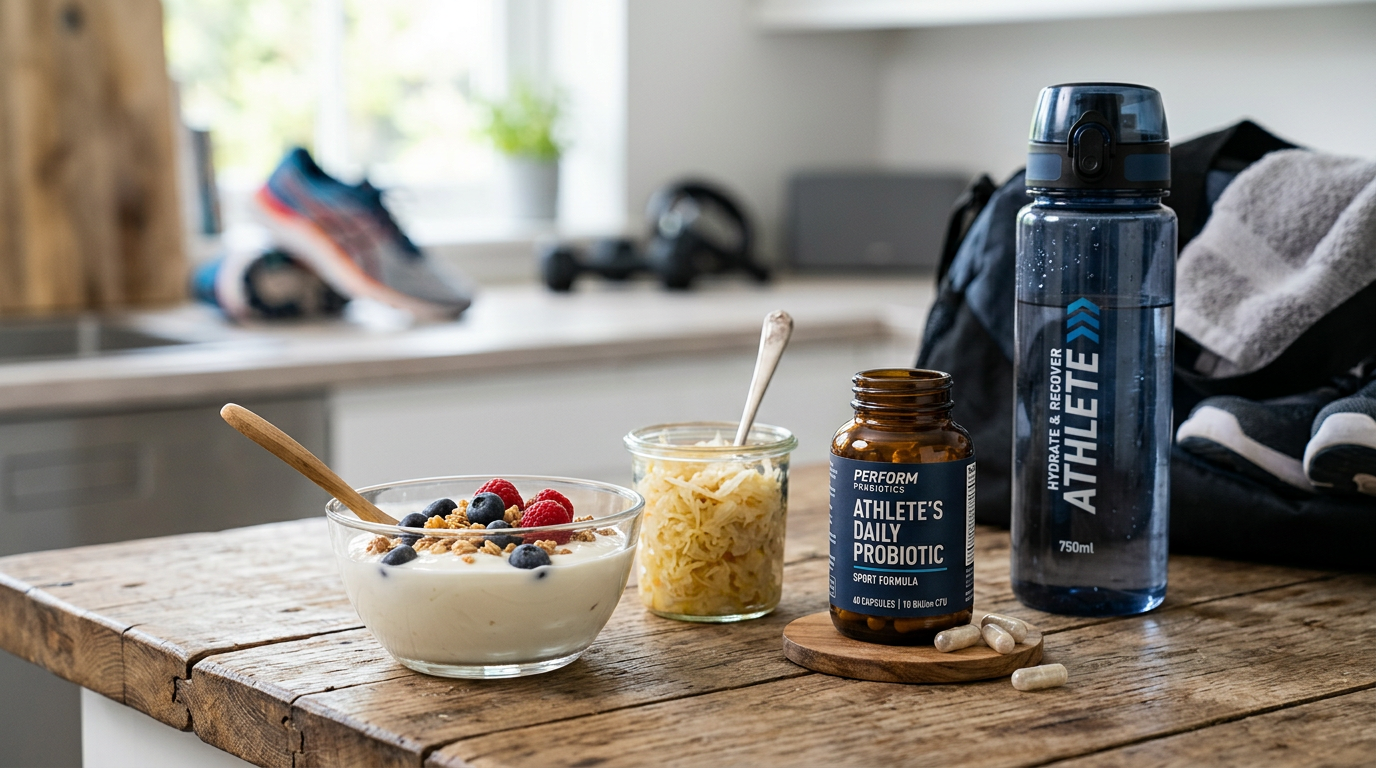
Fermented foods—yoghurt, kefir, kimchi, sauerkraut, miso, tempeh—contain live bacteria and can support dietary diversity and gut health. They rarely specify strain or CFU, so their effect is less predictable than a standardised supplement. For athletes who want to match research in active populations, a supplement with defined strains and doses is the reliable option. A combined approach is reasonable: eat a variety of fibre-rich and fermented foods and, if you choose, add a probiotic supplement that targets your goal (e.g. immune support, GI tolerance). Yoghurt and kefir are practical options for athletes who tolerate dairy; for those who avoid dairy, fermented plant-based foods or a supplement are alternatives. The key is consistency: whether from food or supplements, regular intake over weeks is more important than a single large dose.
Fibre from vegetables, fruits, legumes, and whole grains acts as a prebiotic and feeds beneficial gut bacteria; a diet rich in fibre supports the microbiome whether or not you take a probiotic. Athletes who struggle to meet fibre goals during heavy training or travel may find that a combination of gradual fibre intake and a probiotic helps gut comfort. Probiotics do not replace a balanced diet, adequate sleep, or medical treatment when needed. For product options you can browse probiotics on iHerb; choose products with clear strain names and CFU at expiry.
Combining Probiotics With Training and Diet
Probiotics work alongside a balanced diet and adequate recovery. Prioritise sleep, hydration, and nutrition; use probiotics as an addition if you and your provider decide they may help. During travel or when diet is disrupted, some athletes find probiotics helpful for gut comfort; choose strains with evidence for your concern (e.g. digestive or immune support). Keep a simple log of intake and how you feel if you want to assess effect over time. Do not expect probiotics to compensate for poor periodisation, insufficient recovery, or inadequate fuelling—they are one small piece of the puzzle. Combining them with sensible load management, good sleep, and a diet that supports recovery will give the best chance of benefit.
Safety and When to Be Cautious
Probiotics are generally safe for healthy adults, including athletes. Side effects, when they occur, are often mild and temporary (e.g. gas, bloating) and may decrease with continued use or a lower dose. People with compromised immunity, serious illness, recent surgery, or central venous access should consult a doctor before use—rare cases of infection from probiotics have been reported in such populations. Do not use probiotics to replace medical treatment for infection or gut disease. If you are new to probiotics, starting with a lower dose can help you assess tolerance. Stop use and seek medical advice if you develop severe or persistent diarrhoea, fever, or signs of an allergic reaction. Combine probiotics with sleep, nutrition, hydration, and sensible load management for best results. When in doubt, a brief conversation with your doctor or a registered dietitian can clarify whether probiotics fit your situation. Quality matters: look for products that state the full strain name and CFU at expiry and that have been stored and shipped according to label instructions.
Practical Takeaways
- Training affects gut and immunity: Intense or prolonged exercise can compromise gut barrier function and temporarily increase URTI risk; supporting gut and immune health is part of a broader recovery plan.
- Strain and dose matter: Strains such as Lactobacillus casei and L. rhamnosus GG, and evidence-based multi-strain blends, have been studied in athletes; choose products with full strain names and CFU at expiry.
- Dosing and timing: Typical doses 1–10 billion CFU daily; take with food; allow several weeks of consistent use; space from antibiotics by a few hours.
- Food vs supplements: Fermented foods support diversity; supplements offer defined strains and doses for targeted support in line with research.
- Safety: Generally well tolerated; discuss with a provider if you have immune compromise or serious digestive or immune conditions.
- Combine with fundamentals: Probiotics are one tool alongside sleep, nutrition, hydration, and load management—not a substitute for them.
Probiotics for athletes: choose evidence-based strains, use consistently, and integrate with your overall training and recovery plan. Give any new product at least three to four weeks of consistent use before judging effect; if you see no benefit or experience discomfort, consider a different strain or focus on diet and recovery first. From a registered dietitian perspective, probiotics are a useful tool when matched to your goals and used as part of a plan that prioritises sleep, nutrition, and sensible training load—not a shortcut or a replacement for the fundamentals of athletic performance and health.