Why This Topic Matters
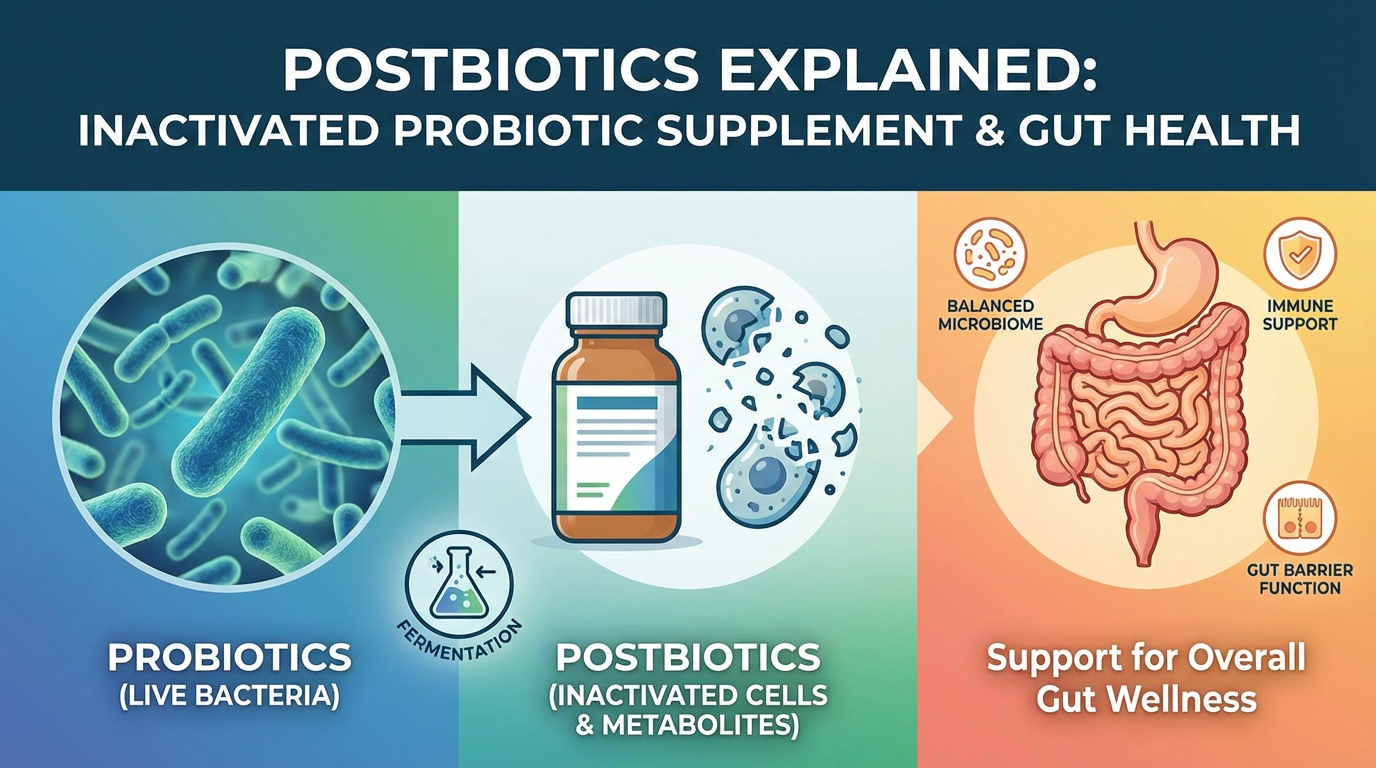
Postbiotics are inactivated microbes or their by-products (e.g., short-chain fatty acids, cell fragments) that may support gut and immune health. They offer an option when live probiotics are not suitable or preferred. As a registered dietitian, I often hear from clients who want gut support but are unsure whether to take live bacteria, who have had inconsistent results with probiotics, or who prefer a stable supplement that does not require refrigeration. Postbiotics address many of these concerns while fitting into an evidence-based approach to digestive and immune wellness. This guide explains what postbiotics are, how they differ from probiotics and prebiotics, what the science suggests about their benefits, and how to use them safely and effectively.
What Are Postbiotics? Definition and Types
The term "postbiotic" was formalized by the International Scientific Association for Probiotics and Prebiotics (ISAPP) in 2021. By definition, a postbiotic is a "preparation of inanimate microorganisms and/or their components that confers a health benefit on the host." In other words, postbiotics are non-living microbial products or dead bacterial cells that still exert beneficial effects. They do not require viable organisms to survive storage, stomach acid, or bile, which simplifies formulation and may improve consistency from batch to batch. That stability also means they can be stored at room temperature in many cases, making them convenient for travel and everyday use.
Common types of postbiotics include:
- Short-chain fatty acids (SCFAs): Butyrate, acetate, and propionate produced when beneficial bacteria ferment fibre in the colon. Butyrate is a primary fuel for colonocytes (the cells lining the colon) and supports gut barrier integrity. Supplemental forms may provide butyrate salts (e.g., sodium or calcium butyrate) to deliver these compounds directly to the gut.
- Cell fragments and lysates: Components of bacterial cell walls (e.g., peptidoglycan, lipoteichoic acid) or whole inactivated cells that can modulate immune signalling. These are sometimes called "paraprobiotics" or "ghost probiotics" in the literature.
- Bacterial metabolites: Vitamins (e.g., B vitamins, vitamin K2), organic acids, and other compounds released during bacterial metabolism. These can support host nutrition and cellular function.
- Spent culture media: The liquid in which bacteria were grown, containing metabolites and soluble factors after the microbes are removed or inactivated. Such preparations may be standardized for specific compounds or used as complex mixtures.
Specific strains may be heat-killed or otherwise inactivated intentionally to create a postbiotic product, while retaining studied benefits. The key point is that the health effect comes from the microbial components or their products, not from live colonization.
Postbiotics vs Probiotics vs Prebiotics
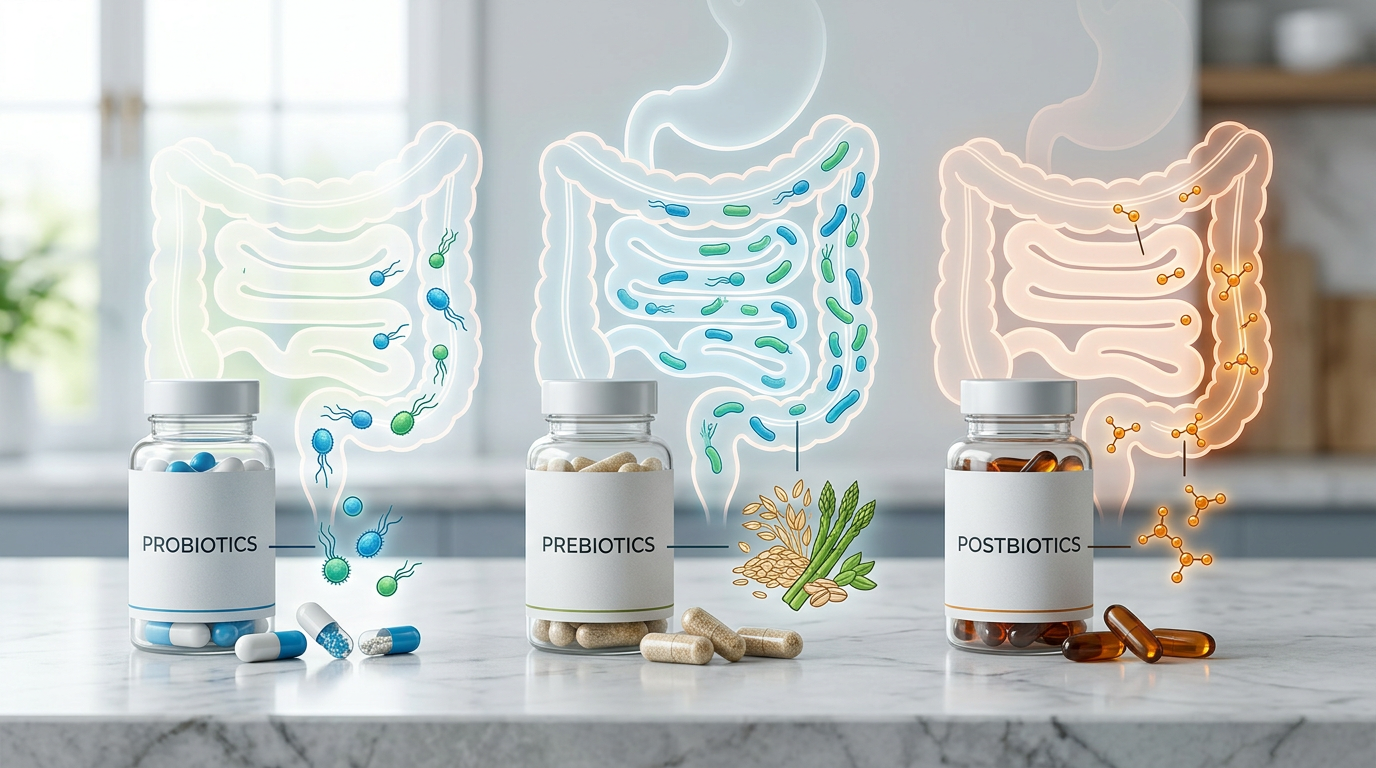
Understanding the difference helps you choose the right support for your goals and clarifies why postbiotics are not simply "dead probiotics" but a distinct category with their own advantages.
Probiotics
Probiotics are live microorganisms that, when administered in adequate amounts, confer a health benefit. They must survive manufacturing, storage, and passage through the stomach and upper intestine to reach the colon in sufficient numbers. Variability in viability (affected by heat, moisture, and time) can affect consistency between batches. Some people prefer to avoid live bacteria due to immune status, past intolerance, or personal preference. Probiotics remain the most studied option for many gut and immune outcomes; the choice between live and inactivated forms depends on individual needs and clinician guidance.
Prebiotics
Prebiotics are substrates (typically fibres or other compounds) that are selectively used by host microorganisms and confer a health benefit. They "feed" beneficial bacteria already present in the gut or taken as probiotics. Examples include inulin, fructooligosaccharides (FOS), galactooligosaccharides (GOS), and resistant starch. When you eat a fibre-rich diet, you are effectively supporting your microbiome to produce more SCFAs and other postbiotic-like compounds. Prebiotics and postbiotics can work together: prebiotics fuel the bacteria, and postbiotics deliver some of the same beneficial compounds (e.g., butyrate) directly.
Postbiotics
Postbiotics are the inactivated microbes or the beneficial by-products of microbial activity. They do not need to be alive to work, so stability is high and refrigeration is often unnecessary. They can be used alone or alongside probiotics and prebiotics as part of a gut-support strategy. For people who want the benefits of microbial support without live organisms, postbiotics offer a practical and increasingly evidence-backed option.
How Postbiotics Work: Mechanisms and Benefits
Research on mechanisms is still evolving, but several pathways help explain why postbiotics may support health. Much of the evidence comes from cell and animal studies, with a growing number of human trials. The following mechanisms are well supported in the literature and align with how dietitians and clinicians think about gut and immune support.
Gut Barrier Function
The intestinal lining acts as a barrier between the gut contents and the rest of the body. When this barrier is compromised (sometimes referred to as increased intestinal permeability), substances that should stay in the lumen can cross into circulation and trigger immune or inflammatory responses. SCFAs, especially butyrate, support the integrity of tight junctions between epithelial cells and promote mucus production. They also provide energy for colonocytes, which helps maintain a healthy lining. Some postbiotic preparations have been shown in studies to enhance barrier function and reduce intestinal permeability, which may support digestive comfort and systemic wellness. A strong gut barrier is foundational for nutrient absorption and for limiting inappropriate immune activation by luminal contents.
Immune Modulation
Postbiotics can interact with immune cells in the gut-associated lymphoid tissue (GALT). Cell wall components (e.g., peptidoglycan) and metabolites may stimulate or regulate immune responses, helping to maintain a balanced reaction to pathogens without excessive inflammation. This modulation is often described as supporting "immune resilience" — the ability to respond appropriately to challenges. Human and animal studies suggest that certain inactivated strains and their components can influence cytokine production and immune cell activity. For example, some heat-killed lactobacilli have been studied for their ability to support respiratory and gut immune function without introducing live organisms. The exact effects depend on the strain and the preparation, which is why choosing a product with evidence for the specific formulation matters.
Anti-Inflammatory Effects
Chronic low-grade inflammation is linked to many conditions. SCFAs and other postbiotic compounds can signal through receptors (e.g., GPR43, GPR109A) on immune and epithelial cells and influence inflammatory pathways. Butyrate, in particular, has been studied for its ability to inhibit NF-κB and other pro-inflammatory signalling, which may support a healthier inflammatory balance in the gut and beyond. By supporting a balanced inflammatory response, postbiotics may contribute to overall wellness in the context of a healthy diet and lifestyle. It is important to note that postbiotics are not a treatment for disease; they are a supportive option that may complement medical care when appropriate.
Who May Benefit from Postbiotics
Postbiotics may be a useful option for a range of people, depending on goals and circumstances. In practice, I recommend them when someone is looking for gut or immune support but has concerns about live probiotics or wants a more stable, convenient option.
- People who prefer non-living formulations: Those who are hesitant to take live bacteria due to personal preference or past intolerance to probiotics often tolerate postbiotics well. The inactivated form removes the concern about viable organisms while still offering microbial-derived benefits.
- Immunocompromised individuals: In some clinical settings, healthcare providers prefer postbiotics over live probiotics to avoid any theoretical risk of colonization or infection by viable organisms. This is a decision that must be made with your doctor; not all immunocompromised patients are advised to avoid probiotics, but when they are, postbiotics can be a discussed alternative.
- Those seeking stability and convenience: Postbiotics generally do not require refrigeration and may have a longer shelf life, making them suitable for travel or inconsistent storage. If you have struggled to keep probiotics refrigerated or have had products lose potency, a stable postbiotic may be more reliable.
- People with digestive sensitivity: Some find that inactivated preparations cause fewer initial digestive symptoms (such as gas or bloating) than high-dose live probiotics. Starting with a lower dose and taking postbiotics with food can further support tolerance.
- Anyone interested in gut and immune support: As part of a balanced diet and lifestyle, postbiotics can complement fibre-rich foods, hydration, and other evidence-based habits. They are not a replacement for a varied diet but can add another layer of support when used appropriately.
If you have a medical condition or take medications, discuss postbiotic use with your healthcare provider or a registered dietitian before starting. They can help you choose a product and dose that fits your needs and ensure there are no conflicts with your care plan.
Food Sources and Supplements
Food Sources
You cannot ingest "postbiotics" as a distinct food category in the same way you take a supplement; however, you can support your gut microbiome so that it produces more SCFAs and beneficial metabolites. Diets rich in fibre (vegetables, fruits, whole grains, legumes) and resistant starch (e.g., cooled cooked potatoes, green bananas) feed beneficial bacteria that produce butyrate and other SCFAs. Fermented foods (yogurt, kefir, sauerkraut, kimchi) contain both live microbes and, in some cases, metabolites that may behave similarly to postbiotic components. Eating a variety of plant-based foods supports microbial diversity and postbiotic production in the colon. From a dietitian's perspective, food-first approaches are the foundation: aim for a mix of fibres and fermented foods, then consider supplements if you want additional, targeted support.

Supplements
Postbiotic supplements are available as capsules, powders, and liquids. They may contain inactivated strains (e.g., heat-killed Lactobacillus or Bifidobacterium), culture supernatants, or purified SCFAs (e.g., calcium or sodium butyrate). Quality varies; choose products from reputable brands that provide strain information and appropriate dosing. If you are looking for both probiotics and postbiotics, you can find a range of gut-support supplements, including probiotics on iHerb, and use product labels to identify postbiotic or "paraprobiotic" options. Always match the product to your goals and, when in doubt, ask a healthcare provider or dietitian for a recommendation.
Dosage, Timing, and Safety
There is no single standard dose for postbiotics because formulations differ (inactivated cells vs. SCFAs vs. culture supernatants). Always follow the product's label and any guidance from your healthcare provider. Typical supplements may suggest one to two capsules or a small scoop of powder daily, often with food. Timing is flexible; taking postbiotics with a meal may help some people remember and may support digestive comfort. If you are combining postbiotics with probiotics or prebiotics, there is no need to take them at the same time unless the product instructs otherwise; spreading intake across the day is fine if that fits your routine.
Postbiotics are generally well tolerated. Because they do not contain live bacteria, they are not expected to colonize the gut or cause overgrowth. Side effects, if any, are usually mild (e.g., temporary gas or bloating) and often resolve with continued use or a lower dose. People with severe immune compromise or serious gastrointestinal disease should use any supplement only under medical supervision. Pregnant or breastfeeding women should also check with their provider before starting a new supplement. Overall, the safety profile of well-studied postbiotic preparations is favourable, but as with any supplement, quality and appropriate use matter.
Practical Takeaways
- Postbiotics are inactivated microbes or their beneficial by-products (e.g., SCFAs, cell fragments) that can support gut barrier function, immune modulation, and digestive comfort.
- They differ from probiotics (live microbes) and prebiotics (food for microbes); postbiotics do not require viability and are often stable without refrigeration.
- Evidence is growing for mechanisms involving gut barrier integrity, immune modulation, and anti-inflammatory effects; more human data will clarify optimal strains and doses.
- Who may benefit: People who prefer non-living formulations, those seeking stability and convenience, and anyone interested in gut and immune support as part of a healthy lifestyle.
- Food sources: A fibre-rich, diverse diet and fermented foods support your microbiome's own production of SCFAs and metabolites.
- Supplements: Follow product directions; choose reputable brands and discuss use with a healthcare provider if you have health conditions or take medications.
- Postbiotics are generally well tolerated and offer a useful option when live probiotics are not preferred or suitable.
Summary
- Postbiotics = inactivated microbes or their beneficial by-products.
- May support gut barrier, immunity, and digestion; evidence evolving.
- Stable without refrigeration; option when live probiotics are not preferred.
- Dose and format per product; generally well tolerated.