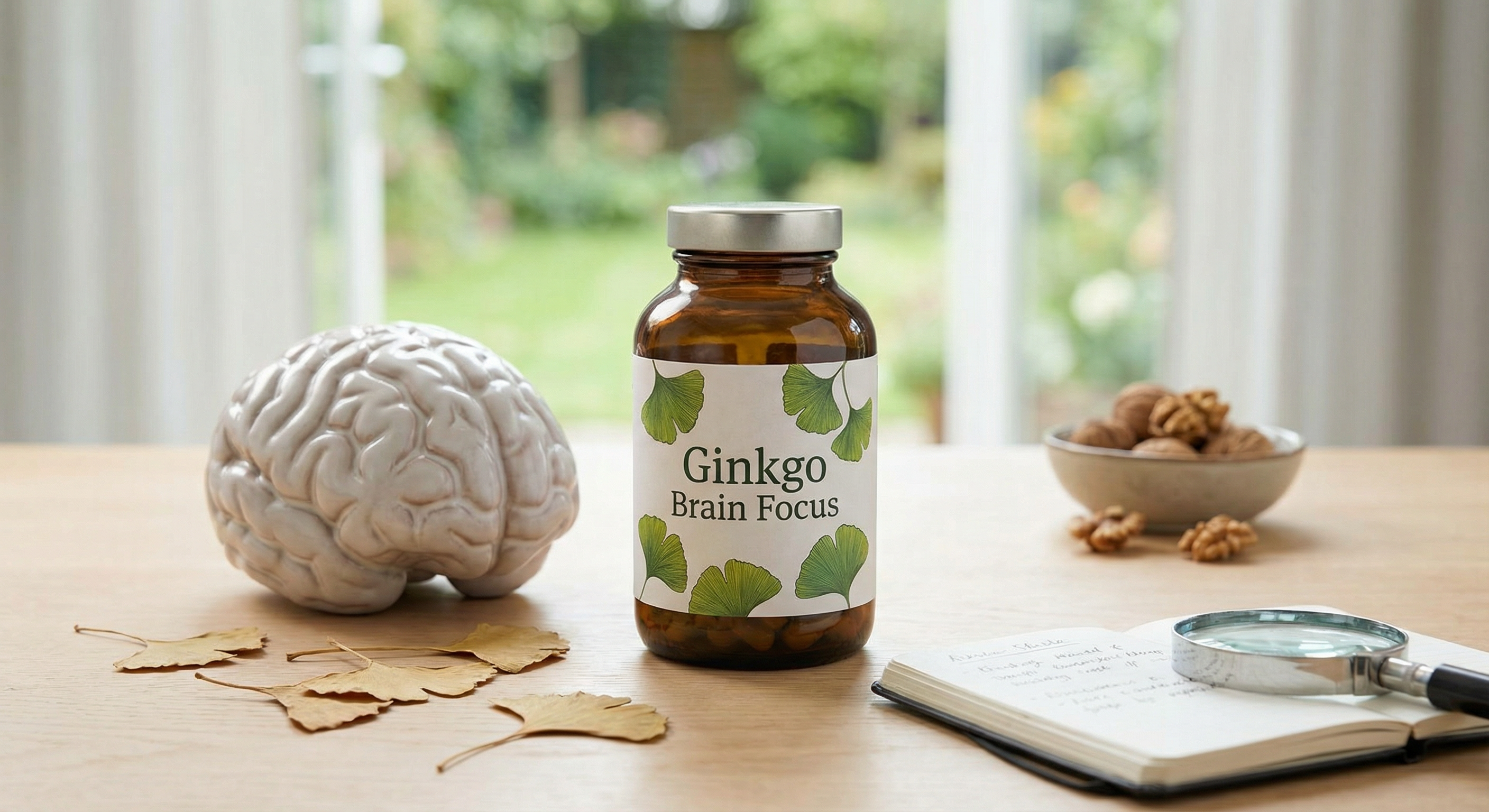
Ginkgo biloba is one of the oldest tree species; its leaves are used in traditional medicine and in modern extracts standardised to flavonoid glycosides and terpene lactones (ginkgolides, bilobalide). These compounds are thought to support blood flow and have antioxidant effects. As an herbalist or integrative health practitioner, I see ginkgo used mainly for cognitive function, memory, and mental clarity, especially in ageing populations. Evidence is mixed: some trials show modest benefits for cognitive performance or quality of life in people with mild cognitive impairment or dementia; others show little or no effect. Quality and standardisation of extracts matter when interpreting studies and choosing products. For product options you can browse ginkgo biloba and brain support on iHerb.
What Is Ginkgo Biloba?
Ginkgo is a deciduous tree native to China; extracts from its fan-shaped leaves have been used in Traditional Chinese Medicine and in Western herbal practice for decades. The active constituents include flavonoid glycosides (antioxidant and vascular effects) and terpene lactones—ginkgolides and bilobalide—which may support circulation and protect nerve cells. Standardised extracts (e.g. EGb 761) ensure a consistent ratio of these compounds so that study results and real-world use are comparable. Raw leaf or non-standardised products vary in strength and may not match the doses used in clinical trials.
What the Research Suggests
Most clinical trials use EGb 761 or similar standardised extracts (often 120–240 mg daily, split into two doses). Meta-analyses have found small but sometimes significant effects on cognitive scores and activities of daily living in people with cognitive decline; benefits in healthy young adults are less clear and often not significant. Ginkgo may support peripheral circulation; it is sometimes used for tinnitus or intermittent claudication, though evidence is inconsistent. Effects, when they occur, tend to develop over weeks to months. Do not use ginkgo to replace prescribed treatments for dementia or other conditions—use it only as a complementary option with your doctor's knowledge.
Dosing and Formulation
Typical supplemental doses are 120–240 mg of standardised extract per day, usually in two divided doses. Choose products that state standardisation to ginkgo flavonoid glycosides and terpene lactones (e.g. 24% flavonoid glycosides, 6% terpene lactones); this helps ensure consistency. Avoid unstandardised raw leaf teas for reliable dosing. Give the herb several weeks before expecting any effect. Long-term use (months to years) has been studied in some trials; if you use it long term, periodic review with a healthcare provider is reasonable. Do not exceed recommended doses; more is not proven to be better and may increase the risk of side effects.
Timing and Duration
Many people take ginkgo in the morning and at lunch to support focus and circulation during the day; taking it too late can occasionally affect sleep in sensitive individuals. Build consistency: use the same dose daily for at least 6–8 weeks before judging benefit. If there is no improvement after a few months, it may not be the right fit; discuss alternatives with your doctor. Do not cycle on and off randomly—steady use is what the trials reflect.
Safety and Drug Interactions
Ginkgo is generally well tolerated at standard doses. Possible side effects include headache, dizziness, digestive upset, and mild allergic reactions. Ginkgo can reduce blood clotting and may increase the risk of bleeding; it should be avoided or used only with medical supervision if you take anticoagulants (e.g. warfarin), antiplatelet drugs (e.g. aspirin, clopidogrel), or have a bleeding disorder. Stop ginkgo before surgery as advised by your doctor. It may interact with certain antidepressants (e.g. SSRIs) and other medicines. Seizure risk has been reported in rare cases. Pregnancy and breastfeeding: not recommended due to insufficient safety data. If you have epilepsy or take blood thinners, do not use ginkgo without professional advice.
Combining Ginkgo with Other Nootropics
People sometimes combine ginkgo with other cognitive-support supplements (e.g. bacopa, lion's mane, omega-3s). There is limited research on such combinations; introduce one supplement at a time so you can tell what helps. If you add ginkgo to others that affect bleeding (fish oil, garlic, ginseng), the combined effect on clotting may increase—disclose all supplements to your healthcare provider and consider spacing or avoiding stacking if you are at risk.
Who Might Consider Ginkgo
Adults interested in cognitive support, especially in the context of age-related mental decline or mild cognitive impairment, may consider a standardised ginkgo extract after discussing with their doctor. It is not a substitute for a healthy diet, sleep, exercise, and management of cardiovascular risk factors, which all support brain health. People on multiple medications or with a history of bleeding or stroke should get medical clearance before starting. Combining ginkgo with other supplements that affect bleeding (e.g. high-dose fish oil, garlic, ginseng) may add risk—disclose all supplements to your healthcare provider.
What to Look for on the Label
Look for “standardised extract” and a stated percentage of flavonoid glycosides and terpene lactones (e.g. 24% / 6%). The dose per serving should be clear (e.g. 60 mg or 120 mg per capsule). Reputable brands often cite EGb 761 or “equivalent to” that standard. Avoid products that do not state standardisation or that promise dramatic cognitive enhancement.
FAQ
How long until ginkgo works?
Effects, when they occur, often take 4–12 weeks. Give it a consistent trial before deciding.
Can I take ginkgo with blood thinners?
Ginkgo can affect clotting. Do not use it with anticoagulants or antiplatelet drugs without your doctor's approval.
Is ginkgo good for young, healthy adults?
Evidence of benefit is stronger in people with cognitive decline; in healthy young adults, effects are often modest or not significant.
Takeaways
- Ginkgo biloba is used for cognitive function and circulation; evidence is strongest in mild cognitive impairment and dementia, with modest effects.
- Dose: 120–240 mg standardised extract daily, in two doses; use products with stated standardisation (e.g. 24% flavonoids, 6% terpene lactones).
- Safety: avoid or use with caution if on blood thinners or with bleeding disorders; stop before surgery; discuss with your doctor.
- Do not replace prescribed treatments; use as a complementary option with professional guidance.
- Support brain health with lifestyle (diet, sleep, exercise, cardiovascular health) alongside any supplement. Compare ginkgo and brain support options on iHerb.
Ginkgo may offer modest cognitive support when used appropriately; choose quality extracts and always consider safety in your personal context.