What Is Omega-6?
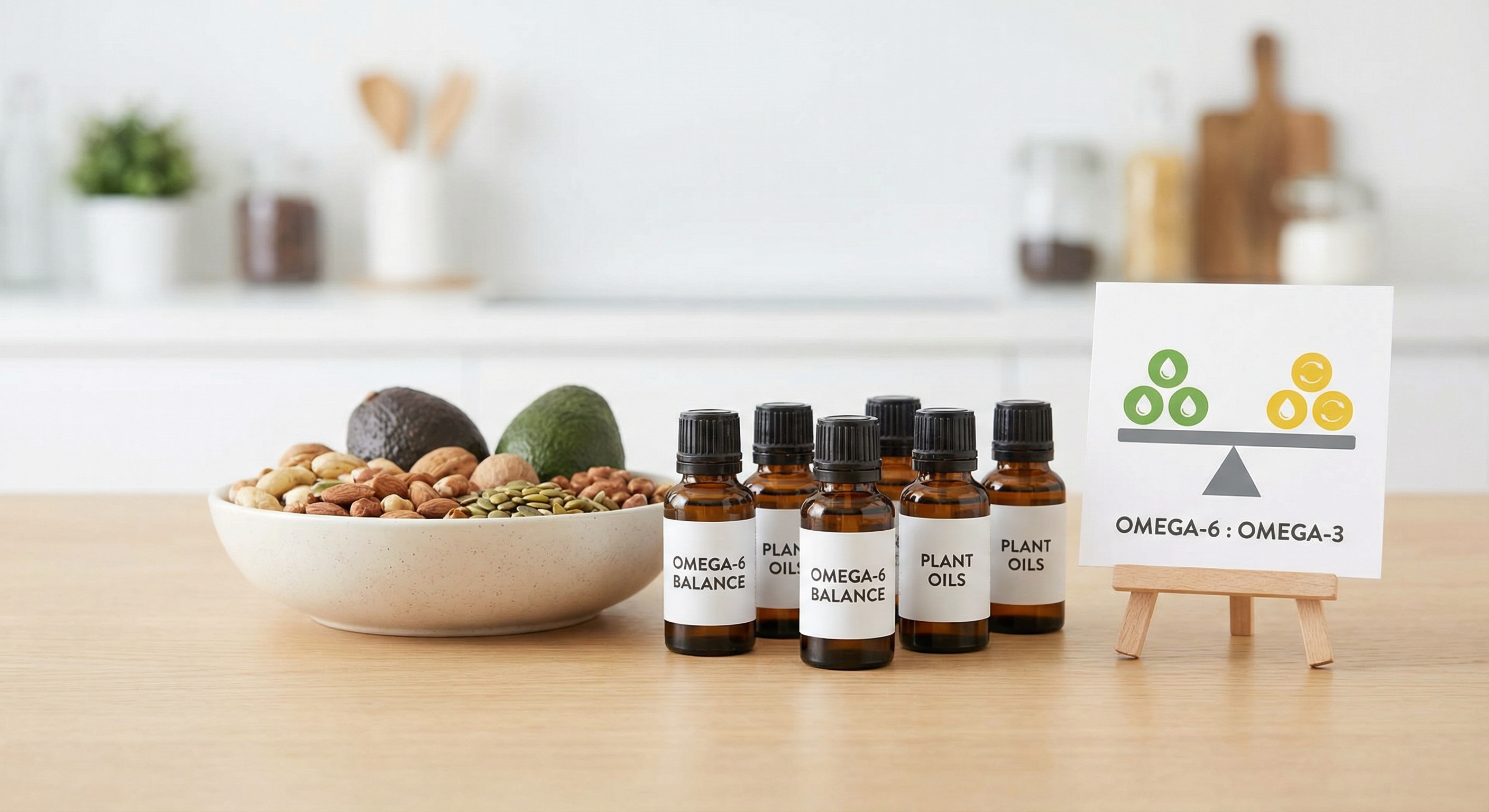
Omega-6 fatty acids are essential polyunsaturated fats: your body cannot make them, so you need them from food. The main dietary form is linoleic acid (LA), found in vegetable oils (soy, corn, sunflower, safflower), nuts, seeds, and many processed foods. Omega-6s play roles in inflammation signalling, skin integrity, and cell membranes. We do need some for health; the issue in Western diets is that omega-6 intake is often very high while omega-3 (from fish, flax, walnuts) is relatively low. From a clinical and dietetic perspective, the focus is less on cutting omega-6 alone and more on improving the balance with omega-3 and choosing whole foods over refined oils where possible.
Why Balance With Omega-3 Matters
Both omega-6 and omega-3 use the same enzymes to produce signalling molecules (eicosanoids). Very high omega-6 with low omega-3 can skew the balance toward more pro-inflammatory pathways; increasing omega-3 (especially EPA and DHA from fish or algae) helps support anti-inflammatory and cardiovascular health. Evidence supports benefits from adequate omega-3 intake and a more balanced ratio rather than simply slashing omega-6. Recommended intakes vary by authority; a common guideline is to ensure sufficient omega-3 (e.g. 250–500 mg EPA+DHA daily for general health, more for specific goals) while not overdoing omega-6 from refined oils and processed snacks. Compare omega-3 on iHerb and healthy oils.
Food Sources: Omega-6 and Omega-3
Omega-6–rich foods: Soybean, corn, sunflower, and safflower oils; many nuts (almonds, walnuts) and seeds (sunflower, pumpkin); packaged snacks and fried foods often contain large amounts of refined omega-6 oils. Omega-3–rich foods: Fatty fish (salmon, mackerel, sardines, herring), flaxseed, chia seeds, walnuts, and algae-based supplements. As a registered dietitian or CNS, I recommend prioritising whole foods: fatty fish two or more times per week, nuts and seeds in moderation, and minimal use of refined seed oils in cooking. Replace some omega-6-heavy oils with olive oil (mainly monounsaturated) or use small amounts of oils higher in omega-3 (e.g. flax) where appropriate.
Should You Take Omega-6 Supplements?
Most people do not need omega-6 supplements; intake from the typical Western diet is already high. Supplementation is rarely indicated unless under medical or dietetic guidance for a specific reason. The priority is increasing omega-3 (food first: fish, flax, walnuts; then supplements if needed) and reducing excessive omega-6 from processed and fried foods. Avoid "balance" products that add more omega-6; focus on omega-3 adequacy and whole-food fats.
Practical Tips for a Healthier Ratio
Eat fatty fish regularly; use olive oil as a primary cooking fat; limit fried foods and snacks made with soybean/corn/sunflower oil; include walnuts, ground flax, or chia in meals; read labels to avoid unnecessary omega-6 in packaged foods. If you use a fish oil or algae supplement, choose one with meaningful EPA and DHA and take it as directed. Children and pregnant or breastfeeding women should follow safe fish guidelines and discuss supplements with a healthcare provider.
Takeaways
- Omega-6 is essential but often over-consumed in Western diets; omega-3 is often under-consumed.
- Improve balance by increasing omega-3 (fish, flax, walnuts, supplements if needed) and reducing refined omega-6 oils and processed foods.
- Do not supplement omega-6 unless advised; prioritise whole foods and omega-3 adequacy.
- Evidence-based approach: adequate EPA and DHA and a more balanced fat intake support heart and inflammatory health.