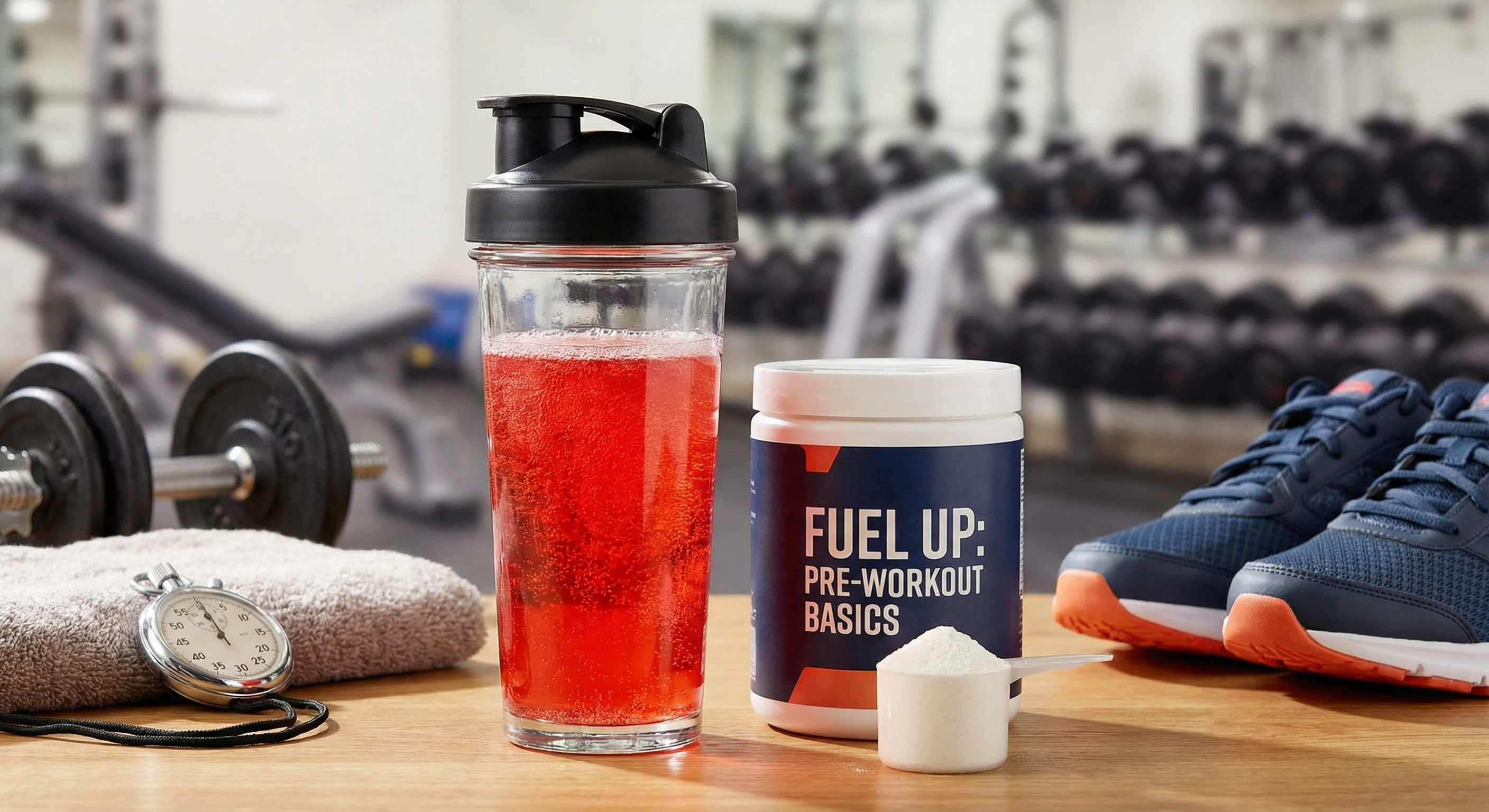
What Is a Pre-Workout Supplement?
Pre-workout products are formulas designed to be taken shortly before training to support energy, focus, and sometimes performance. They often combine caffeine, amino acids, creatine, beta-alanine, and other ingredients in a single serving. Not everyone needs one — a balanced diet, good sleep, and sensible training can be enough. Pre-workouts can still be useful when you want an extra edge for early-morning or high-intensity sessions, or when you are in a busy phase and need a reliable boost.
Common Ingredients and What They Do
Caffeine: Improves alertness, focus, and perceived effort; most research uses 3–6 mg per kg body weight about an hour before exercise. Pre-workouts often contain 150–300 mg per scoop. Avoid late in the day if it affects sleep.
Creatine: Supports strength and power; 3–5 g daily is typical. Taking it pre-workout is fine, but timing matters less than consistent daily intake.
Beta-alanine: May reduce fatigue in high-intensity efforts; often dosed at 3–5 g. It can cause tingling (paraesthesia), which is harmless but noticeable.
Citrulline: May support blood flow and pump; common in pre-workouts in malate or arginine forms. Evidence is mixed but generally safe at label doses.
How to Use Pre-Workout Safely
Start with a low dose or half a scoop to assess tolerance, especially if you are sensitive to caffeine. Take it 30–45 minutes before training so peak effect aligns with your session. Do not stack multiple caffeine sources (e.g. pre-workout plus energy drink) in one day. If you have heart conditions, high blood pressure, or are pregnant or nursing, check with a doctor before use. Cycle off periodically (e.g. a week every few months) to keep sensitivity and avoid over-reliance.
Who Benefits Most?
People who train early in the morning, do high-intensity or long sessions, or occasionally need a mental and physical lift tend to get the most benefit. If you already drink coffee and eat well and feel energised, a pre-workout may add little. If you are new to training, focus on sleep, nutrition, and program consistency first; add a pre-workout only if you still want an extra nudge.
Choosing a Product
Look for transparent labels: ingredient amounts (not just “proprietary blend”) and third-party testing (e.g. Informed Sport, NSF) when possible. Avoid products with excessive caffeine or unlisted stimulants. Simpler formulas with caffeine, creatine, and perhaps beta-alanine or citrulline are easier to dose and assess. You can also build your own “pre-workout” with coffee and a small snack if you prefer to avoid supplements.
Summary
- Purpose: Support energy and focus before training; not essential for everyone.
- Key ingredients: Caffeine, creatine, beta-alanine, citrulline — know what you are taking and why.
- Safety: Start low, time 30–45 min before training, avoid stacking caffeine; check with a doctor if needed.
- Best for: Early or intense sessions, or when you want a consistent boost without guessing with coffee.
Pre-workout basics come down to choosing a sensible product, dosing responsibly, and using it as a tool rather than a requirement for every workout.
Evidence and Practical Tips
Research in this area has grown over the past decades. Most studies focus on specific populations and conditions, so results are not always generalisable. Quality matters: choose products from reputable brands that disclose ingredients and dose per serving. Third-party testing (e.g. USP, NSF, ConsumerLab) when available adds assurance. Start with the lowest effective dose on the label and give any new supplement at least four to six weeks of consistent use before judging effect. Many factors influence how well a supplement works: your baseline status, diet, sleep, and lifestyle. Keeping a simple log of what you take and how you feel can help you and your provider decide whether to continue or adjust.
Supplements are not a substitute for a varied diet, adequate sleep, and regular physical activity. If you are pregnant, breastfeeding, or have a chronic condition, talk to your doctor before starting any new supplement. Do not use supplements to replace diagnosis or treatment for medical conditions. When in doubt, a short conversation with a doctor or dietitian can clarify whether a supplement is right for you and how to use it safely.
Evidence and Practical Tips
Research in this area has grown over the past decades. Most studies focus on specific populations and conditions, so results are not always generalisable. Quality matters: choose products from reputable brands that disclose ingredients and dose per serving. Third-party testing (e.g. USP, NSF, ConsumerLab) when available adds assurance. Start with the lowest effective dose on the label and give any new supplement at least four to six weeks of consistent use before judging effect. Many factors influence how well a supplement works: your baseline status, diet, sleep, and lifestyle. Keeping a simple log of what you take and how you feel can help you and your provider decide whether to continue or adjust.
Supplements are not a substitute for a varied diet, adequate sleep, and regular physical activity. If you are pregnant, breastfeeding, or have a chronic condition, talk to your doctor before starting any new supplement. Do not use supplements to replace diagnosis or treatment for medical conditions. When in doubt, a short conversation with a doctor or dietitian can clarify whether a supplement is right for you and how to use it safely.