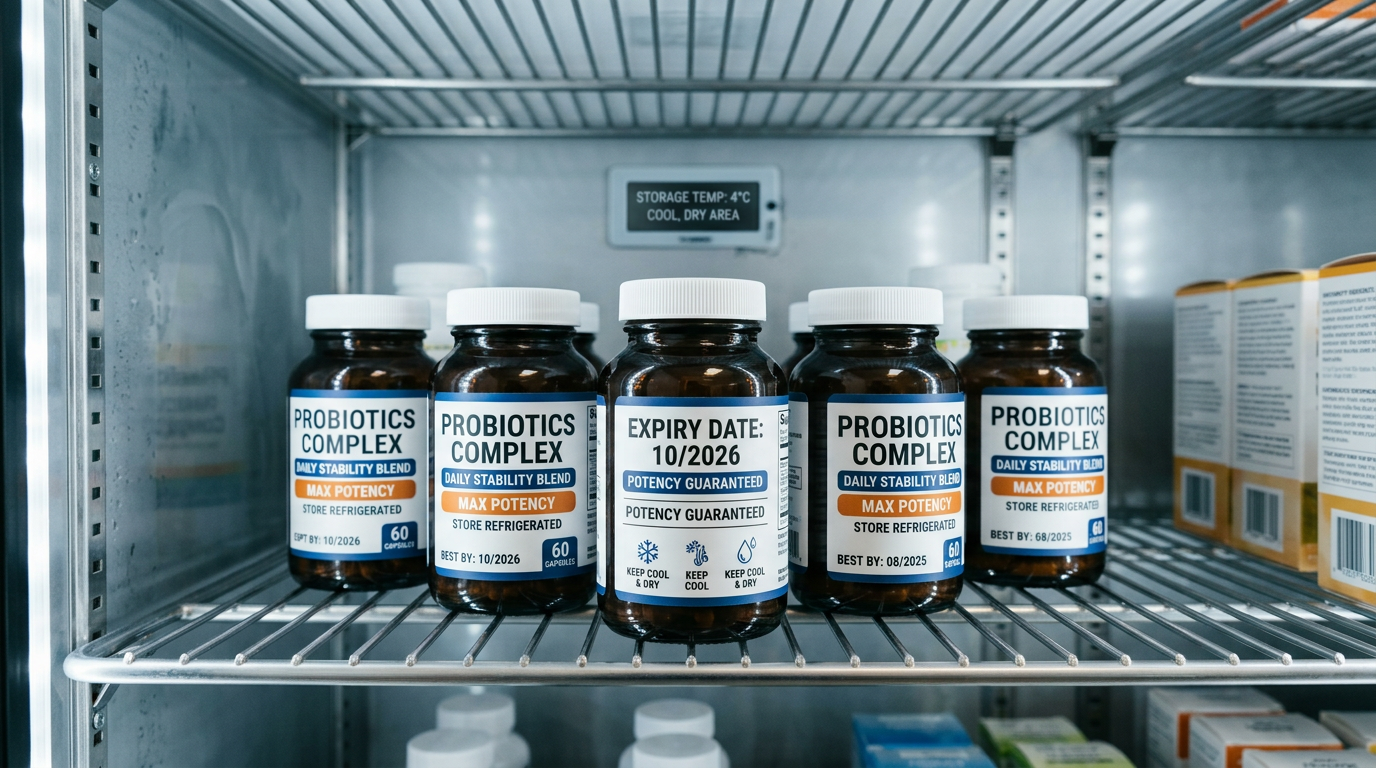
Why Storage and Shelf Life Matter
Probiotics are live microorganisms; their viability (ability to survive and colonise) can decline over time or when exposed to heat, moisture, or light. Proper storage and paying attention to shelf life help you get the dose stated on the label and the benefits you expect. Labels typically state "use by" or "best before" and sometimes "CFU at end of shelf life." For quality probiotic options see probiotics on iHerb.
Refrigerated vs Room-Temperature Probiotics
Some products are sold refrigerated and must be kept cold to maintain viability; others are formulated to be stable at room temperature (shelf-stable). Follow the manufacturer''s instructions: if it says "refrigerate after opening" or "store in refrigerator," keep it in the fridge. Shelf-stable products are convenient for travel but still should be kept away from direct heat and humidity. Freezing is generally not recommended unless the label specifies it; thaw cycles can damage cells.
Best Practices for Storage
Keep probiotics in a cool, dry place away from direct sunlight. Avoid storing in bathrooms or near stoves where humidity and heat fluctuate. If the product is in a blister pack or opaque bottle, that helps protect from light. Once opened, use within the period recommended on the label and close the container properly to limit moisture. Do not transfer capsules or powder to unmarked containers; you may lose storage instructions and expiry information.
Understanding CFU at End of Shelf Life
Quality brands often guarantee CFU (colony-forming units) at the end of shelf life, not just at manufacture. That means the product is formulated so that the stated dose is still present when you use it by the "use by" date. If only "at time of manufacture" is stated, viability may drop by the time you take it; prefer products that state "through end of shelf life" when possible. This is especially important if you buy in bulk or use the product over several months.
Travel and Short-Term Storage
For short trips, shelf-stable probiotics are easiest. If you use a refrigerated product, a small cooler bag or keeping it in a cool place during travel can help. Avoid leaving probiotics in hot cars or in checked luggage where temperatures can be extreme. Use within the use-by date and discard if the product looks or smells off. If you are travelling for a long time, consider buying a smaller size or shelf-stable format at your destination.
Signs of Poor Storage or Age
If capsules are cracked, powder is clumped or discoloured, or the product has an off smell, do not use it. Moisture can cause clumping and reduce viability. Storing in the original packaging until use helps maintain quality. If you are unsure whether a product is still good, check the use-by date and follow the label; when in doubt, replace the product.
Evidence and Practical Takeaways
Viability of probiotic strains depends on formulation, packaging, and storage conditions; not all products are equal. Choosing brands that guarantee CFU at expiry and following label instructions gives you the best chance of getting an effective dose. Consistency in storage and use-by discipline matters more than chasing the highest CFU number on the box.
Summary
- Store probiotics according to the label: refrigerate if required, otherwise cool and dry.
- Avoid heat, moisture, and direct light to preserve viability.
- Prefer products that guarantee CFU at end of shelf life when possible.
- Use by the use-by date and follow opening instructions (e.g. use within X days).
Proper storage and attention to shelf life help your probiotic supplement stay effective until you use it.