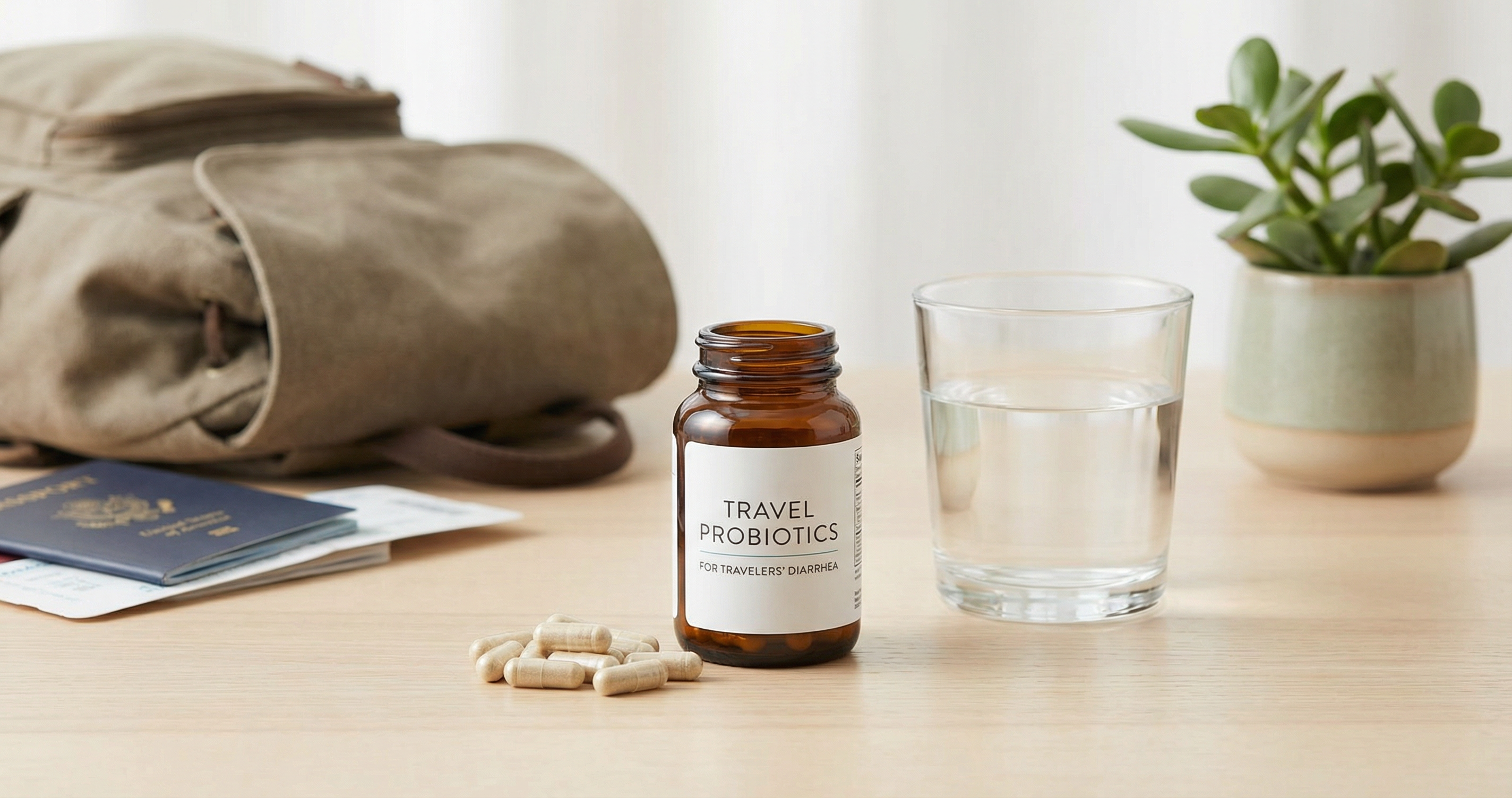
What Is Travelers'' Diarrhea and Why It Happens
Travelers'' diarrhoea (TD) is usually caused by bacteria, viruses, or parasites picked up from food or water in regions where standards differ from home. It often resolves on its own but can ruin a trip and sometimes leads to dehydration or more serious illness. As a CNS/RD I explain that prevention still relies first on food and water safety: choose cooked foods, peel fruits, avoid tap water and ice when uncertain, and wash hands. Probiotics are a complementary strategy that may help reduce the risk or severity of TD in some travellers; they are not a substitute for good hygiene and safe eating habits.
Evidence for Probiotics in Prevention
Several meta-analyses and reviews suggest that certain probiotics may reduce the risk of travellers'' diarrhoea when taken before and during travel. The effect size varies by study and by strain. Saccharomyces boulardii and some Lactobacillus strains (e.g. L. rhamnosus GG) are among those most often studied. Results are not uniform—some trials show benefit, others modest or no effect—likely due to destination, dose, timing, and product quality. Starting probiotics a few days before departure and continuing during the trip is a common approach. Typical doses are in the billions of CFU per day; follow the product label and choose a stable, well-studied formulation.
Strains and Product Choice
Saccharomyces boulardii (a beneficial yeast) is frequently used for travel gut support because it is not killed by antibiotics and survives passage through the gut well. Lactobacillus rhamnosus GG and other Lactobacillus or Bifidobacterium strains appear in TD prevention trials. Multi-strain products are available; look for those with evidence in travel or diarrhoea prevention and clear CFU counts. Quality matters: probiotics are sensitive to heat and moisture, so choose products with appropriate packaging and storage instructions, and take them as directed. There is no single "best" strain for everyone; match the product to the evidence and your tolerance.
When Probiotics Are Not Enough
If you develop diarrhoea while travelling, stay hydrated with safe fluids (bottled water, oral rehydration solutions if needed) and eat bland, safe foods as tolerated. Probiotics may still be used for gut support during illness, but they do not replace rehydration or medical care. Seek local medical attention if you have high fever, bloody stools, severe dehydration, or symptoms that do not improve. In some destinations, a doctor may prescribe an antibiotic for bacterial TD; take it as directed and consider probiotic spacing (e.g. 2–3 hours apart) if you use both. Travellers with weakened immune systems or chronic conditions should discuss probiotic use and travel health with their doctor before the trip.
Summary and Takeaways
- Prevention first: Food and water safety, handwashing; probiotics are an add-on, not a replacement.
- Evidence: S. boulardii and L. rhamnosus GG are among the most studied for TD risk reduction; start before travel and continue during.
- Product: Choose evidence-based strains, clear CFU, stable formulation; follow label for dose and storage.
- If you get sick: Hydrate, eat safe foods, seek care for severe or persistent symptoms; probiotics can support but do not replace medical treatment.
Probiotics can be a useful part of travel gut health when combined with careful food and water choices. Use them as one layer of protection and always prioritise hygiene and medical advice when needed.