What Is Reishi?
Reishi (Ganoderma lucidum) is a woody, bitter mushroom used for centuries in East Asian tradition as a longevity and calming tonic. Herbalists value it for supporting resilience, immune balance, and restful sleep. Modern research focuses on its polysaccharides and triterpenes, which may modulate immune and inflammatory responses; human evidence is growing but still mixed. This guide covers how reishi is used traditionally, what the science suggests, and how to choose and use it safely.
Reishi and Immunity
Reishi is often taken to "support the immune system"—meaning to help the body respond appropriately to stress and pathogens rather than to stimulate it aggressively. Polysaccharide fractions from reishi have been shown in lab and some human studies to influence immune cells (e.g. natural killer cells, macrophages) and cytokine balance. That may be relevant for general resilience and during seasonal stress; it is not a substitute for vaccines or medical treatment for infection. Herbalists typically use reishi as part of a broader approach: good sleep, diet, and stress management, with reishi as a gentle modulator.
Reishi and Sleep
In traditional use, reishi is considered calming and sleep-supportive. Some people report better sleep quality and less restlessness when taking reishi in the evening; clinical data are limited. Effects may be indirect—for example through mild stress-modulating or anti-inflammatory action—rather than strongly sedative. If you have chronic insomnia or a sleep disorder, see a doctor; reishi can complement but not replace good sleep hygiene and any prescribed treatment.
Forms and Preparation
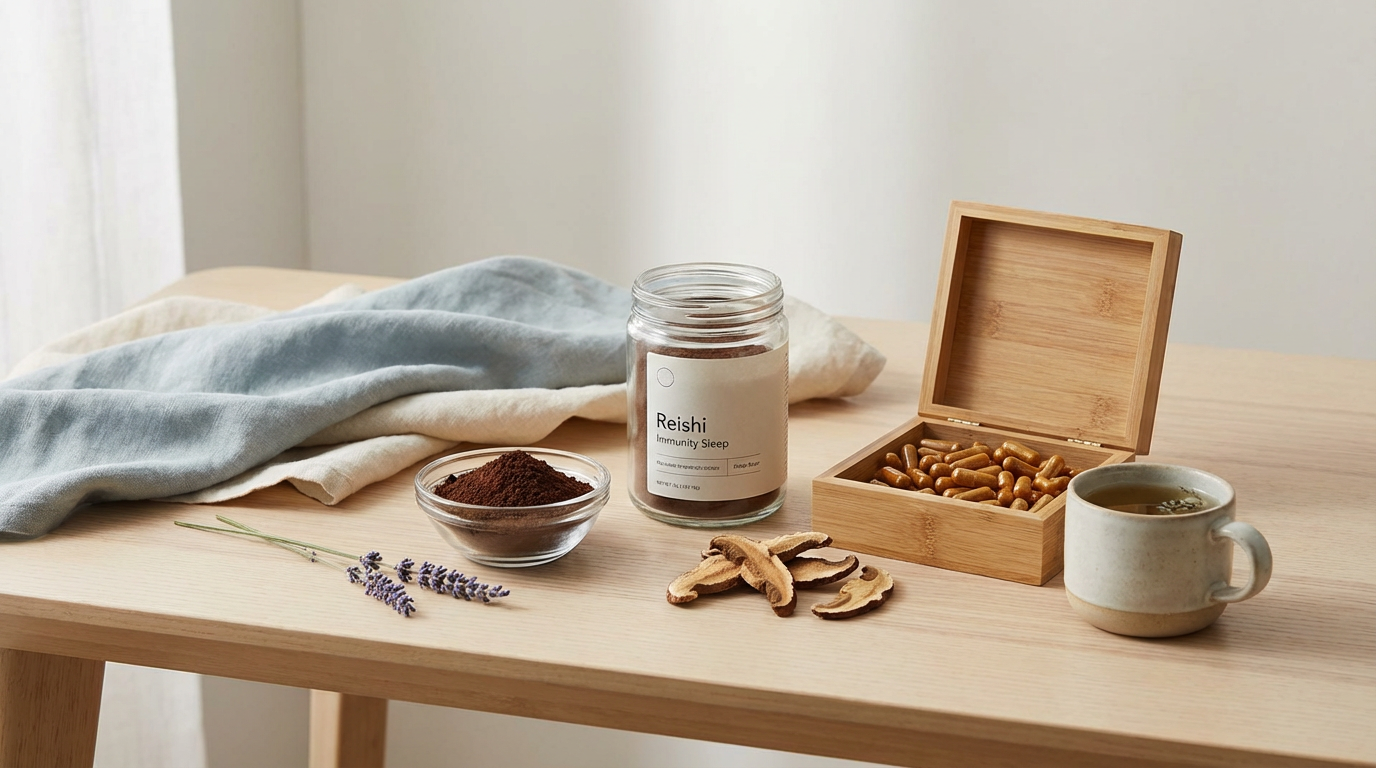
Reishi is available as dried slices for decoction (simmer 20–30 minutes), as powdered extract (often in capsules), and as liquid extracts (tinctures or concentrated drops). Whole mushroom and hot-water extracts emphasise polysaccharides; alcohol extracts capture more triterpenes. Dual-extract products offer both. Quality varies: choose a reputable brand with standardised extracts or verified reishi content. The bitter taste is normal; blending reishi powder into hot drinks or taking capsules avoids it.
Dosing and Use
Typical doses depend on form: 1–3 g daily of dried reishi (as decoction) or the equivalent in standardised extract (e.g. 500–1500 mg extract). Liquid extracts are used according to label (often 1–2 mL once or twice daily). Many herbalists suggest taking reishi consistently for several weeks to notice subtle effects on energy, calm, or sleep. Take in the evening if using for sleep; morning or split doses if using for general adaptogenic support.
Safety and Interactions
Reishi is generally well tolerated. Rare side effects include digestive upset or dry mouth. It may thin the blood slightly; use caution or avoid before surgery or if you take anticoagulants. Immunosuppressant users and those with autoimmune conditions should discuss use with a doctor. Not recommended in pregnancy or breastfeeding without professional guidance. Source from trusted suppliers to avoid contamination.
Summary
- Reishi is a traditional tonic mushroom used for immunity, calm, and sleep support.
- Immunity: May support balanced immune response; not a replacement for vaccines or medical care.
- Sleep: Traditionally calming; may support sleep quality; use with good sleep habits.
- Forms: Decoction, powder, capsules, liquid extract; choose quality, standardised products.
- Safety: Generally safe; caution with blood thinners, surgery, immunosuppressants, pregnancy.
For personalised herbal or health advice, consult a qualified herbalist or your doctor.