What the Front Lever Is
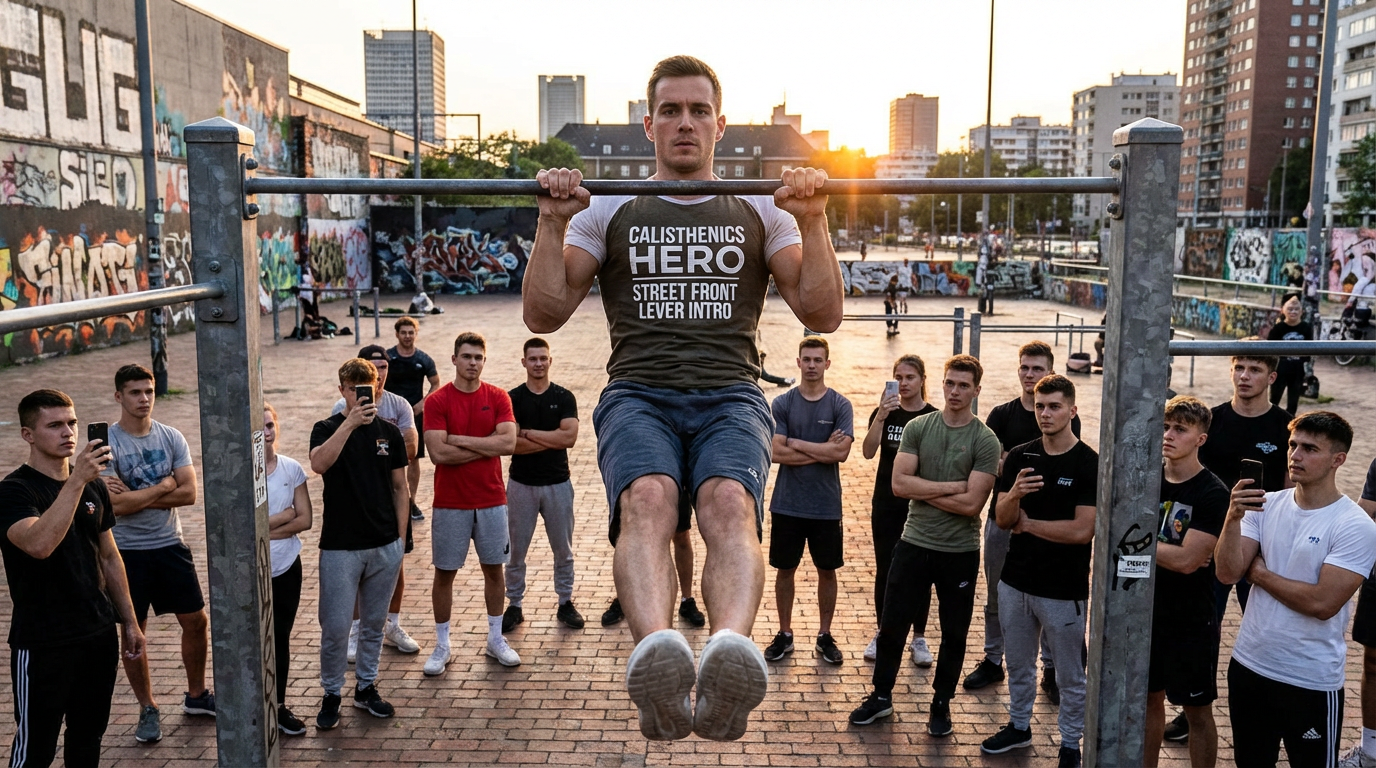
The front lever is a horizontal hang: you hold your body straight and parallel to the ground while hanging from a bar or rings, face toward the floor. Arms can be straight or bent (straight is harder and the standard goal). It demands serious lat and core strength, shoulder extension, and grip. You see it in calisthenics and street workout; it''s a gateway to other lever and pull skills. This guide covers the basics: prerequisites, progressions from tuck to full, and how to program so you build the hold without frying your elbows or shoulders.
Prerequisites
You need a strong pull: at least 8–12 strict pull-ups and the ability to hold a dead hang for 30+ seconds. Some straight-arm lat engagement (e.g. from skin-the-cat or German hang) helps. Shoulders and elbows should be healthy; front lever puts stress on both. If you have pain, fix it first. Don''t jump to tuck front lever until you can do a solid pull-up and feel comfortable in an inverted hang or skin-the-cat.
Body Line and Grip
In a proper front lever, your body is one straight line from hands to feet—no piking at the hips, no sagging. Think "hollow body": slight posterior pelvic tilt, ribs down, core tight. Grip is typically overhand (pronated) on bar or rings; some use a false grip on rings for later progressions. Hands about shoulder width or slightly wider. The pull is mostly lats and core holding the body horizontal; arms are the connection. Train the line first with easier progressions so you don''t sacrifice form for height.
Progression 1: Tuck Front Lever
Tuck front lever: hang from bar or rings, tuck your knees to your chest, and hold your body horizontal. Knees can be at chest or slightly in front. 3×10–20 seconds. Focus on keeping the line (no pike), shoulders engaged (depression and slight retraction), and arms straight if you can. If you can''t get horizontal yet, do tuck front lever with hips a bit below horizontal and build strength; or use a band for assistance. Build to 3×15–20 sec before moving on.
Progression 2: Advanced Tuck
Advanced tuck: same idea but your knees are in front of your hips (thighs more horizontal). This extends the lever and is harder. 3×10–15 seconds. Same cues: straight line, shoulders down, arms straight. Build to 3×15 sec.
Progression 3: Straddle Front Lever
Straddle front lever: legs spread to the sides. Spreading shortens the lever, so straddle is easier than full. From advanced tuck, extend one leg out, then the other. 3×5–15 seconds. Keep the line—don''t let the hips drop or pike. Straddle is a major milestone; many train it for a long time before full. You can do it on bar or rings; rings add rotation so some prefer bar for learning.
Progression 4: One-Leg Extended
One-leg front lever: one leg straight and in line with the body, the other still tucked or in straddle. This is a step between straddle and full. 3×5–10 seconds per side. Same focus on line and shoulder engagement.
Progression 5: Full Front Lever
Full front lever: both legs straight and together, body horizontal. The longest lever and the hardest. 3×3–10 seconds to start; build from there. Same cues: hollow body, straight line, shoulders down, arms straight. Don''t sacrifice form for time; quality holds build the skill. Most people need months or years of consistent work to get a solid full front lever.
Bar vs Rings
Bar: Fixed, so no rotation. Easier to learn the position. Use overhand grip, shoulder width or slightly wider. Rings: Unstable; rings can rotate. Same progressions, but you need to control the rotation. Many learn on bar first, then transfer to rings. Rings allow more grip options (e.g. false grip for front lever pull-up later). Choose one and get consistent before switching.
Assistance and Accessories
Front lever raises (from hang, raise to tuck or straddle and lower slowly) build strength through the range. Ice cream makers (front lever position, then rotate to back lever and back) build control. Band-assisted holds let you feel the full position; reduce band tension over time. Negatives (lower slowly from inverted hang to front lever) are demanding but effective. Don''t neglect pull-ups and rows; raw pulling strength supports the lever.
Common Mistakes
Piking at the hips—squeeze core, think hollow body. Sagging—lift the hips and keep the line. Bent arms when you''re aiming for straight—focus on lockout; do bent-arm progressions separately if you want. Shrugging—depress the shoulders. Training only at the end of a session when you''re tired—do front lever when fresh. Too much volume—front lever is hard on elbows and shoulders; 3–4 sets a few times per week is enough. If you plateau, add more strength work (pull-ups, rows, front lever raises) and ensure recovery.
Programming
Train front lever 3–4 times per week when fresh. 3–4 sets of max hold (or timed, e.g. 3×15 sec) with 90–120 sec rest. Progress by adding 1–2 seconds per set per week or by moving to the next progression when you hit the target. Balance with pushing and other pulling so you don''t overdo the elbows. Once you have straddle or full, maintain with 2–3 sets a couple of times per week and use the rest of your time for other skills or strength.
Summary
- Prerequisites: Strong pull-up (8–12), dead hang, healthy shoulders and elbows.
- Progressions: Tuck → advanced tuck → straddle → one leg → full. Hold times (e.g. 3×15 sec) before moving on.
- Cues: Hollow body, straight line, shoulders down, arms straight (unless doing bent-arm variant).
- Bar vs rings: Bar often easier to learn; rings add instability. Learn one first.
- Volume: 3–4 sets, 3–4× per week; quality over duration. Add pull-ups, rows, and raises if you plateau.
Front lever is a classic for a reason. Nail the line, build through the progressions, and be patient with the joints—you''ll get there.