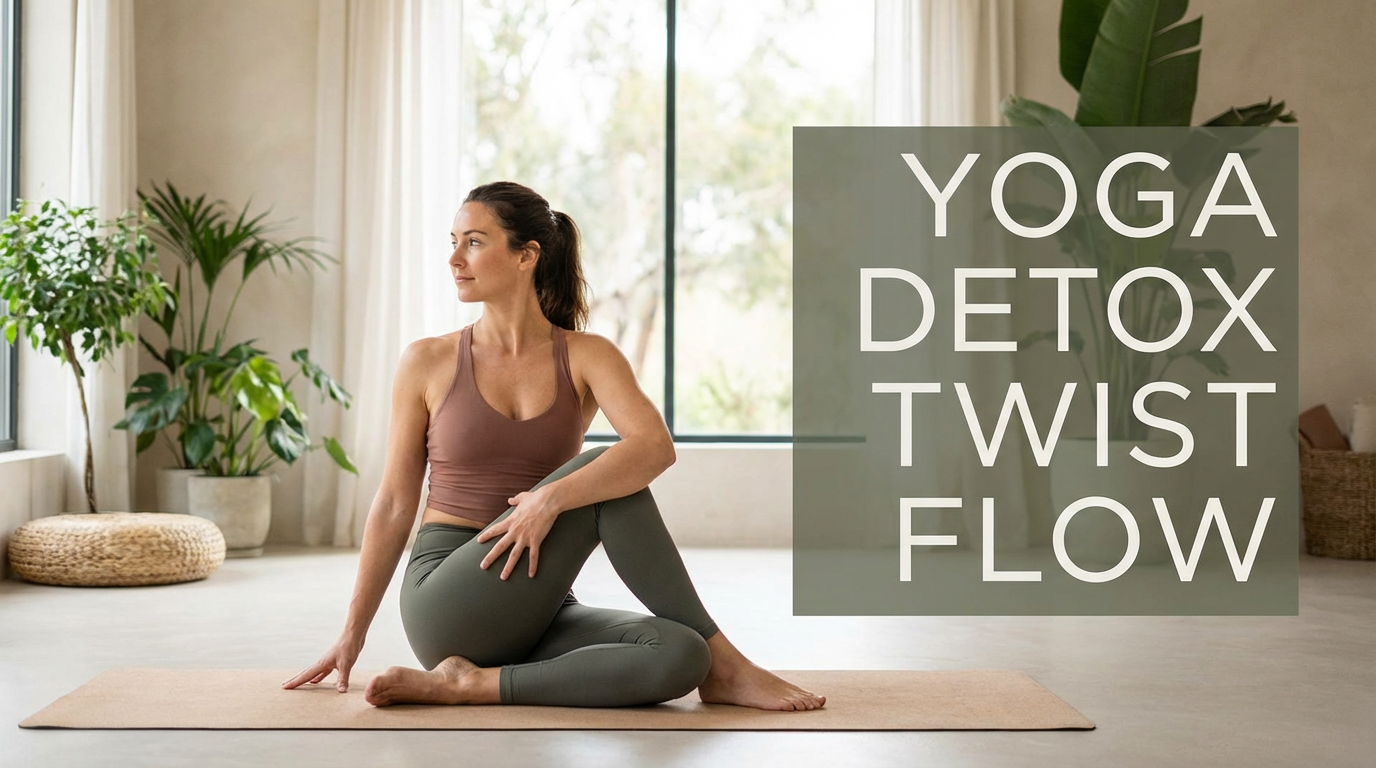
Twisting poses in yoga massage the digestive organs, wring out the spine, and support circulation. A flow that links seated and standing twists with breath is often called a detox flow for this wringing effect—though the term "detox" here means supporting natural circulation and mobility, not a medical cleanse. When you exhale into a twist, you deepen the stretch and calm the nervous system. This guide covers the benefits of twists for the spine, digestion, and circulation; key seated and standing poses; how to build a twist flow; breath and alignment; safety, including when to avoid deep twists (for example in pregnancy); a clear step-by-step sequence; and practical takeaways so you can practise confidently and safely.
Benefits of Twists: Spine, Digestion, and Circulation
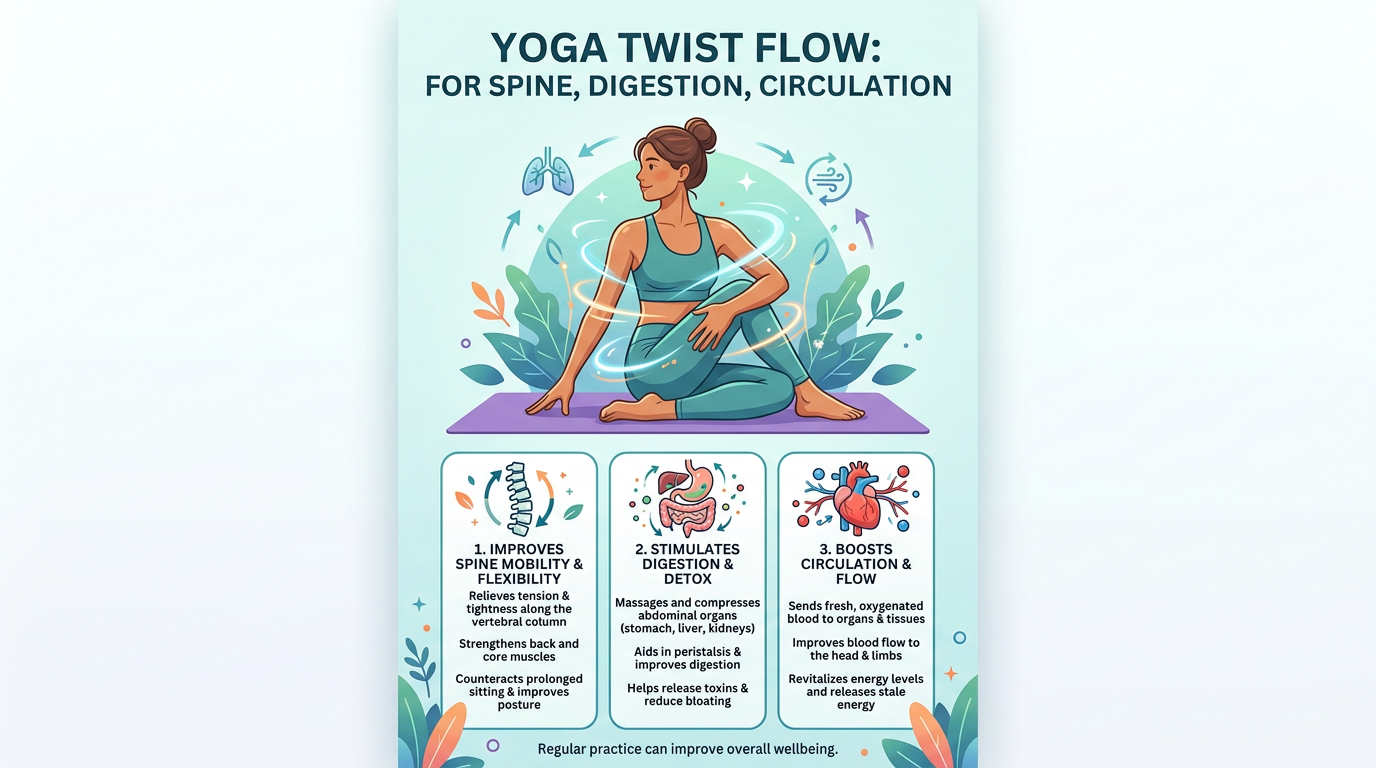
Twists offer three main areas of benefit: the spine, the digestive system, and circulation. Understanding these helps you practise with intention and get the most from your flow.
Spine. Spinal rotation improves mobility in the thoracic (mid-back) and lumbar (lower-back) regions. Many people hold tension and stiffness in these areas from sitting or repetitive movement. Twists lengthen and rotate the spine, which can ease stiffness and support a healthier range of motion. The movement also encourages the small muscles along the spine to engage and release, contributing to better posture and comfort over time. Regular twisting can help maintain the natural mobility of the spinal segments and reduce the sense of "stuck" or tight back that comes from long hours at a desk or in one position.
Digestion. Twisting poses create a gentle squeezing and releasing effect on the abdomen. This massages the digestive organs and may support digestive comfort and regularity. The effect is mechanical and mild; "detox" in this context does not mean a medical cleanse but rather supporting natural processes through movement and circulation. Practice on an empty stomach or well after eating so the twist does not feel uncomfortable. Many practitioners find that a short twist flow in the morning or after a light meal (one to two hours later) helps reduce bloating and supports a sense of lightness in the belly.
Circulation. As you twist and release, blood flow to the torso and spine is encouraged. Combined with breath work, this can feel energising and help reduce that sluggish feeling after long periods of sitting. Linking twists with steady breathing also supports the nervous system, often leaving you calmer and more focused. Research on "detox" effects is limited; the benefits are mainly improved mobility, circulation, and stress modulation. This practice is suitable for most people with a healthy spine; if you have disc or sacroiliac issues, use open twists or reduce range and seek guidance from a teacher or physiotherapist as needed.
Key Twisting Poses: Seated and Standing
A balanced detox twist flow includes both seated and standing twists. Seated twists ground you and allow a deep rotation from the base of the spine; standing twists add leg and core engagement and are useful for building heat and linking movement.
Seated twists. Half lord of the fishes (Ardha Matsyendrasana) is a classic: one leg bent with the foot outside the opposite thigh, the other leg extended or bent. Sit tall, then rotate the torso toward the bent knee, using the opposite arm to hug the knee or press the floor. Seated spinal twist (often with both legs bent or one extended) is a gentler option: sit with legs in front, bend one knee and cross the foot over the opposite thigh or place it beside the hip, then twist toward the bent knee. In both, keep the spine long and lead the twist with the chest, not the head. Hold each side for 30–60 seconds and breathe steadily. If one sitting bone lifts, sit on a folded blanket or cushion to level the hips so the twist is even and the spine can spiral without compression.
Standing twists. Revolved chair (Parivrtta Utkatasana): from chair pose (squat with arms forward or overhead), bring the hands to the heart and twist the torso, hooking the opposite elbow outside the knee. This builds leg strength and spinal rotation. Revolved triangle (Parivrtta Trikonasana): from a wide stance, hinge at the hip over one leg and twist the torso, reaching one hand to the floor or a block and the other toward the ceiling. Use a block under the bottom hand if the floor is out of reach. A simpler option is standing twist with hands at heart: stand with feet hip-width apart, bend the knees slightly, and rotate the upper body from side to side while keeping the hips stable. Standing twists warm the body and link well into a flowing sequence. Use props to support good alignment: a block under the bottom hand in revolved triangle or under the sitting bone in seated twists if one hip is higher. A folded blanket under the knees in seated poses can ease the hips. Never sacrifice length in the spine for depth in the twist; it is better to twist less and keep the back long.
Building a Twist Flow
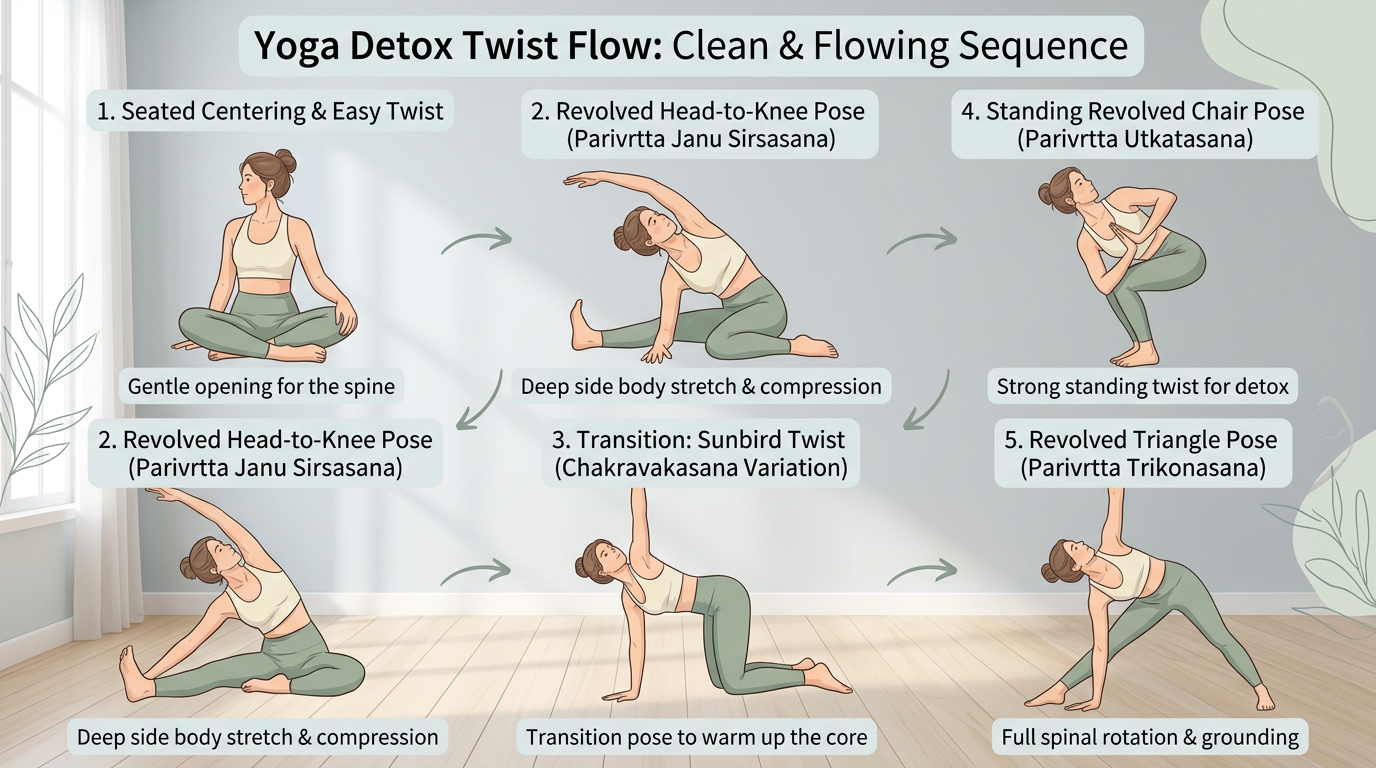
A twist flow is a sequence that connects several twisting poses with breath and smooth transitions. You can keep it short (10–15 minutes) or extend it (20–30 minutes) by adding more rounds or poses. Start with a brief warm-up to prepare the spine and hips, then move through seated twists, then standing twists, and finish with a gentle release (e.g. forward fold or child's pose) and rest.
Structure the flow so that you twist both sides equally. This keeps the spine balanced and avoids overworking one side. If you are short on time, a minimal flow might be: cat-cow to warm the spine, one or two seated twists (each side), one or two standing twists (each side), then a forward fold and Savasana or seated rest. As you get comfortable, you can add more poses, longer holds, or extra rounds. Many people practise a twist flow in the morning to wake up the spine and digestion, or in the evening to release the day's tension. Aim for two to four sessions per week; even short practices build familiarity and lasting benefits. If you have more time, add a few rounds of sun salutations or standing poses before the twists to warm the body further.
Breath and Alignment
Breath and alignment are what make twists both safe and effective. Ignoring them can lead to strain in the neck, lower back, or sacroiliac area.
Breath. In most traditions, you exhale as you move deeper into a twist and inhale as you release or prepare for the next movement. This ties the movement to the breath and prevents holding your breath or forcing the pose. Use steady, even breaths—for example, inhale for four counts and exhale for four counts—and let each exhale allow a little more release into the twist without pushing. If you notice you are holding your breath, pause at a comfortable depth and breathe there for several cycles before going deeper or moving on.
Alignment. Lead the twist with the chest and mid-spine, not the head or neck. If you look over your shoulder, keep the gaze in line with the spine or only slightly beyond the shoulder so the neck stays long. Lengthen the spine upward first (sit or stand tall), then rotate. In seated twists, keep both sitting bones grounded so the twist comes from the waist up. In standing twists, keep the hips as level as possible and let the rotation happen in the torso. If you feel compression or pinching in the lower back, reduce the depth of the twist or use an open twist (chest toward the ceiling) instead of a deep closed twist.
Safety: When to Ease Off or Avoid Deep Twists
Twists are safe for most people when practised with awareness and within your range. A few situations require caution or modification.
Pregnancy. Do not do deep twists that compress the belly. Avoid closed twists (e.g. hugging the knee and twisting tightly across the abdomen). Prefer open twists, where the chest opens toward the ceiling and the belly has space, or very gentle rotation. If in doubt, skip twisting and focus on other safe prenatal poses; get clearance from your care provider.
Back or disc issues. If you have a history of disc injury, herniation, or sacroiliac (SI) joint problems, avoid deep or forced twists. Use open twists, reduce the range of rotation, and move slowly. If you feel sharp pain, numbness, or shooting sensations, ease off immediately and consult a physiotherapist or doctor.
After meals. Practise on an empty stomach or at least one to two hours after eating. Twisting on a full stomach can cause discomfort or nausea.
General. Never force a twist. Find an edge where you feel a stretch or mild intensity, not pain. Twist both sides equally and use props (blocks, blankets) as needed so you can maintain length and comfort. If you feel sharp pain, numbness, or dizziness, come out of the pose slowly and rest. When in doubt, consult a qualified yoga teacher or healthcare provider to adapt the practice to your needs.
Step-by-Step Sequence
This sequence is a practical 15–20 minute twist flow you can do at home. Adapt or skip any pose that does not suit your body.
- Warm-up (2–3 minutes). Start on hands and knees. Move through cat-cow: inhale as you drop the belly and lift the chest and tailbone; exhale as you round the spine and tuck the tail. Repeat 8–10 times to warm the spine.
- Seated twist, right side (1–2 minutes). Sit with legs extended. Bend the right knee and place the right foot on the floor outside the left thigh (or cross it over the left thigh for a deeper option). Inhale to lengthen the spine; exhale to twist toward the right. Place the left hand on the right knee or the floor behind you, and the right hand behind the right hip. Hold 30–60 seconds, breathing steadily. Lead with the chest; keep both sitting bones down.
- Seated twist, left side (1–2 minutes). Release and repeat on the left side, twisting toward the left.
- Standing twist or revolved chair (2–3 minutes). Stand with feet hip-width or slightly wider. Bend the knees into a shallow squat (chair pose). Bring the hands to the heart. Exhale and twist to the right, hooking the left elbow outside the right knee (or bringing the hands to the floor or a block if that suits you). Hold 30–45 seconds, then repeat on the left.
- Revolved triangle or simple standing twist (2–3 minutes). From a wide stance, turn the right foot out 90 degrees and the left foot in slightly. Hinge at the hip over the right leg and place the left hand on the floor or a block inside or outside the right foot. Reach the right arm toward the ceiling and twist the chest open. Hold 30–45 seconds, then repeat on the left. If revolved triangle is too much, do a simple standing twist with hands at heart instead.
- Release and rest (2–3 minutes). Come to a gentle forward fold (standing or seated) or child's pose. Then lie down in Savasana or sit quietly for 1–2 minutes, allowing the body to integrate the practice.
Repeat the sequence 1–2 times if you have time, or use it as a stand-alone short practice. Consistency matters more than length; even 10 minutes of mindful twisting can support mobility and calm. Common mistakes to avoid: twisting from the neck first, holding the breath, or rushing through one side and skipping the other. Take your time, breathe, and prioritise symmetry and comfort over depth.
Takeaways
- Twisting poses support spinal mobility, digestion, and circulation; link them with breath for a calming, energising effect.
- Include both seated twists (e.g. half lord of the fishes, seated spinal twist) and standing twists (e.g. revolved chair, revolved triangle) and twist both sides equally.
- Exhale into the twist, inhale to release; lead with the chest, not the head, and keep the spine long.
- Practise on an empty stomach or well after eating; use open twists or reduce range if you have disc, SI, or back issues.
- If pregnant, avoid deep twists that compress the belly; use open twists or skip twisting and seek guidance from your care provider.
- Build a short flow (warm-up, seated twists, standing twists, release and rest) and practise regularly; 10–20 minutes can be enough to maintain mobility and ease.
For digestive support alongside your practice, some people use herbs or teas; you can explore digestive support on iHerb and herbs for options. Prioritise whole foods, hydration, and consistent movement first; use supplements only as a complement when needed.