Why a Back Care Flow?
As a yoga teacher, I meet many people who carry tension or stiffness in the back—from sitting, standing, or stress. A back care flow is a gentle, repeatable sequence designed to support spinal mobility, release tight areas, and strengthen the muscles that protect the spine. It is not about deep flexibility or advanced poses; it is about moving the spine in safe, varied ways while breathing and listening to your body. This practice can help with general stiffness and discomfort; it is not a substitute for medical care if you have acute pain, injury, or a diagnosed condition. When in doubt, check with your doctor or physiotherapist and work with a qualified yoga teacher who can adapt the practice to you.
Breath and Awareness
Begin with a few minutes of calm breathing. Notice where you feel tension—often the lower back, shoulders, or neck. Let the breath be natural; then gently lengthen the exhale. In back care, we use the breath to soften: on each exhale, imagine the spine and surrounding muscles releasing a little. If any movement causes sharp pain, numbness, or shooting sensation, stop and ease off. Sensation (mild stretch, warmth) is normal; pain is not. Your practice should feel supportive, not punishing.
Gentle Warm-Up: Cat-Cow and Pelvic Tilts
On hands and knees, move through cat-cow: round the spine on the exhale (cat), arch gently on the inhale (cow). Do 8–10 rounds slowly, letting the movement follow the breath. This lubricates the spine and warms the core. Then add pelvic tilts: from the same position, tilt the pelvis so the tailbone tucks slightly (flatten the lower back), then release. Repeat 5–8 times. These small movements prepare the spine for slightly deeper work without strain. If wrists bother you, use fists or forearms on the floor.
Mobility: Twists and Side Bends
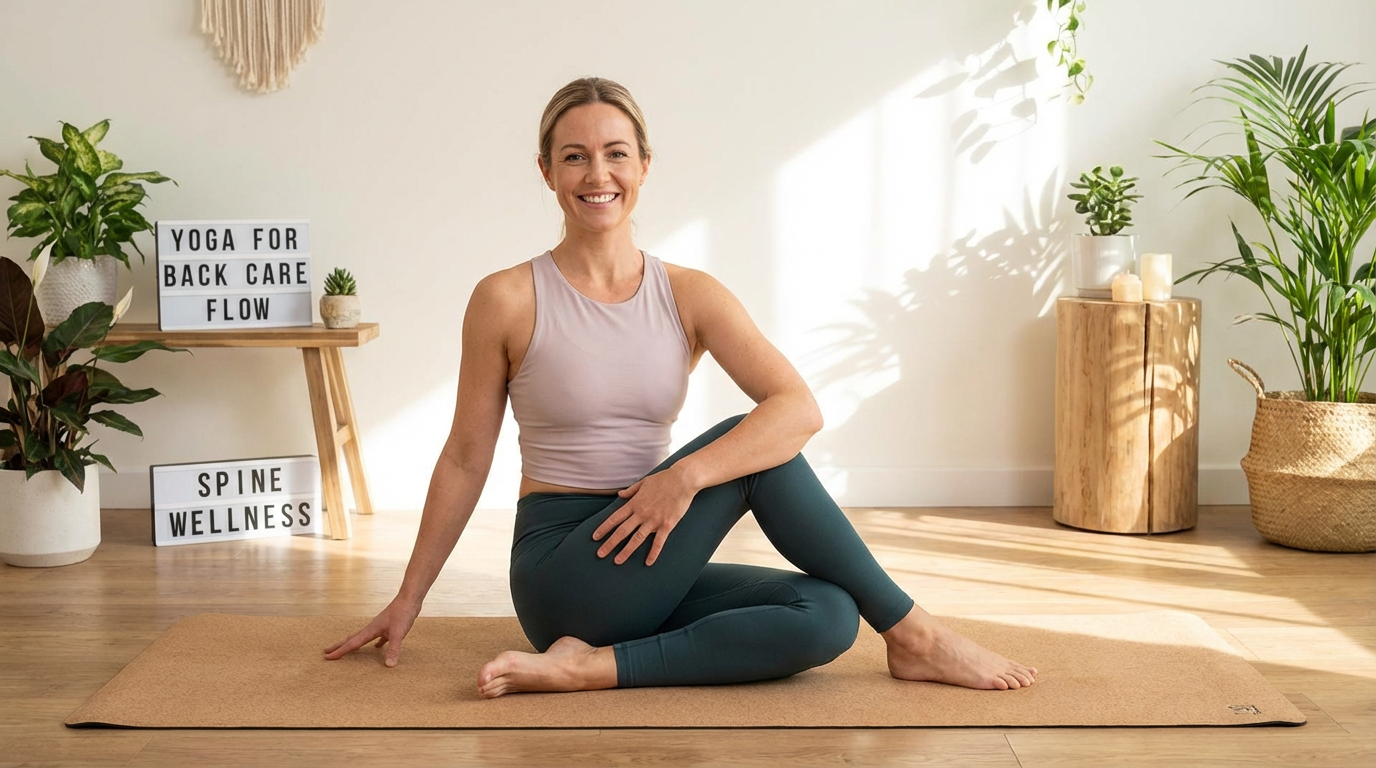
Supine twist: lie on your back, draw both knees toward the chest, then drop them to one side. Turn the gaze or head the opposite way. Breathe into the lower back and ribs. Hold 1–2 minutes per side. This is one of the safest ways to rotate the spine. Seated or standing side bend: reach one arm up and lean gently to the opposite side. Do not collapse; keep length in the spine. Hold a few breaths per side. These movements add variety and release to the spine without loading it heavily.
Strength and Support: Core and Back
Gentle core work supports the back. Try a few rounds of tabletop (on hands and knees, extend one arm and the opposite leg, keep the spine neutral). Hold 5–10 breaths per side. Or do a short hold in boat pose (navasana) with bent knees—only if it does not aggravate the lower back. Bridge pose (setu bandhasana): lie on your back, feet flat, knees over ankles. Lift the hips toward the ceiling and squeeze the glutes gently. Hold 5–10 breaths. This strengthens the posterior chain and can relieve some lower back stiffness. If bridge bothers you, skip it or do a single-leg bridge with one foot on the floor.
Forward Folds and Rest
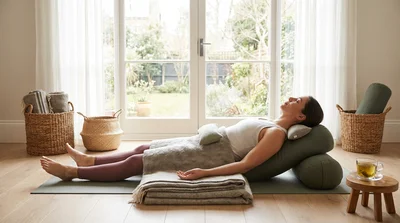
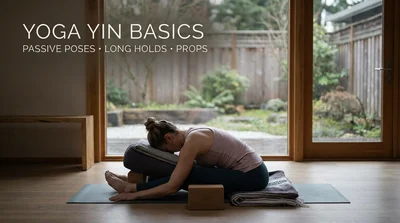
Seated forward fold with bent knees if needed: let the spine round gently; do not force the head toward the knees. Hold 1–2 minutes. Child''s pose: knees under hips or wider, rest the forehead on the floor or a block. Stay 1–2 minutes. These poses offer a gentle stretch and a chance to rest. Finish with 5–10 minutes of Savasana so the nervous system can integrate the practice. If the lower back is sensitive, place a cushion under the knees in Savasana or bend the knees and place the feet on the floor.
Building a Sustainable Practice
Consistency matters. A short back care flow 2–4 times per week often brings more benefit than an occasional long session. You can do it on its own or after other movement. If you have a history of back issues, work with a teacher or physio to adapt poses—for example, avoiding deep forward folds or twists if they are not suitable. Progress is gradual; be patient and kind to your back. This flow is a way to care for your spine over time, not to fix everything in one session.
Summary
- Purpose: Support spinal mobility, release tension, and strengthen support muscles; gentle and safe.
- Key elements: Breath awareness, cat-cow, pelvic tilts, supine twist, side bends, gentle core and bridge, forward fold, child''s pose, Savasana.
- Safety: No sharp pain; modify or skip poses as needed; seek professional advice for injury or pain.
- Frequency: 2–4 times per week for lasting benefit.
This back care flow is a simple, sustainable way to support your spine and ease everyday stiffness.