Why Standing Balance Matters
As a yoga instructor, I love teaching standing balance: these poses build stability, focus, and leg strength while calming the mind when we link them with breath. Tree, eagle, half-moon, and dancer are classics that improve proprioception and coordination. You do not need to be already flexible or strong — balance is a skill that grows with practice. We work one leg at a time, use the floor or a wall for support when needed, and keep the breath steady. This sequence is suitable for most practitioners; adapt the depth and duration to your body.
Grounding and Breath
Start in mountain pose: feet hip-width or together, weight even, spine long, shoulders relaxed. Close the eyes or soften the gaze and take 5–10 breaths. Feel the feet root into the floor; let the crown of the head lift. This grounding is the foundation for all standing balances. Whenever the balance wobbles, return to the breath and the sensation of the standing foot — that is your anchor.
Tree Pose (Vrksasana)
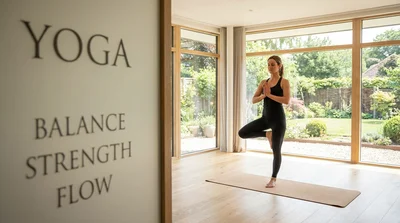
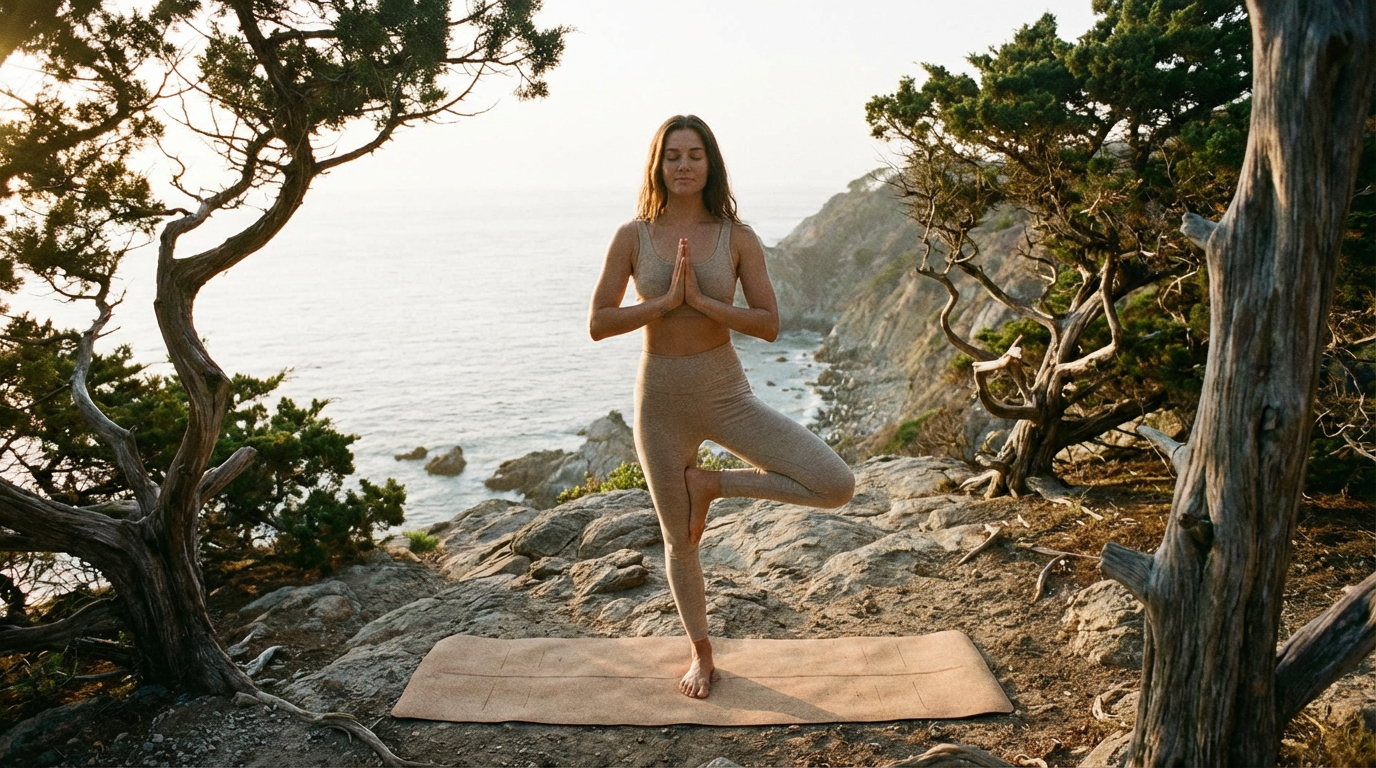
Shift weight onto one leg. Place the sole of the other foot on the inner thigh, calf, or ankle of the standing leg (never on the knee). Bring the hands to the heart or overhead. Fix the gaze on a point in front of you (drishti) to help balance. Hold 1–2 minutes per side. If the foot slides, use a wall or place the foot lower on the leg. Tree builds focus and hip stability; breathe steadily and avoid gripping the standing leg — allow the muscles to work without tension.
Eagle Pose (Garudasana)
From standing, wrap one thigh over the other and, if possible, hook the foot behind the standing calf. Wrap the arms: one arm under the other and press the palms together or the backs of the hands. Sit back slightly and hold 30–60 seconds per side. Eagle opens the upper back and hips and demands concentration. If the full wrap is too much, do legs only or arms only. Unwind slowly and repeat on the other side.
Half-Moon Pose (Ardha Chandrasana)
From a wide stance, turn one foot out and bend that knee; place the hand on the floor or a block beside the front foot. Lift the back leg parallel to the floor and open the chest and hips toward the ceiling. Extend the top arm up; gaze can be down, forward, or up. Hold 30–60 seconds per side. Half-moon strengthens the standing leg and core and opens the side body. Use a block under the hand if the floor is far; you can also practice with the back against a wall for support.
Dancer Pose (Natarajasana)
Stand on one leg. Bend the other knee and reach back to hold the foot or ankle (or use a strap). Kick the foot into the hand and lift the chest; the front of the thigh stretches and the back opens. Keep the standing leg steady and the gaze forward or slightly up. Hold 30–60 seconds per side. Dancer requires openness in the shoulder and quad; if you feel strain, use a strap or reduce the lift. Never force the knee; the grip is on the foot or ankle, not the knee.
Flowing Between Poses
You can link the poses in a short flow: mountain → tree (right) → tree (left) → eagle (right) → eagle (left) → half-moon (right) → half-moon (left) → dancer (right) → dancer (left) → mountain. Move slowly and breathe; take a breath or two between sides. The sequence can take 15–25 minutes depending on hold length. There is no rush — quality of balance and breath matters more than speed.
Modifications and Safety
Use a wall for tree, half-moon, or dancer if balance is unsteady. For half-moon, a block under the hand reduces the reach and makes the pose more accessible. For eagle, do not force the wrapped leg; a simple cross of the ankles is fine. For dancer, a strap around the foot allows the arm to stay straight and reduces shoulder strain. If you have ankle, knee, or hip issues, shorten the holds and avoid deep compression. Always come out of a pose if you feel sharp pain or dizziness.
Summary
- Poses: Mountain, tree, eagle, half-moon, dancer — build stability, focus, and leg strength.
- Breath: Steady breath and a fixed gaze (drishti) support balance; return to the standing foot when wobbly.
- Modifications: Wall, blocks, strap; shorten holds and reduce depth as needed.
- Duration: 15–25 minutes for the full sequence; practice 2–3 times per week for progress.
Standing balance sequence in yoga is a powerful way to build steadiness and focus: ground through the feet, breathe, and let the poses meet you where you are.