What Is Restorative Yoga?
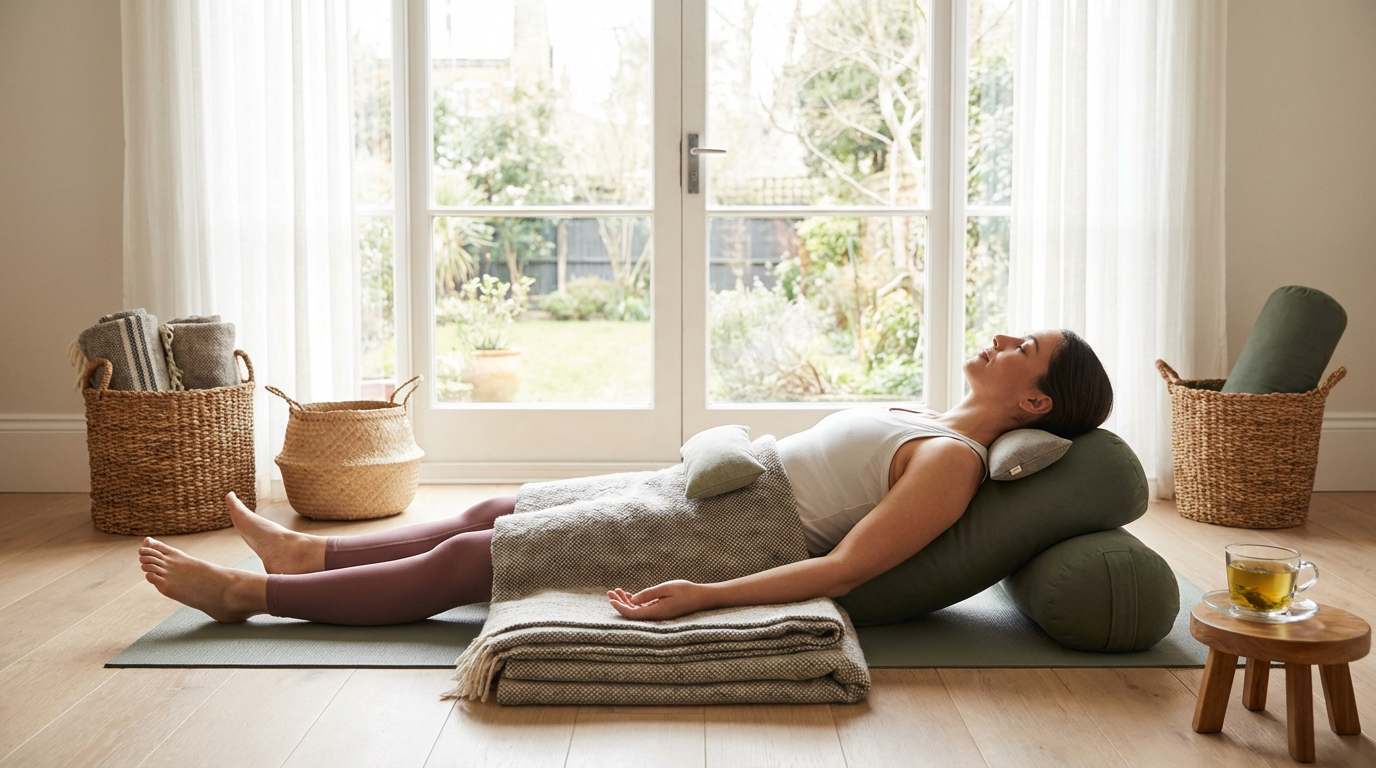
Restorative yoga uses props (bolsters, blankets, blocks) to support the body in passive poses held for several minutes. The aim is deep relaxation and nervous system down-regulation rather than stretch or strength. From a CNS perspective, this practice encourages the parasympathetic response and can support sleep and recovery when done regularly. It is especially useful after stress, illness, or intense training, and for people who find it hard to switch off.
Unlike active yoga flows, restorative poses require minimal muscular effort; the props do the work so you can release. Breath awareness and a quiet environment enhance the effect. Many people notice better sleep and lower perceived stress after adding a short restorative sequence to their routine.
What the Evidence Shows
Research on restorative yoga is less extensive than on more active styles, but studies and reviews suggest it can reduce stress, improve heart-rate variability, and support subjective sleep quality. The mechanisms are thought to involve parasympathetic activation and reduced sympathetic tone. Restorative practice is often recommended as part of integrative approaches to insomnia, anxiety, and chronic stress. It does not replace medical or psychological care but can complement it.
Basic Restorative Poses
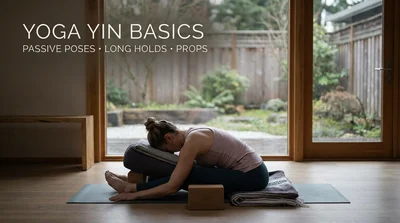
Supported child''s pose: Kneel with a bolster under the torso and forehead resting on hands or the bolster; hold 3–5 minutes. Legs up the wall (viparita karani): Lie on your back with legs resting against a wall; place a folded blanket under the hips if needed. Stay 5–10 minutes. Supported reclining bound angle (supta baddha konasana): Recline with a bolster along the spine and soles of the feet together; support the knees with blocks or blankets. Hold 5–10 minutes. Supported savasana: Lie on your back with a bolster under the knees and perhaps a folded blanket under the head; 5–10 minutes. Use enough props so there is no strain; the body should feel fully supported.
How to Practice
Choose 2–4 poses per session; total time can be 15–30 minutes or longer. Set up in a quiet, dim space and avoid practising too close to a heavy meal. Breathe naturally and allow the body to sink into the supports. If the mind wanders, gently return to the breath. After each pose, transition slowly. Restorative yoga is safe for most people; if you have injuries, high blood pressure, or glaucoma, adapt poses (e.g. avoid long inversions) and seek guidance if needed.
Summary
- Purpose: Deep relaxation and nervous system recovery through supported, passive poses.
- Evidence: Associated with reduced stress and improved subjective sleep; supports parasympathetic tone.
- Practice: 2–4 poses, 3–10 minutes each; use props generously; quiet environment.
- Safety: Adapt for injury, blood pressure, or eye conditions; avoid strain; complement, do not replace, medical care.
Restorative yoga is a valuable tool for recovery and stress management. Introduce it gradually and use it consistently for best results.