What Is Yin Yoga?
Yin yoga is a slow, floor-based style of yoga that uses long-held, passive poses to target the deeper connective tissues—fascia, ligaments, and the joint capsules—rather than muscles. Unlike more dynamic (yang) practices, yin emphasises stillness: you move into a shape, find a sustainable edge of sensation, and then hold for several minutes while breathing and relaxing into the stretch. The practice has roots in both traditional Chinese meridian theory and modern anatomy; teachers such as Paul Grilley and Sarah Powers helped formalise it in the West. Yin is not about achieving a "perfect" pose or building strength or heat. It is about allowing the body to release over time under gentle, sustained load, which can improve flexibility, ease stiffness, and support a calmer nervous system. For many people, yin complements active yoga or other fitness by balancing intensity with recovery and reflection. Classes are usually done on the floor with minimal movement between poses, making it accessible even if you are new to yoga or prefer a slower pace.
Core Principles: Long Holds, Passive Release, and Connective Tissue
Three principles define how yin works and why it feels different from a typical yoga or stretching class.
Long holds. Poses are typically held for three to five minutes, and sometimes longer. Muscles respond quickly to stretch; connective tissue (fascia, ligaments, tendons) responds to sustained, moderate tension over time. Short holds mainly affect muscle; long holds allow stress to reach the deeper, less elastic layers. That is why yin can feel intense even when the pose looks minimal—you are loading tissues that do not change quickly.
Passive approach. You use gravity and the weight of the body rather than active muscular effort. You relax into the pose instead of pulling or pushing. The idea is to soften and allow the stretch to deepen gradually, rather than forcing. If you find yourself gripping or bracing, you have likely gone past your useful edge; backing off slightly and breathing into the sensation is more in line with yin.
Targeting fascia and connective tissue. Fascia is the web of collagenous tissue that wraps muscles, organs, and bones and connects different parts of the body. It can become stiff or restricted through inactivity, injury, or repetitive movement. Yin poses apply a slow, sustained load to these tissues, encouraging hydration and remodelling over time. The same principle applies to ligaments and the capsules around joints. The goal is not to "stretch" in the usual sense but to stress the tissue gently and consistently so it can adapt. Finding an edge—a clear sensation that is not sharp or shooting—and staying there is key.
Benefits of Yin Yoga
Regular yin practice is associated with several benefits, although high-quality research specific to yin is still limited compared with general stretching or yoga.
Flexibility and joint mobility. Long-duration, low-intensity stretching can improve range of motion and reduce stiffness, especially around the hips, spine, and shoulders. Many people notice that holding yin poses regularly makes other activities—sitting, walking, or more active yoga—feel easier.
Stress relief and nervous system regulation. The combination of stillness, breath awareness, and mild physical sensation can shift the nervous system toward rest and digestion. Yin is often used as a recovery or wind-down practice and can support better sleep and a calmer baseline when practised consistently.
Body awareness and mindfulness. Because you hold poses for several minutes, you have time to notice sensation, breath, and resistance. That can deepen body awareness and a more mindful relationship to physical limits—useful both on and off the mat.
Complement to yang practice. If you do strength training, vinyasa, running, or other dynamic work, yin can balance that with a practice that does not add more muscular or cardiovascular load. It is often scheduled on rest days or after intense sessions.
Individual responses vary; benefits tend to accumulate with consistency (e.g. two to four sessions per week) rather than from occasional long sessions. Some practitioners also report better sleep, reduced mental chatter, and a greater sense of acceptance toward physical limits—outcomes that align with the meditative, non-striving quality of the practice. While yin is not a substitute for medical treatment for anxiety or chronic pain, it can be a useful part of a broader self-care and movement routine.
Key Poses: Butterfly, Dragon, Sphinx, Child's Pose
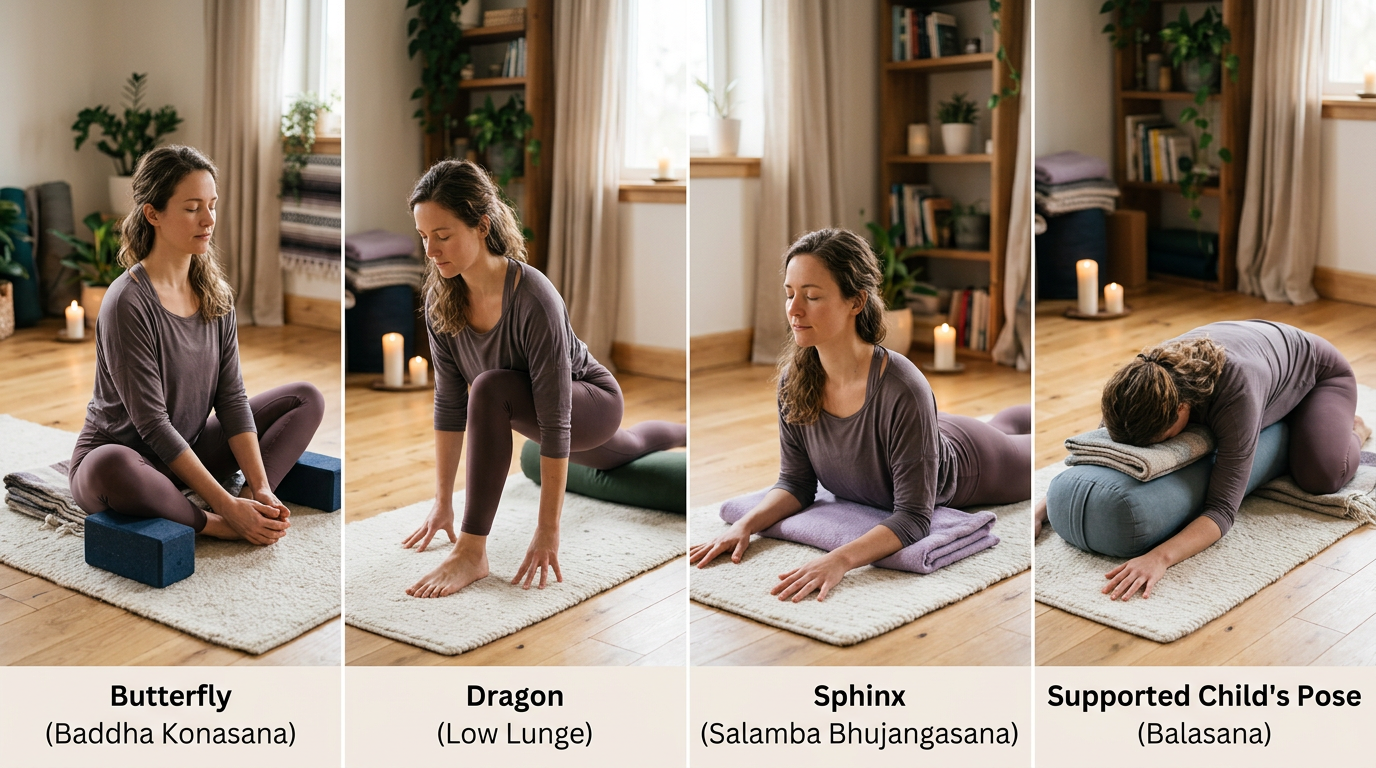
Yin classes draw from a set of floor-based poses. Below are four that appear often and how to approach them.
Butterfly (Baddha Konasana, yin style). Sit with the soles of the feet together and knees out to the sides. Allow the knees to float or rest toward the floor; do not push them. Fold forward only to an edge of sensation in the hips or lower back. Use a cushion under the sit bones or under the forehead if needed. Hold three to five minutes, breathing into the hips and inner thighs. This pose targets the hips, inner groin, and lower back.
Dragon (low lunge variation). From hands and knees, step one foot forward between the hands and lower the back knee. The back foot can be top-of-foot down or toes tucked. Shift the hips forward and down to find a stretch in the front of the back hip and thigh. Keep the front knee over or behind the ankle. Use blocks under the hands or a bolster under the back knee for support. Hold two to four minutes per side. Dragon targets the hip flexors and quadriceps.
Sphinx. Lie on the belly and place the forearms on the floor, elbows under the shoulders, so the chest lifts slightly. Relax the lower back and let the spine lengthen. This is a gentle backbend that loads the lumbar spine and front of the body. If it is too strong, lower the arms or place a bolster under the chest. Hold two to four minutes. Sphinx prepares the spine for deeper backbends and can ease compression in the lower back when done with awareness.
Child's Pose (Balasana). From hands and knees, sit the hips back toward the heels and fold forward, arms extended or alongside the body. Rest the forehead on the floor or on a block or stacked fists. This pose offers a mild release for the back, hips, and shoulders and is often used as a rest between more intense shapes. Hold for two to five minutes. You can widen the knees for more space for the belly and lower back.
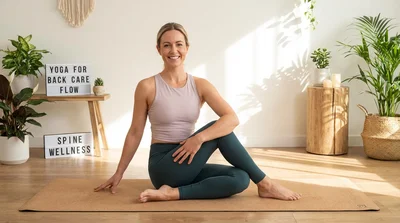
Other common yin poses include Saddle (reclining hero), Reclined Twist, Dragonfly (wide-legged forward fold), and variations of Seal (deeper backbend). In all of them, the same rules apply: find an edge, hold still, breathe, and use props so the body can relax. When practising at home, start with a few poses you know well and add others as you learn them from a teacher or a reliable video. Sequencing often moves from opening the lower body (hips, thighs) to the spine (twists, gentle backbends) and ends with a restful shape such as Child's Pose or a supported Savasana.
How to Practice: Duration, Props, and Safety
Duration. A typical yin class runs 45 to 90 minutes. Poses are usually held three to five minutes each; some teachers use longer holds (five to seven minutes or more) for a few key shapes. At home, a short sequence of five to seven poses can be done in 30 to 45 minutes. Consistency matters more than length—two or three 45-minute sessions per week often yield more benefit than one very long session occasionally.
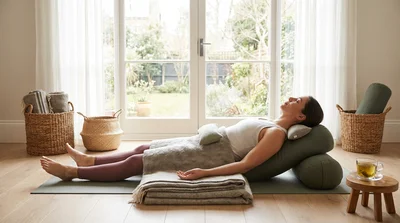
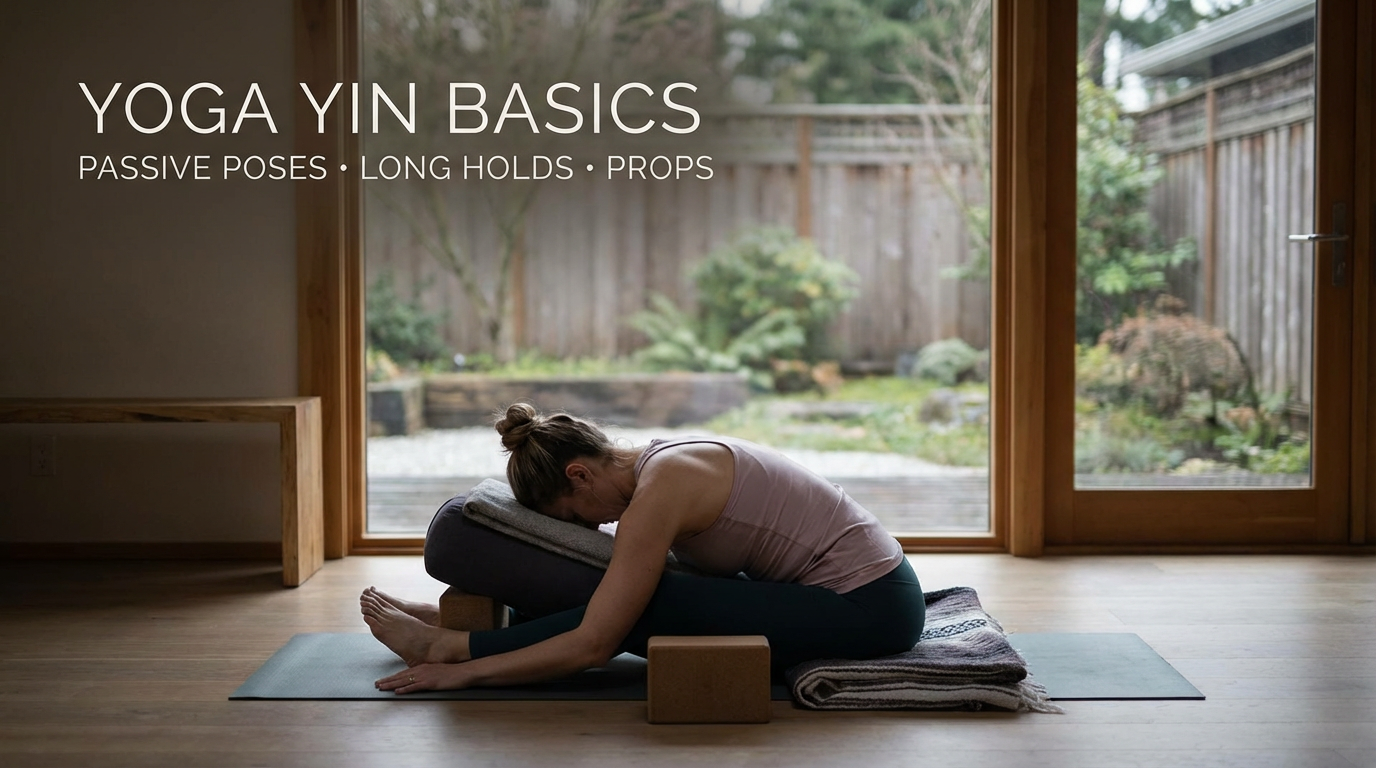
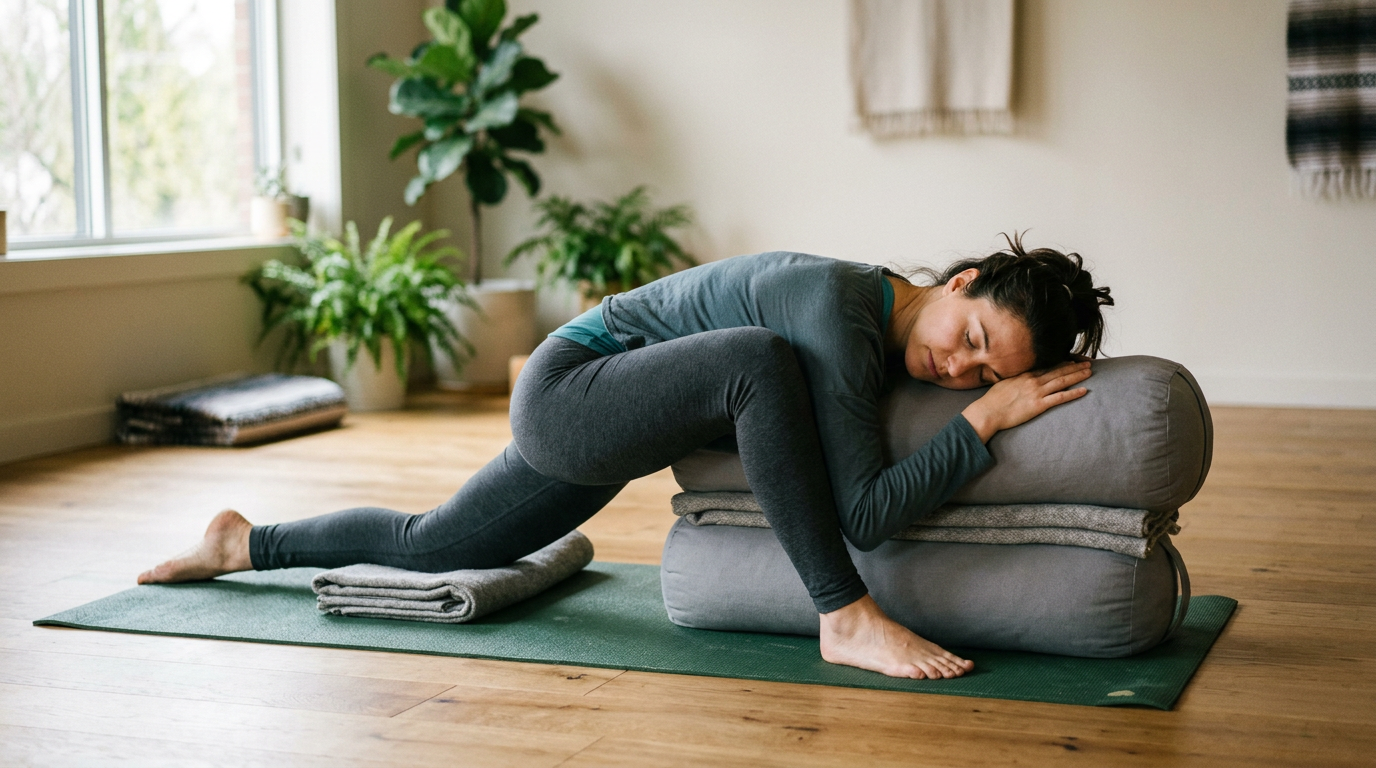
Props. Props are central to yin. Use a bolster under the knees in Butterfly or under the chest in Sphinx; under the back knee in Dragon; or along the spine in reclining poses. Blocks can raise the floor for the hands or sit bones, or support the head in forward folds. Blankets add cushioning under joints and warmth. The aim is to reduce unnecessary strain so you can stay in the pose without gripping. If you do not have yoga props, cushions, firm pillows, and folded towels work well.
Finding your edge. Move into a pose until you feel a clear but manageable sensation—stretch, tension, or mild intensity—without sharp or shooting pain. Stay there; if the sensation fades, you may ease slightly deeper, but avoid bouncing or forcing. Breathe slowly and direct the breath into the area being stretched. If you feel numbness, tingling, or sharp pain, ease off or come out of the pose.
Exiting poses. Come out of each pose slowly. After long holds, tissues are more pliable; moving too quickly can strain them. Use the hands to support the legs or spine as you transition, and take a few breaths in a neutral position before the next pose.
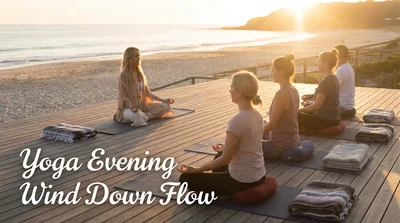
Environment. Practising in a quiet, slightly warm room can help the body and mind settle. Avoid cold drafts; some people like to cover themselves with a blanket during longer holds. Dim lighting or candlelight is optional but can support a calmer mood. If you practise in the evening, yin can serve as a wind-down before bed; if you practise in the morning, it can ease stiffness and set a reflective tone for the day.
Who Yin Yoga Is For
Yin is suitable for most people, including beginners, provided they respect their limits and use props. It is especially useful for those who want to improve flexibility and joint mobility without high intensity; people in recovery from injury (with clearance from a healthcare provider where appropriate); anyone with a lot of yang activity (running, gym, vinyasa) who wants a counterbalance; and those looking for a more reflective, meditative movement practice. If you have hypermobility, reduce the depth and duration of poses and avoid pushing to end range. If you have joint or disc issues, osteoporosis, or are pregnant, modify or skip poses that load the affected area and seek guidance from a qualified teacher or physiotherapist. Yin is a complement to a balanced movement and stress-management routine, not a substitute for medical or mental health care.
Yin vs Yang: How They Differ and Work Together
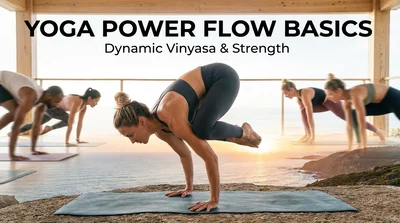
In Taoist philosophy, yin and yang represent complementary opposites. Yang is active, warming, muscular, and dynamic—think vinyasa flow, strength training, or running. Yin is passive, cooling, and focused on sustained stillness and release. In a balanced practice, yang builds strength, stamina, and heat; yin maintains or restores mobility, cools the system, and supports recovery. Doing only yang can lead to tightness and burnout; doing only yin may not challenge the cardiovascular system or muscles enough for some goals. Many practitioners alternate: for example, yang-heavy days two or three times per week and yin one or two times, or a short yin sequence after a yang session. The ratio depends on your goals, recovery needs, and schedule; there is no single "right" balance.
Key Takeaways
- Yin yoga uses long-held (typically 3–5+ minutes), passive floor poses to target fascia, ligaments, and joints rather than muscles.
- Core principles: long holds, passive release (no forcing), and sustained gentle stress on connective tissue. Find an edge of sensation and breathe into it.
- Benefits may include improved flexibility, joint mobility, stress relief, and nervous system regulation; it complements active (yang) practice.
- Key poses include Butterfly, Dragon, Sphinx, and Child's Pose; use props (bolster, blocks, blankets) so the body can relax into each shape.
- Practice 2–4 times per week for 45–90 minutes (or 30–45 minutes at home). Come out of poses slowly to protect tissues.
- Yin is for most people; modify for hypermobility, joint or disc issues, and pregnancy. It supports but does not replace medical or mental health care.
- Yin and yang work together: yang builds strength and heat; yin supports mobility, recovery, and calm. Balance both according to your needs.
Yin yoga is a practical way to maintain flexibility, ease stiffness, and add a reflective, low-intensity element to your movement routine. Use props generously, respect your edge, and pair it with active practice and healthy lifestyle habits—including sleep, nutrition, and stress management—for lasting benefit. For herbs and supplements that may support recovery and relaxation alongside your practice, see herbs on iHerb.