Why Hip Openers Matter
As a yoga teacher, I see how often tight hips show up—from long sitting, running, cycling, or simply holding tension in the body. The hips are a complex area: they hold emotion and stress for many people, and limited mobility there can contribute to lower back or knee discomfort. A hip opener sequence is a series of poses designed to create space and release in the hip flexors, external rotators, and surrounding tissues. This practice is not about forcing flexibility; it is about breathing into the area, respecting your current range, and allowing gradual release. You do not need to be flexible to start—only willing to move slowly and listen to your body.
Breath and Safety First
Begin with a few minutes of calm breathing. Let the breath be natural; then gently extend the exhale. In hip openers, we often hold tension or push too soon. The breath reminds us to soften: on each exhale, imagine allowing the hip to release a little. If you feel sharp pain, numbness, or pinching, ease out of the pose or reduce the intensity. Sensation (stretch, mild intensity) is normal; pain is not. Never bounce or force. Your practice is yours—honour what your body allows today.
Warm-Up: Low Lunge and Lizard
Start in a low lunge: one foot forward, back knee down (use a cushion under the knee if needed). Square the hips forward and breathe into the front of the back hip. Hold for 1–2 minutes per side. From there, you can move into lizard pose: lower the forearms to the floor (or blocks) inside the front foot, back knee can stay down or lift for more intensity. This targets the hip flexors and inner hip. Stay 1–2 minutes per side, breathing steadily. If the front knee bothers you, keep it behind the ankle or ease off.
Classic Hip Openers: Pigeon and Figure-Four
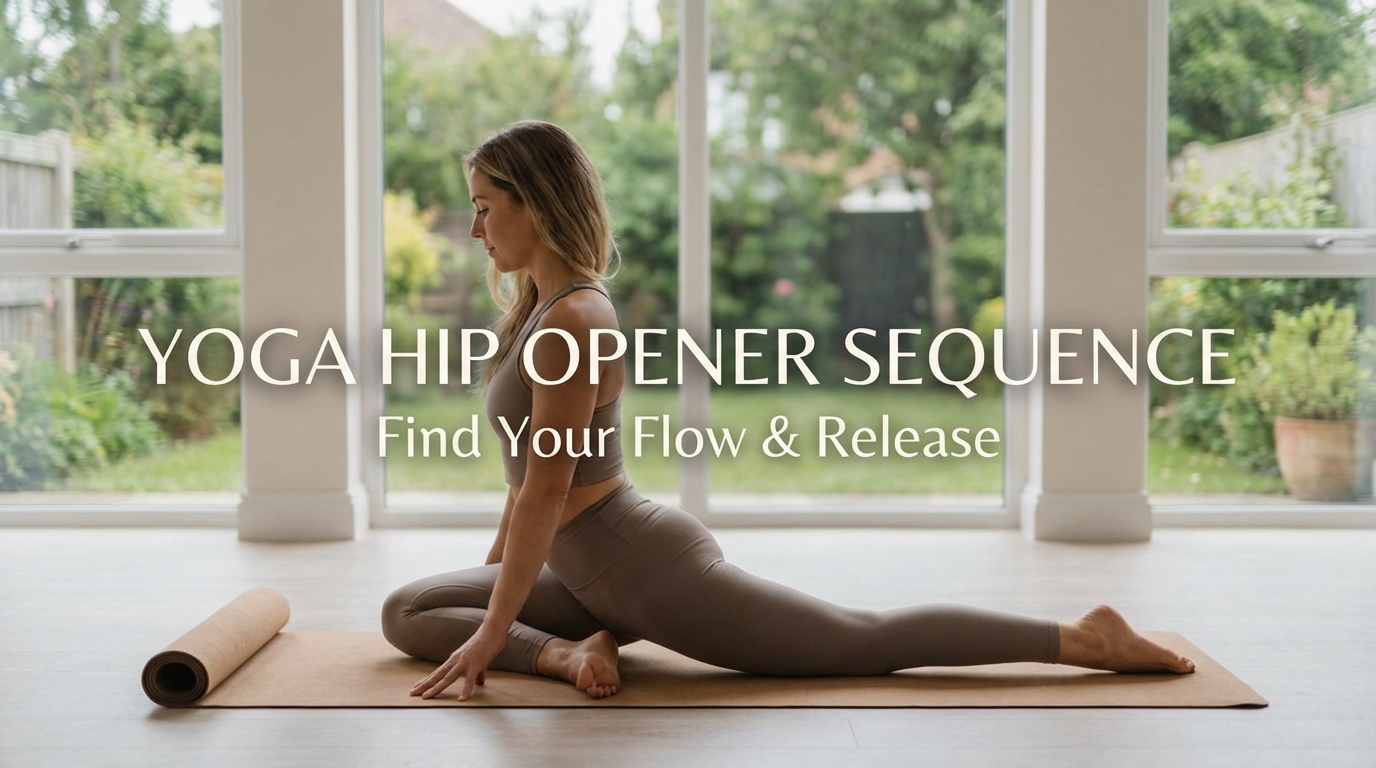
Pigeon pose (eka pada rajakapotasana variation): from all fours, bring one shin forward (parallel to the front of the mat or slightly angled). Extend the back leg behind. If the front hip is high, use a block or cushion under the sitting bone. Fold forward if it feels good, or stay upright. Hold 2–3 minutes per side, breathing into the hip. Figure-four (reclining or standing): lie on your back, cross one ankle over the opposite knee, and draw the supporting leg toward you. Or do the same shape standing, with the foot of the bent leg on a chair or wall. These poses address the external rotators and glutes. Ease off if you feel strain in the knee.
Seated and Supine Options
Butterfly (baddha konasana): sit with the soles of the feet together, knees out to the sides. Let the knees descend toward the floor over time; do not press them down. Hold for 2–3 minutes. Supine twist with crossed legs: lie on your back, cross one ankle over the opposite knee, then drop both legs to one side. This combines hip release with a gentle spinal twist. Hold 1–2 minutes per side. Finish with a few minutes of Savasana or child''s pose so the body integrates the release.
Building a Regular Practice
Hip openers respond well to consistency. A short sequence 2–4 times per week often brings more change than an occasional long stretch. You can do this sequence on its own or add a few poses after other movement (e.g. after a run or gym session). If you have hip or knee issues, work with a qualified teacher or physiotherapist to adapt poses. Progress is gradual; be patient and kind to your body.
Summary
- Purpose: Create space and release in the hips; support mobility and ease.
- Key poses: Low lunge, lizard, pigeon, figure-four, butterfly, supine twist.
- Safety: Breathe; avoid sharp pain; use props; ease off if the knee is stressed.
- Frequency: 2–4 times per week; consistency over intensity.
This hip opener sequence is a safe, sustainable way to care for your hips and support overall ease in the body.