Why Neck and Shoulders Hold Tension
As a yoga instructor, I see how often neck and shoulder tension comes from desk work, screens, and stress. The upper trapezius, levator scapulae, and chest muscles shorten and tighten; the breath becomes shallow. Gentle yoga sequences can release these areas, improve mobility, and restore a sense of ease. This practice is not about stretching to the limit — it is about listening to the body, breathing into tight spots, and allowing gradual release. You need no prior experience; only a quiet space and 10–20 minutes.
Breath as Foundation
Begin with a few minutes of conscious breathing. Sit or lie comfortably. Inhale for four counts, exhale for six (or longer if it feels good). Lengthening the exhale activates the parasympathetic nervous system and supports relaxation. If the mind wanders, gently return to the breath. Let the breath lead the practice: soft, full, and even. This sets the tone for the entire sequence — we are not pushing; we are inviting release.
Thread the Needle
From all fours, slide one arm under the body (palm up or down), so the shoulder and ear move toward the floor. The other hand can stay on the mat or walk to the side. Feel the stretch in the shoulder blade and side body. Breathe here for 1–2 minutes, then repeat on the other side. If the supporting wrist is sensitive, make a soft fist or use a folded blanket. This pose is one of the most effective for releasing the upper back and shoulder; take your time and avoid forcing.
Cow Face Arms
Seated or standing, reach one arm up and bend the elbow so the hand comes toward the upper back; bring the other arm behind the back and try to clasp the hands or hold a strap. If the hands do not meet, use a strap or towel between them. Keep the spine long and the chest open; avoid collapsing forward. Hold 1–2 minutes per side. Cow face arms open the shoulders and chest and can relieve tension from typing and driving. If you have shoulder issues, reduce the depth or skip this pose and choose thread the needle or ear-to-shoulder instead.
Ear to Shoulder and Gentle Neck Stretches
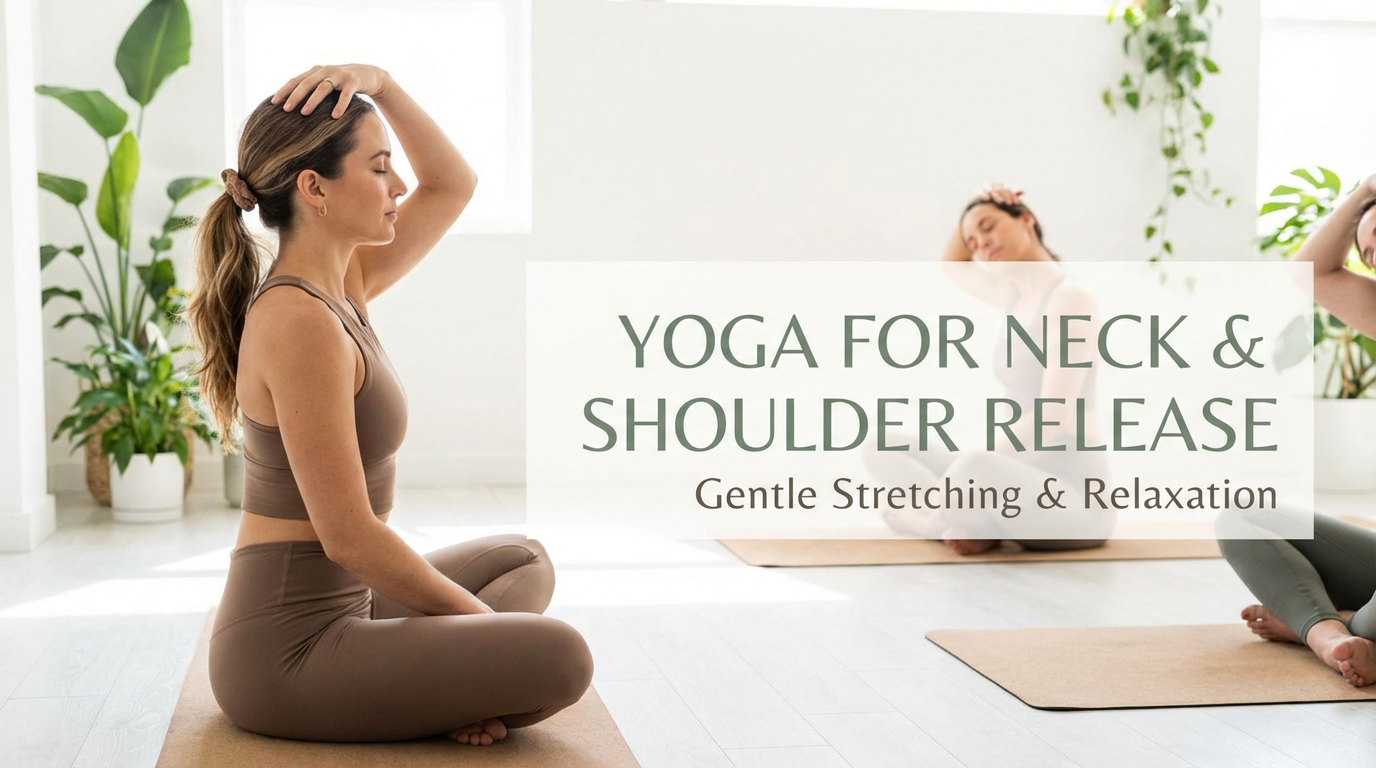
Sit or stand tall. Slowly tilt the head to one side, bringing the ear toward the shoulder. Keep the opposite shoulder down; do not lift it to meet the ear. Hold 30–60 seconds per side, breathing into the stretch. You can add a gentle assist with the hand on the side of the head — no pulling, only a light invitation. For more release, combine with a slight turn of the chin toward the armpit. Avoid sharp or sudden movements; if you have disc issues or vertigo, skip aggressive neck work and consult a professional.
Child''s Pose and Chest Opener
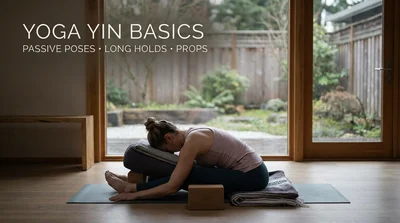
Child''s pose — knees under hips, forehead to the mat, arms extended or alongside the body — allows the upper back to round gently and the shoulders to soften. Stay 1–2 minutes, breathing into the back. For a chest opener, place the hands slightly wider than the shoulders and press the chest toward the floor between the arms (optional). This counters the forward slump of desk work. If the knees are sensitive, place a cushion between the thighs and calves or use a bolster under the torso.
Supine Twist and Final Rest
Lie on your back. Draw both knees toward the chest, then lower them to one side. Turn the gaze to the opposite side. Stay 2–3 minutes per side, allowing the spine and shoulders to release. Then come to savasana (corpse pose): legs slightly apart, arms away from the body, palms up. Rest 5–10 minutes. The nervous system integrates the practice in rest; do not skip this. When you are ready, roll to one side and rise slowly.
When to Practice and Safety
Practice 10–20 minutes daily or several times per week. Best times: after work to release the day''s tension, or in the morning to set a calm tone. Move slowly; never bounce or jerk. If you have neck or disc issues, vertigo, or recent injury, avoid strong neck stretches and get clearance from a healthcare provider. Use props (straps, blankets, blocks) to support the body. This sequence is a gift to yourself — keep it gentle and consistent.
Summary
- Focus: Upper trapezius, levator scapulae, chest — release through breath and gentle holds.
- Key poses: Thread the needle, cow face arms, ear-to-shoulder, child''s pose, supine twist, savasana.
- Duration: 10–20 minutes; consistency matters more than length.
- Safety: No forcing; skip aggressive neck work if you have disc issues or vertigo.
Neck and shoulder release through yoga is a simple way to counter desk tension: breathe, move slowly, and let the body open in its own time.