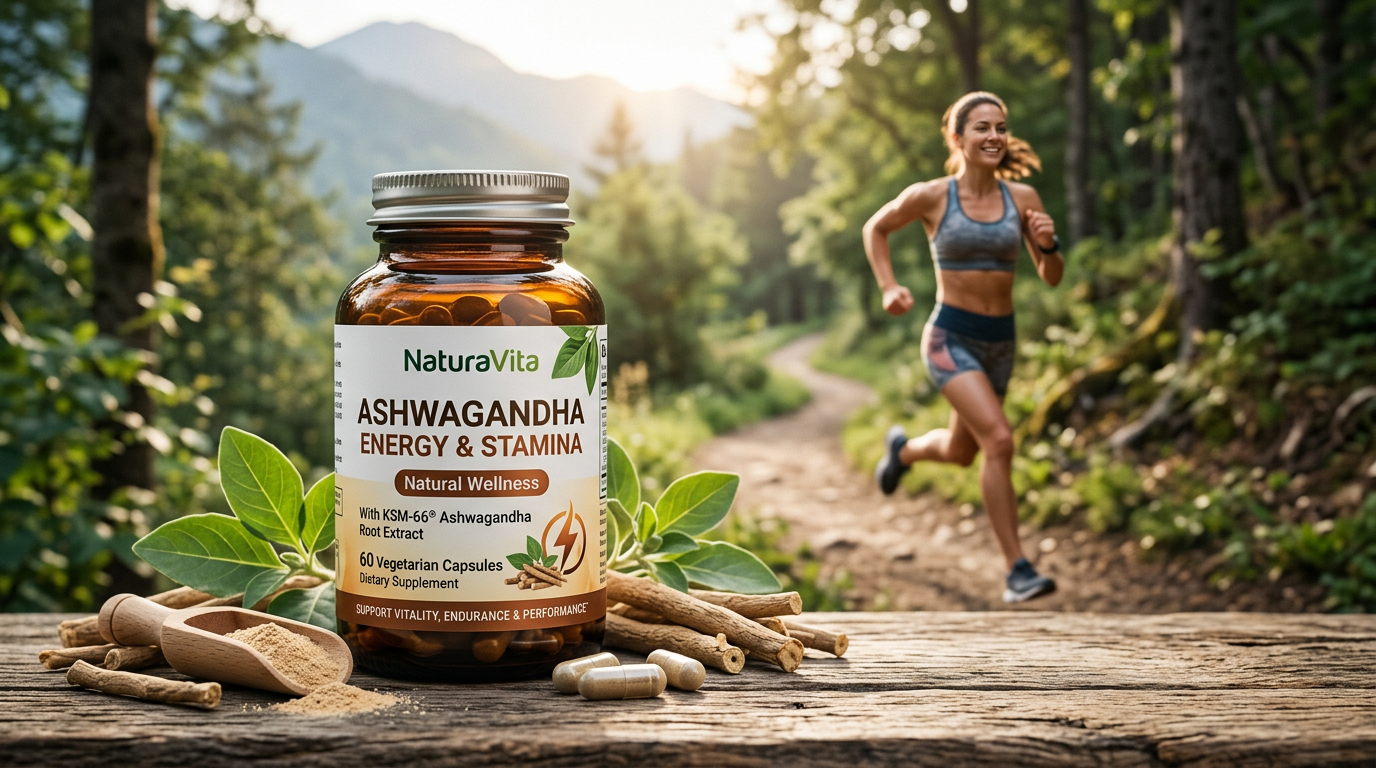
When people say they want more energy, they usually mean one of two things: either they want less fatigue (the body feels drained), or they want more stamina (they can maintain output in training or daily life without crashing). Ashwagandha is popular because it may support both, but not in the way a stimulant does. It is often discussed as an adaptogen: a plant that may help the body handle stress more effectively.
This article is a practical, fitness-focused guide: what ashwagandha is, what the evidence suggests for fatigue and performance, how to choose a form, how to dose and time it, and the main safety and interaction considerations. It is educational content, not medical advice. If you are pregnant, have thyroid disease, take sedatives, or have chronic health conditions, consult a clinician before use.
Quick takeaways
- Best use case: stress-related fatigue, poor recovery, or low drive where sleep and stress are limiting performance.
- Not a pre-workout: effects, if they occur, usually build over weeks rather than minutes.
- Evidence: some trials suggest improvements in perceived stress, sleep quality, strength, and training outcomes, but results vary by product and population.
- How to try it: pick one standardized extract, take it consistently, track outcomes for 6–8 weeks, and avoid stacking many new supplements at once.
- Safety: caution with pregnancy, thyroid issues, sedatives, and if you have a history of liver problems from supplements.
What is ashwagandha?
Ashwagandha (Withania somnifera) is a traditional herb used in Ayurvedic medicine. Modern supplements usually provide a root extract standardized for withanolides, the compounds most commonly associated with its effects. Because products differ widely, outcomes in real life depend heavily on the specific extract and the dose.
Ashwagandha is not a speed supplement. If it helps, the effect is more like turning down background stress so that your existing energy system works better: sleep gets easier, recovery improves, and training feels more sustainable.
Energy vs stamina vs fatigue: what you are actually trying to improve
Before adding a supplement, clarify the problem:
- Low energy all day: could be sleep debt, under-eating, iron deficiency, low B12, depression, or thyroid issues.
- Afternoon crash: often relates to meal composition, total calories, hydration, stress, or caffeine timing.
- Training stamina: can be a programming issue, fueling issue (especially carbohydrates), or inadequate recovery.
- Motivation and drive: often linked with stress load, sleep quality, and overall life schedule.
Ashwagandha most often fits the pattern where stress and recovery are the bottleneck. If your bottleneck is diet quality, total sleep time, or a medical issue, fix that first or in parallel.
How ashwagandha may support energy and stamina
The most practical way to think about ashwagandha is that it may support:
- Stress resilience: lowering perceived stress can reduce the feeling of being wired but tired.
- Sleep quality: better sleep can improve next-day energy and training recovery.
- Recovery signals: improved recovery may translate into better training consistency and stamina over time.
Because these effects are indirect, the right expectation is not more energy in 30 minutes, but better baseline over 2–8 weeks.
What does the evidence say?
Ashwagandha research is broad: stress, sleep, cognition, strength, and sometimes endurance. The key point is that results vary. Differences in extract type, dose, training status, and baseline stress matter.
A simple evidence-informed interpretation for athletes and active people:
- Stress and sleep: in people under stress or with sleep disruption, ashwagandha may improve perceived stress and aspects of sleep, which can indirectly improve energy.
- Strength and performance: some studies report improvements in strength measures and training outcomes when combined with resistance training.
- Endurance: findings are mixed; any benefit may be subtle and context-dependent.
Because the evidence is not uniform, the smartest approach is a structured trial with tracking, not blind long-term use.
How to run a clean 6–8 week trial
- Pick one product: a standardized root extract with clear labeling.
- Pick one goal: better recovery, lower perceived fatigue, improved sleep quality, or improved training output.
- Keep variables stable: do not change caffeine, training volume, and multiple supplements at the same time.
- Track outcomes weekly: sleep quality (1–10), morning energy (1–10), training performance metrics, and resting heart rate if you measure it.
- Decide: continue only if there is a clear benefit.
Dosing and timing (practical)
Study doses differ, but in real-world use, people often take ashwagandha once or twice per day. Timing choices usually depend on your main goal:
- For stress and sleep: evening dosing is common.
- For overall resilience: split doses morning and evening may be used.
- If it feels sedating: move the dose later in the day.
- If it feels stimulating: take it earlier and avoid late dosing.
Consistency matters more than perfect timing. If you forget doses frequently, you will not be able to judge the effect.
Which form to choose: root powder vs standardized extracts
Ashwagandha products fall into a few buckets:
- Root powder: traditional form; potency can vary and doses can be large.
- Standardized root extracts: more consistent, often easier to dose.
- Branded extracts: some products use specific extracts that have been studied in trials.
In practice, standardized extracts are usually the easiest for a clean trial because the dose is consistent.
How long until you feel it?
If ashwagandha helps you, the effect often appears gradually. Many people evaluate after 2–4 weeks and make a real decision at 6–8 weeks. If nothing changes after a consistent trial, it is fair to stop and focus on higher-impact levers.
Cycle or take continuously?
Some people cycle adaptogens, others take them continuously. Because long-term daily use is less studied than short- to medium-term use, a reasonable strategy is:
- take it consistently for 6–8 weeks
- assess benefits and side effects
- consider a short break to see whether the benefit persists without it
Stacking: what combines well (and what to avoid)
Keep stacks simple. If you are using ashwagandha for recovery and energy, the foundation is still sleep, food, and training plan.
Often paired with
- Magnesium: especially if intake is low; can support sleep and muscle function.
- Creatine: for strength and performance support; works through a different mechanism.
- Fueling: adequate protein and carbohydrates matter more than any stack.
Be cautious with
- Alcohol: it can sabotage sleep and recovery, counteracting the goal.
- Multiple sedating herbs: stacking many calming herbs increases grogginess risk.
- Multiple stress supplements at once: it becomes hard to know what helped.
Safety, side effects, and interactions
Ashwagandha is commonly tolerated, but side effects can occur. Common reports include digestive upset, headache, and changes in sleepiness. Stop use if you feel unwell and consult a clinician if symptoms persist.
Be extra cautious if any of the following apply:
- Pregnancy and breastfeeding: avoid unless specifically approved by your clinician.
- Thyroid disease: discuss with your clinician.
- Sedatives and sleep medications: combined effects may increase drowsiness.
- Autoimmune conditions or immunosuppressants: discuss before use.
- Liver concerns: avoid self-experimenting if you have a history of liver issues from supplements.
Who should consider ashwagandha for energy and stamina?
- Often a good fit: active adults with high stress and suboptimal recovery who also commit to improving sleep and fueling.
- Less likely to help: people who are chronically under-sleeping due to schedule or under-eating for long periods.
- Not the right first step: unexplained fatigue, suspected sleep apnea, or significant mood symptoms. Get evaluated.
FAQ
Is it a stimulant?
No. It is not comparable to caffeine. If it helps, it usually improves baseline resilience and recovery.
Can I take it before training?
You can, but it is not designed as an acute pre-workout.
What if it makes me sleepy?
Move it to the evening, lower the dose, or stop.
Key takeaways
- Ashwagandha may support energy and stamina indirectly by improving stress resilience, sleep, and recovery.
- Expect gradual changes over weeks, not an immediate boost.
- Use a clean trial: one product, one goal, stable routine, simple tracking.
- Prioritize safety with pregnancy, thyroid disease, sedatives, and liver concerns.