What Is CoQ10?
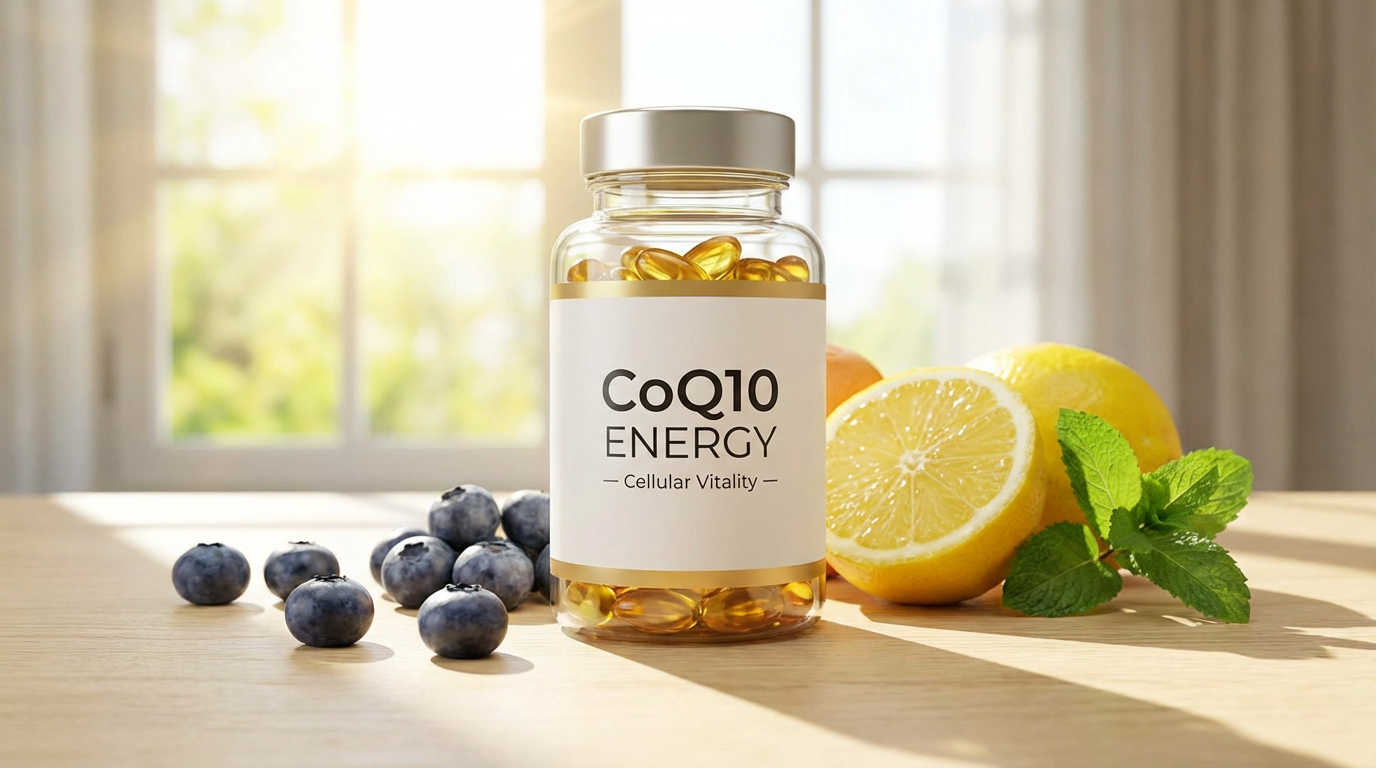
Coenzyme Q10 (CoQ10) is a compound that your body produces naturally. It plays a key role in cellular energy production in the mitochondria and also acts as an antioxidant. Tissues with high energy demand — heart, muscles, liver — contain more CoQ10. Levels can decline with age and may be lowered by some medications, notably statins used for cholesterol. Supplementing may help maintain levels when production or intake is insufficient.
CoQ10 and Energy
Because CoQ10 is involved in ATP (energy) production, low levels have been linked to feelings of fatigue in some people. Research in people on statins or with conditions affecting energy metabolism suggests that CoQ10 supplementation may improve perceived energy and reduce some medication-related side effects in certain cases. It is not a substitute for addressing sleep, diet, or underlying illness; think of it as support when levels are low or depleted.
Who Might Benefit?
People taking statins often have lower CoQ10 levels; some take a supplement to support muscle comfort and energy. Older adults, people with high oxidative stress, or those with conditions that affect mitochondrial function may also consider CoQ10 under medical guidance. If you feel persistently low on energy, a doctor can help rule out deficiencies or medical causes before relying on supplements alone.
Forms and Absorption
CoQ10 is fat-soluble and best absorbed when taken with a meal that contains fat. Ubiquinone is the standard form; ubiquinol is a reduced form that some brands market as better absorbed, especially in older adults. Evidence on ubiquinol vs ubiquinone is mixed; both can work. Typical supplemental doses range from 100–200 mg daily; higher doses are sometimes used under supervision. Split doses (e.g. twice daily) may improve absorption compared to one large dose.
Safety and Interactions
CoQ10 is generally well tolerated. High doses can occasionally cause mild digestive upset. It may interact with blood thinners (e.g. warfarin) and can theoretically affect blood pressure or blood sugar, so people on relevant medications should discuss use with a healthcare provider. Do not use CoQ10 as a replacement for prescribed treatments; use it as a complementary support when appropriate.
Summary
- Role: Supports cellular energy production and antioxidant defence; levels may drop with age or statins.
- Who may benefit: Those on statins, some older adults, or when levels are low (per a provider).
- How to take: With fat-containing meals; 100–200 mg daily is common; ubiquinol or ubiquinone.
- Safety: Generally safe; check with a doctor if on blood thinners or blood pressure medications.
CoQ10 for energy and cellular health is most useful when there is a reason to support levels; take with fat and follow label or provider advice.
Evidence and Practical Tips
Research on supplements has grown; quality matters: choose reputable brands and evidence-based doses. Give new supplements four to six weeks before judging effect. Supplements do not replace diet, sleep, or medical care. Consult your doctor if pregnant, on medications, or with a chronic condition. Compare vitamins and minerals on iHerb. Store in a cool, dry place; check expiry dates. Individual response varies; consistency and lifestyle remain the foundation.
Many factors influence how well a supplement works: baseline status, diet, sleep, and other medications. Start with the lowest effective dose and adjust as needed. Do not exceed upper limits unless under professional supervision. When combining supplements, introduce one at a time to identify any adverse reactions. A balanced approach—sleep, nutrition, movement, and stress management—remains the basis; supplements can support but not replace these habits. Your healthcare provider can help tailor intake and avoid interactions.
Evidence and Practical Tips
Research on supplements has grown; quality matters: choose reputable brands and evidence-based doses. Give new supplements four to six weeks before judging effect. Supplements do not replace diet, sleep, or medical care. Consult your doctor if pregnant, on medications, or with a chronic condition. Compare vitamins and minerals on iHerb. Store in a cool, dry place; check expiry dates. Individual response varies; consistency and lifestyle remain the foundation.
Many factors influence how well a supplement works: baseline status, diet, sleep, and other medications. Start with the lowest effective dose and adjust as needed. Do not exceed upper limits unless under professional supervision. When combining supplements, introduce one at a time to identify any adverse reactions. A balanced approach—sleep, nutrition, movement, and stress management—remains the basis; supplements can support but not replace these habits. Your healthcare provider can help tailor intake and avoid interactions.
Evidence and Practical Tips
Research on supplements has grown; quality matters: choose reputable brands and evidence-based doses. Give new supplements four to six weeks before judging effect. Supplements do not replace diet, sleep, or medical care. Consult your doctor if pregnant, on medications, or with a chronic condition. Compare vitamins and minerals on iHerb. Store in a cool, dry place; check expiry dates. Individual response varies; consistency and lifestyle remain the foundation.
Many factors influence how well a supplement works: baseline status, diet, sleep, and other medications. Start with the lowest effective dose and adjust as needed. Do not exceed upper limits unless under professional supervision. When combining supplements, introduce one at a time to identify any adverse reactions. A balanced approach—sleep, nutrition, movement, and stress management—remains the basis; supplements can support but not replace these habits. Your healthcare provider can help tailor intake and avoid interactions.