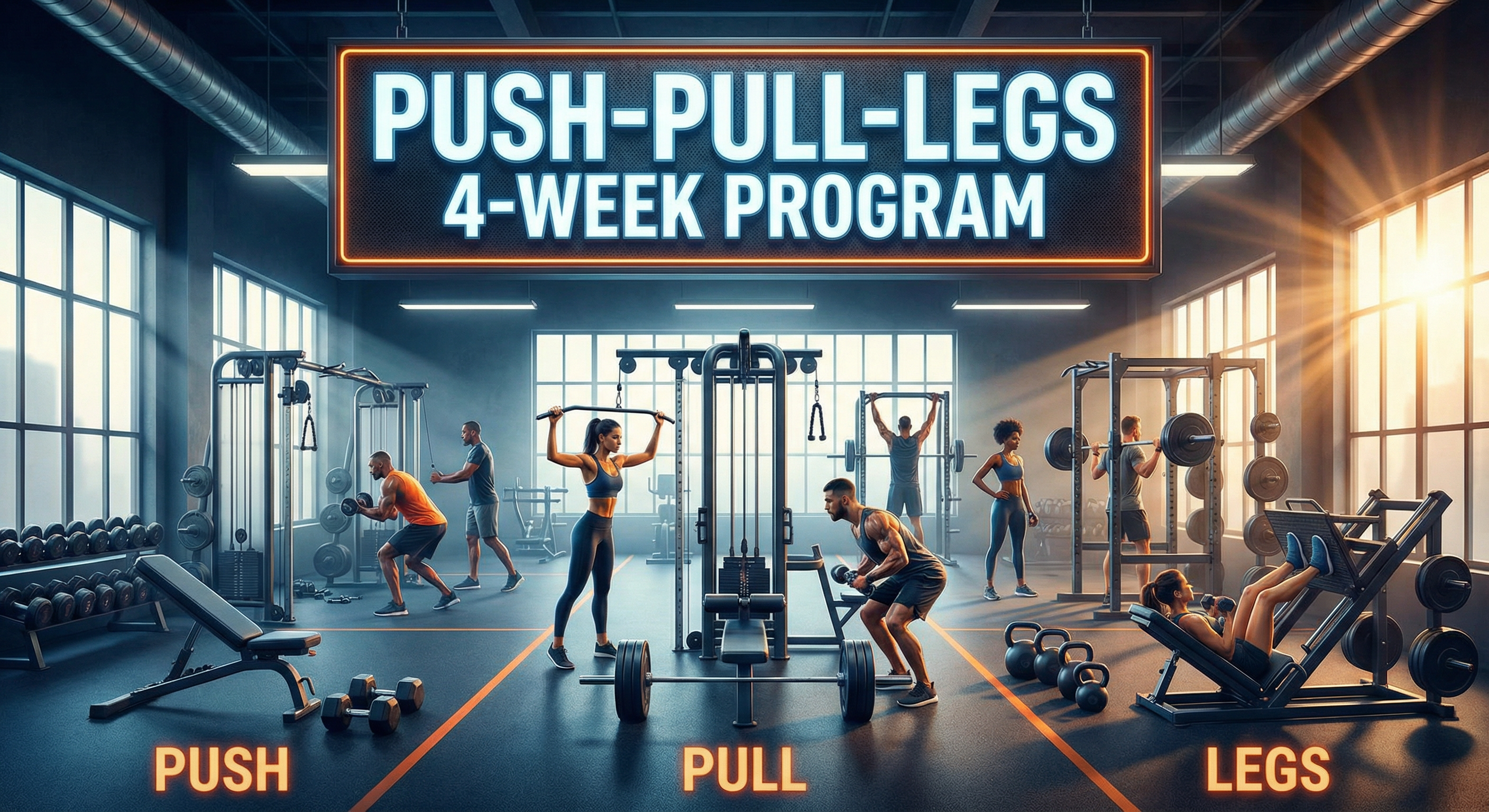
What Is Push-Pull-Legs?
Push-pull-legs (PPL) splits training into push days (chest, shoulders, triceps), pull days (back, biceps), and leg days (quads, hamstrings, glutes, calves). Each muscle group gets trained at least once per week; many run PPL twice per week for six sessions. The 4-week block we describe fits a first cycle or a focused mesocycle. This structure allows adequate recovery between sessions for the same muscle group while providing enough frequency and volume for growth when combined with progressive overload and good nutrition.
Research on training periodisation and progressive overload shows that structured variation and gradual load increase drive strength and hypertrophy. Quality matters: prioritise sleep, protein intake, and recovery so your body can adapt. Many lifters benefit from protein supplements and creatine to support training; use them as part of a balanced diet, not as a substitute for food. Start with the lowest effective dose and give any new supplement at least four weeks. If you have health conditions or take medications, consult a healthcare provider before starting. Track your lifts and how you feel; adjust volume or intensity if you feel run down. Consistency and patience often matter more than aggressive short-term protocols. This guide is for education; it does not replace advice from a coach or doctor.
Structure of the 4-Week Block
Weeks 1–2: Establish your working weights and technique. Use moderate rep ranges (8–12) for most exercises. Weeks 3–4: Add weight or aim for an extra rep per set where possible. Include one main compound per day (e.g. bench on push A, overhead press on push B) and accessories for balance and hypertrophy. Do not add too much volume in the first two weeks; focus on form and consistency so you can progress safely in weeks 3–4.
Frequency and Recovery
With three or six sessions per week, recovery between repeat sessions matters. Allow at least one rest day between training the same muscle group. Sleep and nutrition support progress; if you feel run down, add a rest day or reduce volume slightly rather than pushing through. A common pattern is PPL rest PPL rest, or PPL PPL rest when running six sessions per week. Listen to your body: if recovery lags, reduce frequency or volume before adding more.
Progression and Supplements
Progressive overload over the four weeks: add weight or reps when you can complete the target with good form. Supplements like protein and creatine can support recovery and performance when diet and sleep are in place; they do not replace fundamentals. Track your main lifts (e.g. bench, row, squat or leg press) so you can see progress and plan the next block. After four weeks, consider a deload week or move to another block (e.g. higher volume or different split) based on your goals.
Evidence and Practical Tips
Structured splits like PPL are widely used and supported by evidence when volume and intensity are managed. Prioritise compound movements and add isolation as needed. Include a deload every 4–6 weeks if you extend beyond one 4-week block. When in doubt or with health conditions, seek professional advice.
Summary
- PPL divides training into push, pull, and leg days; each group at least once per week (often twice in a 6-day setup).
- Weeks 1–2: establish weights and form; weeks 3–4: add weight or reps.
- Allow at least one rest day between training the same muscle group; prioritise sleep and nutrition.
- Progressive overload and optional supplements (protein, creatine) support results; they do not replace food or recovery.
- Track main lifts; after 4 weeks, deload or plan the next block.