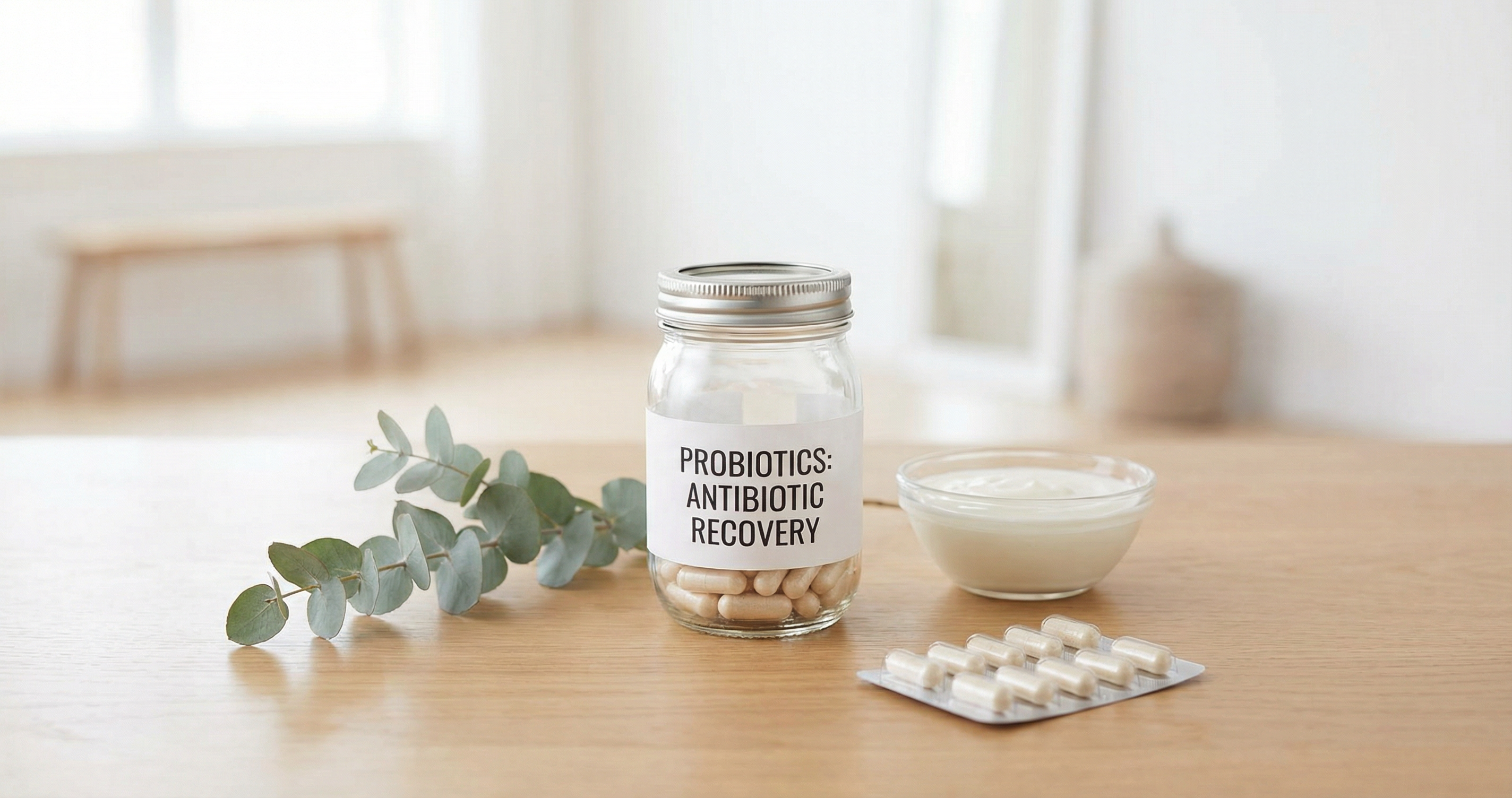
Why Gut Support After Antibiotics Matters
Antibiotics treat bacterial infections but can also reduce beneficial gut bacteria, which may lead to digestive upset, diarrhoea, or a temporary imbalance in the microbiome. Using probiotics during and after a course of antibiotics may help support gut recovery and reduce the risk of antibiotic-associated diarrhoea in some people. This guide covers which strains to consider, how to time them with your antibiotic, and how long to continue for the best chance of a smooth recovery.
Spacing Probiotics From Antibiotics
Taking probiotics a few hours apart from your antibiotic dose can help more live bacteria reach the gut. If you take both at the same time, the antibiotic may kill the probiotic bacteria before they can colonise. A simple approach: take the antibiotic at the same time each day as prescribed, then take the probiotic at a different time (e.g. probiotic in the morning, antibiotic in the evening, or at least 2–3 hours apart). Some people take the probiotic with a meal to buffer stomach acid; check the product label. Browse probiotics on iHerb for strains suited to antibiotic recovery.
Strains With Evidence for Antibiotic Recovery
Lactobacillus rhamnosus GG and Saccharomyces boulardii (a beneficial yeast) are among the most studied strains for antibiotic-associated diarrhoea and gut support during treatment. S. boulardii is not a bacterium, so it is not killed by most antibacterial antibiotics; many people use it during the course. Bacterial probiotics like L. rhamnosus GG are also widely used with proper spacing. Choose a product that lists the strain(s) and provides a dose in the range used in studies (often 1–10 billion CFU per day). Multi-strain products that include these or similar evidence-based strains can also be a good option.
When to Start and How Long to Continue
Many people start probiotics at the beginning of antibiotic treatment and continue for a few days to several weeks after the last antibiotic dose. There is no single rule; some studies show benefit with probiotics only after the course. If you have a weakened immune system, serious illness, or have been advised to avoid probiotics, discuss with your doctor before starting. Do not use probiotics as a substitute for completing the full antibiotic course as prescribed — stopping antibiotics early can promote resistance and worsen infection.
Diet and Lifestyle During Recovery
Eating fibre-rich foods (when tolerated) and fermented foods can support gut recovery once you are able to tolerate them. Introduce fibre gradually if your gut is sensitive. Stay hydrated, especially if you experience diarrhoea. Avoid unnecessary or repeated courses of antibiotics; use them only when prescribed. A balanced diet, adequate sleep, and stress management also support overall recovery and a healthy microbiome over time.
Safety and When to Be Cautious
Probiotics are generally safe for healthy adults. People with compromised immunity, serious illness, central lines, or recent surgery should consult a doctor before use. If you experience persistent or worsening digestive symptoms, stop the probiotic and seek advice. Probiotics do not replace medical treatment for infection or chronic gut conditions.
Summary
- Space probiotics a few hours apart from the antibiotic to improve bacterial survival.
- Consider evidence-based strains (e.g. L. rhamnosus GG, S. boulardii) for recovery support.
- Start during or after the course and continue for a few days to weeks; discuss with a doctor if at risk.
- Support recovery with gradual fibre, fermented foods, and hydration; complete the full antibiotic course.
Probiotics can be a useful part of gut recovery after antibiotics when chosen and timed with evidence in mind.