What Is Power Flow Yoga?
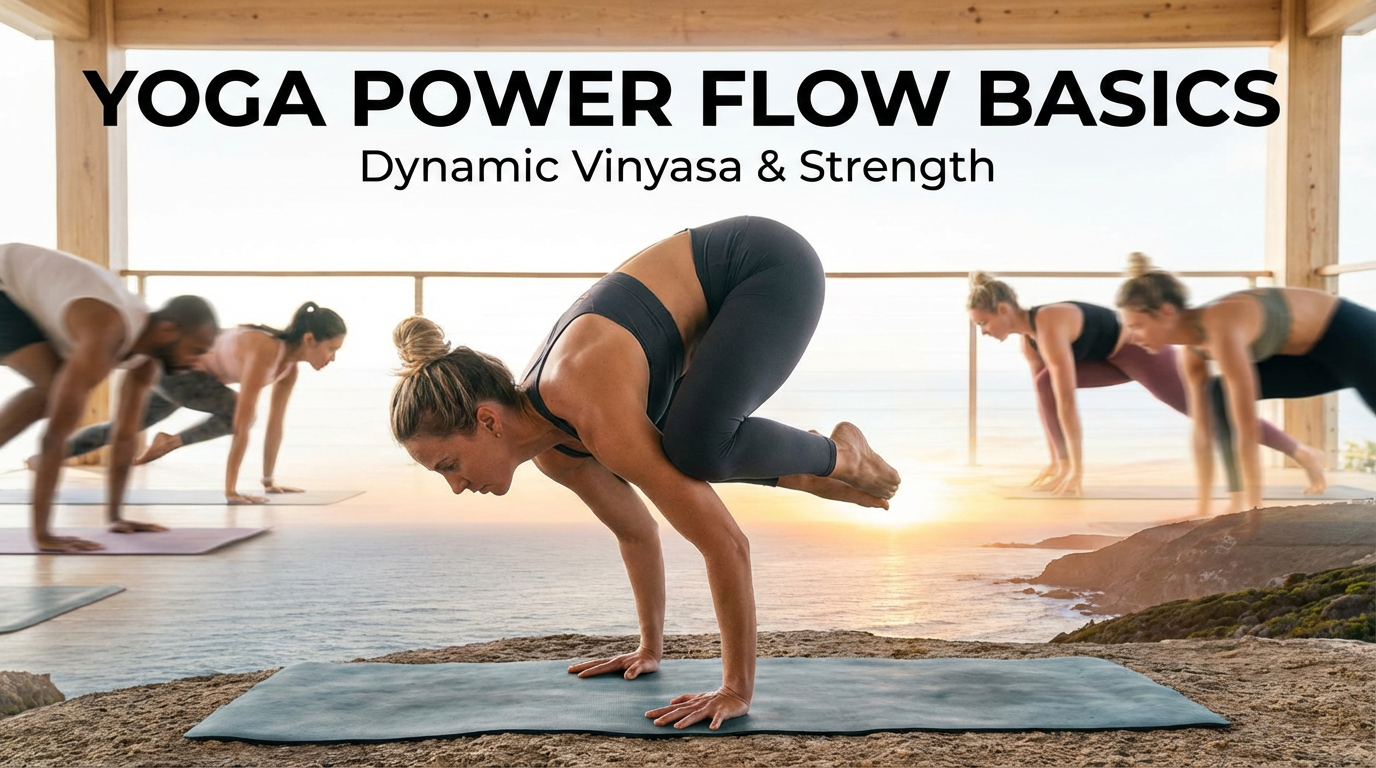
Power flow is a style of yoga that links strength-focused poses with the breath in a continuous, fluid sequence. Unlike slow restorative or gentle classes, power flow keeps the body moving and the heart rate elevated; unlike pure strength training, it emphasises breath, alignment and smooth transitions. As a yoga teacher, I describe it as a bridge between strength and flow: you build heat, endurance and muscular engagement while staying connected to the breath and to the present moment. The practice typically follows a clear structure—warm-up, peak and cool-down—which keeps it safe and effective whether you are new to power flow or already experienced. You do not need to be strong or flexible to start; intensity and complexity can be scaled with modifications and pacing.
Breath-Linked Movement
In power flow, every movement is tied to the breath. The standard pattern is simple: inhale to expand, lengthen or rise; exhale to fold, lower or release. For example, in a sun salutation you might inhale the arms overhead, exhale into a forward fold, inhale to lengthen the spine, exhale to step or jump back. This linking (vinyasa in the broad sense) does several things: it keeps the nervous system regulated so you can sustain effort without burning out, it gives the practice a steady rhythm so the mind stays focused, and it encourages full, conscious breathing instead of holding the breath when poses get challenging. Ujjayi breath—a slight constriction at the back of the throat so the breath sounds like a soft ocean—is often used to deepen the rhythm and keep the breath audible and steady. If you notice yourself holding your breath or gasping, ease off the intensity slightly and re-establish the breath; the movement can then follow.
Typical Sequence Elements
A well-designed power flow class usually includes three main building blocks: sun salutations, standing poses and vinyasa (the repeated “flow” between poses). Together they create a session that warms the body, builds strength and stamina, and then winds down safely.
Sun Salutations
Sun salutations (Surya Namaskar) are the backbone of many power flow classes. Sun Salutation A is a short, repeatable sequence: mountain pose, arms up, forward fold, half-lift, plank (or chaturanga), upward dog (or cobra), downward dog, then step or jump forward and repeat. It warms the whole body, stretches the hamstrings and back, and builds shoulder and core engagement. Sun Salutation B adds bent-knee poses (e.g. chair pose, warrior I) into the flow, increasing leg strength and cardiovascular demand. Classes often begin with several rounds of A at a moderate pace, then add B to raise the heat and intensity. The number of rounds depends on the class length and level; beginners might do three to five of each, while more advanced practitioners might do more or move faster.
Standing Poses
After the body is warm, power flow typically moves into standing poses. These include warrior I and II, triangle (Trikonasana), extended side angle (Utthita Parsvakonasana), half-moon (Ardha Chandrasana) and others. Standing poses build leg strength, hip stability and balance; they also open the hips and groin and challenge focus. In power flow they are often woven into the sequence rather than held for long periods—for example, flowing from warrior II into side angle and back, or transitioning through a short vinyasa between sides. Alignment cues (e.g. front knee over the ankle in warrior, lengthening both sides of the waist in triangle) help protect the knees and lower back and make the poses more effective. Taking time to learn these cues in a beginner or all-levels class will make your practice safer and more rewarding.
Vinyasa
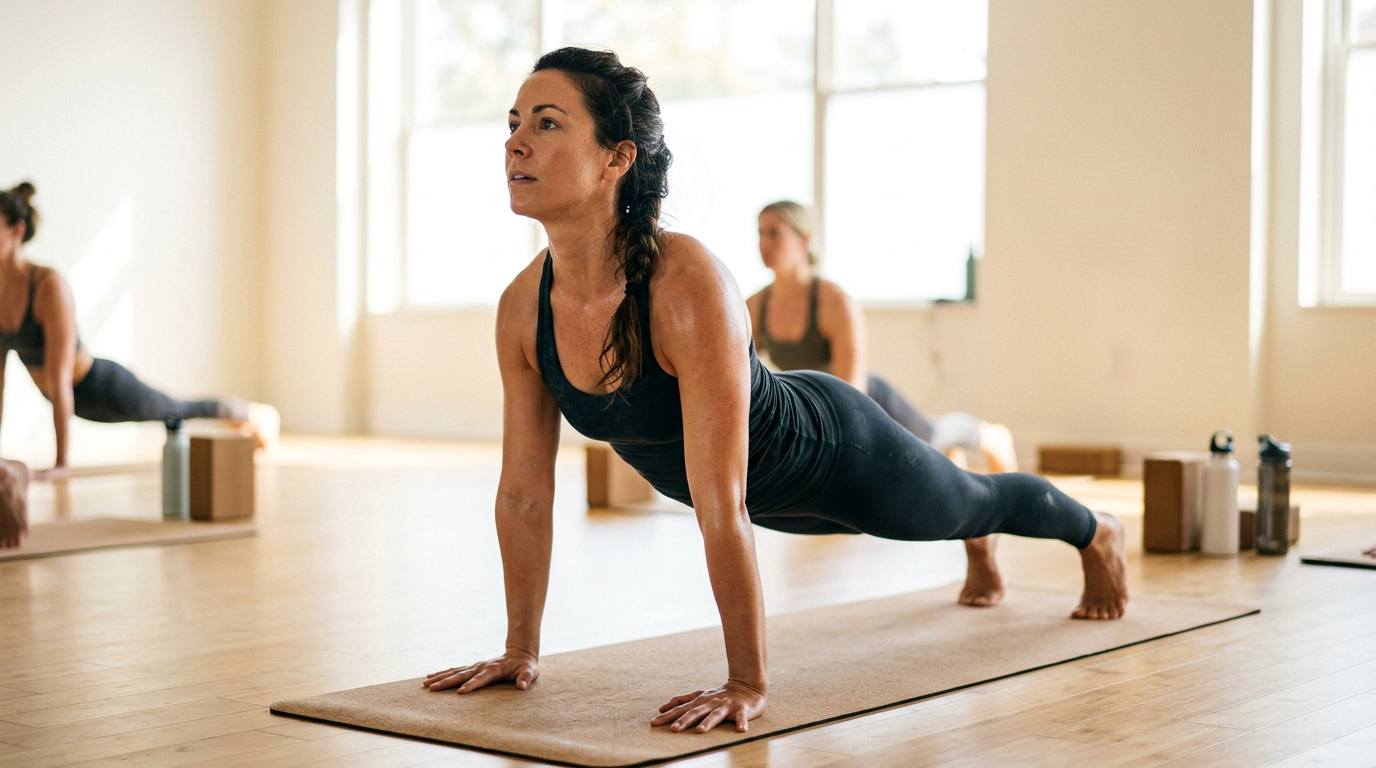
“Vinyasa” here means the short flow that connects poses: typically plank (or high plank), chaturanga (low push-up), upward dog (or cobra) and downward dog. In a power flow class you often use this vinyasa between sides of standing poses or between different sections of the sequence. It maintains heat, builds upper-body and core strength and gives the practice a continuous, moving quality. Chaturanga is one of the most demanding parts—it requires shoulder stability and core control. Modifications (e.g. knees down, or skipping chaturanga and moving from plank to downward dog) are always appropriate if the full expression is not yet accessible or if you have wrist or shoulder sensitivities.
Benefits: Strength, Heat and Endurance
Power flow delivers a mix of physical and mental benefits that support long-term practice and general fitness.
Strength. Holding and moving through poses like plank, chaturanga, warrior and chair builds strength in the legs, core, arms and shoulders. The constant transitioning also challenges stability and coordination. Over time, practitioners often notice better capacity in daily activities and in other forms of exercise.
Heat. The continuous movement and repeated sun salutations raise body temperature and heart rate. This warmth can make muscles and connective tissue more pliable, support circulation and create a cleansing, energising effect. Staying well hydrated before and after class is important, especially in heated or long sessions.
Endurance. Power flow is a form of cardiovascular and muscular endurance work. Keeping the breath steady while moving through multiple rounds of sun salutations and standing flows trains the body and mind to sustain effort. Many people find that regular power flow improves stamina for other sports and for daily life.
Additionally, the focus on breath and the rhythm of the practice can reduce mental chatter and stress when approached with awareness rather than competition. The combination of physical challenge and mindful breathing makes power flow a practical tool for both fitness and mental clarity. Over time, many practitioners also notice improved flexibility in the hamstrings, hips and shoulders simply from moving through the sequences regularly, even though the primary aim is strength and flow rather than deep stretching. Cool-down and final relaxation (savasana) at the end of class help the nervous system shift from effort to rest and support recovery, so the benefits extend beyond the mat.
How to Start
If you are new to power flow, start with a class labelled “basics,” “all levels” or “beginner-friendly.” Tell the teacher you are new so they can offer modifications. Arrive a few minutes early to set up your mat and, if possible, mention any injuries or limitations. Begin with one or two classes per week and allow your body to adapt; more frequency can come later. Wear comfortable, breathable clothing that allows movement and use a non-slip mat. Avoid eating a heavy meal right before class; a light snack an hour or so before is usually fine. Bring water and drink after class to rehydrate. If you practice at home, follow a structured video or written sequence from a qualified teacher rather than improvising, so you get a safe warm-up, peak and cool-down. A typical class lasts 45–75 minutes; shorter “express” sessions of 30 minutes can work for maintenance or busy days. Allow at least a few weeks of regular practice to feel the rhythm and benefits. Consistency matters more than length: two or three sessions per week will build strength and familiarity faster than one long session every few weeks. If you have never done sun salutations or vinyasa, consider a single “intro to power flow” or “vinyasa basics” workshop so you learn the key movements and breath pattern before joining a full class.
Modifications
Modifications are not a compromise—they are how you tailor the practice to your body and current level. Use them freely.
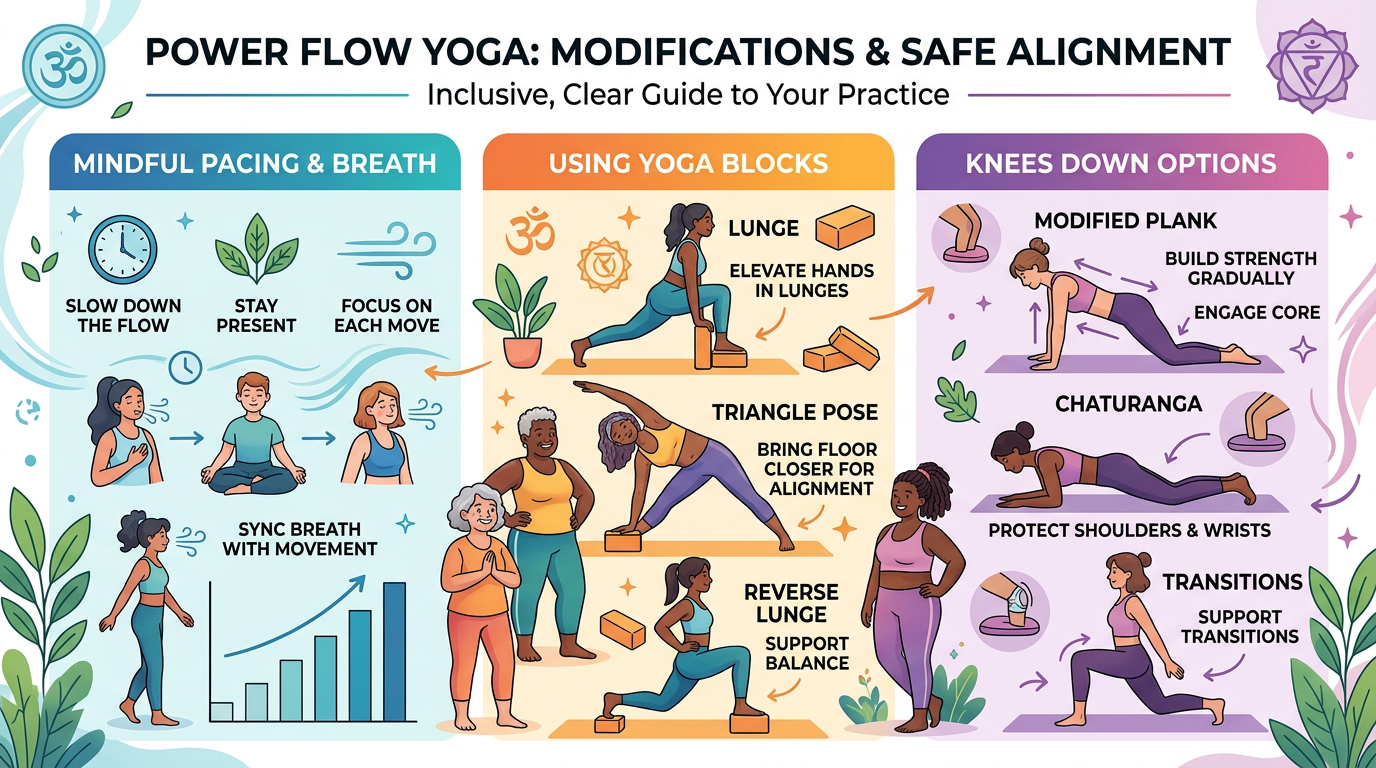
Chaturanga: Lower the knees in plank before bending the arms, or skip chaturanga and move from plank to knees-chest-chin and then to cobra or upward dog, or step back to downward dog without going through the low push-up. This protects the shoulders and lower back until you have the strength and alignment for the full pose.
Jumps: Step rather than jump the feet between poses (e.g. from forward fold to plank, or from downward dog to the top of the mat). Stepping is gentler on the wrists and lower back and still builds strength and flexibility.
Standing poses: Use a block under the hand in triangle or side angle if the floor is far away; shorten your stance in warrior poses if the front knee is unstable or the back leg is strained. You can also reduce the depth of the bend in the front knee until balance and strength improve.
Wrists: If the wrists are sensitive, use fists instead of flat hands in plank and downward dog, or perform those poses on the forearms (dolphin pose instead of downward dog). Wrist circles and gentle stretches before class help prepare the joints.
Pacing: Take an extra breath (or several) in downward dog or child’s pose instead of rushing to keep up. Rest in child’s pose whenever you need to; the teacher will not mind. Building endurance is a process—honour your body’s signals.
Safety
Safety in power flow comes from preparation, alignment and self-awareness.
Warm-up: Do not skip the warm-up. Joint mobility (especially wrists, shoulders and spine), cat-cow and a few rounds of sun salutation A at a moderate pace prepare the body for stronger work and reduce the risk of strain.
Wrists and shoulders: In plank, chaturanga and downward dog, distribute weight through the whole hand (fingers spread, weight toward the knuckles) and avoid sinking into the wrists. Keep the shoulders away from the ears and the chest open. If you have a history of wrist or shoulder issues, use the modifications above and consider discussing with a physiotherapist or experienced teacher.
Lower back: In backbends (e.g. upward dog, cobra), lengthen the spine and use the legs and glutes; avoid compressing the lower back. In forward folds, bend the knees as much as needed and focus on lengthening the front of the torso rather than forcing the head toward the shins. Engage the core in transitions to support the back.
Knees: In lunges and warrior poses, align the front knee over the ankle (or slightly behind it) and track it in line with the second toe. Avoid letting the knee collapse inward. If you have knee issues, shorten the stance or use a block and discuss options with your teacher.
Pain vs. effort: Distinguish between healthy muscular effort and sharp or joint pain. Back off from anything that feels like pain, and seek advice from a healthcare provider or experienced teacher if pain persists. Rest and recovery are part of a sustainable practice.
Cool-down: Every power flow session should end with a few minutes of cooling postures (e.g. seated forward fold, gentle twist, supine knee-to-chest) and savasana (corpse pose). This allows the heart rate and breath to return to baseline and supports the body’s recovery. Skipping the cool-down can leave you feeling wired or stiff; honour this part of the practice even in short home sessions.
Key Takeaways
- Power flow links strength-focused poses with the breath in a continuous sequence, building heat, endurance and muscular engagement.
- Sync movement with breath: inhale to expand or rise, exhale to fold or lower; use ujjayi breath to keep the rhythm steady.
- Typical elements include sun salutations (A and B), standing poses (warrior, triangle, side angle, etc.) and vinyasa (plank–chaturanga–upward dog–downward dog).
- Benefits include strength, heat, cardiovascular and muscular endurance, and mental focus when practised with awareness.
- Start with a beginner-friendly or all-levels class; use modifications for chaturanga, jumps, standing poses and wrists; pace yourself and rest in child’s pose when needed.
- Prioritise warm-up, alignment and self-awareness; protect wrists, shoulders, lower back and knees; back off from pain and seek advice when needed.
Power flow yoga is a practical way to build strength, stamina and body awareness in a breath-centred, structured format. Whether you are new or experienced, focus on breath-linked movement, use modifications without hesitation and respect your body’s limits. Progress is gradual; the practice meets you where you are and grows with you. With consistent, mindful practice, power flow can support both your fitness and your overall well-being. For recovery and muscle support, some practitioners pair their practice with quality supplements; you can explore options such as amino acids on iHerb if that aligns with your goals.